


Pavel Zemek-Novák
Released Album
Keyboard
-
-
 May 31, 2011
Artist Info
Role:ComposerBirth:1957 in Brno, Czech RepublicPeriod:ContemporaryPavel Zemek-Novák was a Czech composer and pianist who was born on August 30, 1918, in Prague, Czechoslovakia. He was the son of a prominent Czech composer, Vítězslav Novák, and his wife, Marie Zemková. Pavel showed an early interest in music and began studying piano at the age of six. He later studied composition with his father and with Alois Hába, a leading figure in microtonal music. Zemek-Novák's early compositions were influenced by his father's romantic style, but he soon developed his own unique voice. His music was characterized by its use of unconventional harmonies and rhythms, as well as its incorporation of folk melodies and dance forms. Zemek-Novák was also interested in the use of microtones, and he experimented with different tuning systems in his compositions. Zemek-Novák's career as a composer began to take off in the 1940s. In 1943, he won first prize in a competition for young composers organized by the Czech Philharmonic Orchestra. This led to performances of his music by the orchestra and other leading Czech ensembles. Zemek-Novák also began to receive commissions for new works, including a ballet score for the National Theatre in Prague. One of Zemek-Novák's most important works from this period was his Piano Concerto No. 1, which he composed in 1946. The concerto was premiered by the Czech Philharmonic Orchestra with Zemek-Novák as the soloist. The work was well-received and helped to establish Zemek-Novák as one of the leading composers of his generation. In the 1950s, Zemek-Novák's career was interrupted by political events in Czechoslovakia. In 1951, he was arrested by the communist authorities and accused of "bourgeois decadence" in his music. He was released after several months, but his music was banned from public performance for several years. Zemek-Novák continued to compose during this period, but he was unable to hear his music performed in public. Zemek-Novák's fortunes began to improve in the 1960s. In 1963, he was awarded the State Prize for Music by the Czechoslovak government. This led to a renewed interest in his music, and his works began to be performed more frequently. Zemek-Novák also began to receive commissions from abroad, including a commission from the BBC for a new work. One of Zemek-Novák's most important works from this period was his Symphony No. 2, which he composed in 1965. The symphony was premiered by the Czech Philharmonic Orchestra under the direction of Karel Ančerl. The work was well-received and helped to establish Zemek-Novák as one of the leading symphonists of his generation. Zemek-Novák continued to compose throughout the 1970s and 1980s. He wrote a number of important works during this period, including his Symphony No. 3, which he composed in 1972. The symphony was premiered by the Czech Philharmonic Orchestra under the direction of Václav Neumann. The work was well-received and helped to establish Zemek-Novák as one of the leading symphonists of his generation. Zemek-Novák's music was characterized by its use of unconventional harmonies and rhythms, as well as its incorporation of folk melodies and dance forms. He was also interested in the use of microtones, and he experimented with different tuning systems in his compositions. Zemek-Novák's music was often compared to that of his father, Vítězslav Novák, but he developed his own unique voice over the course of his career.More....
Recent Artist Music
2
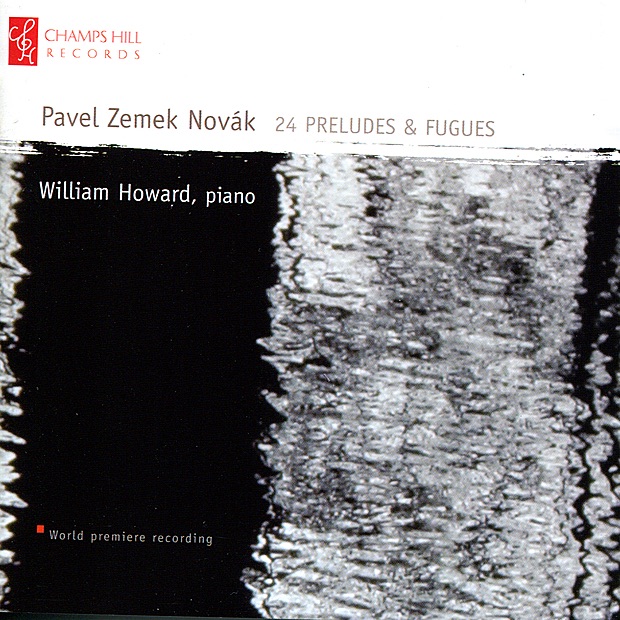
Preludes & Fugues (24) for piano
Book 1 (Old Testament). Prelude 1: The Creation of Heaven and Earth
2:17
3
Piano Sonata No. 7 ("Little Song of Love and Mercy")
Sonata No. 7 (Little Song of Love and Mercy)
4:12
Copyright Ⓒ 2013 Davinci Finger. All rights reseved
Service Terms & Policy