


Concerto Caledonia
Released Album
Chamber
-
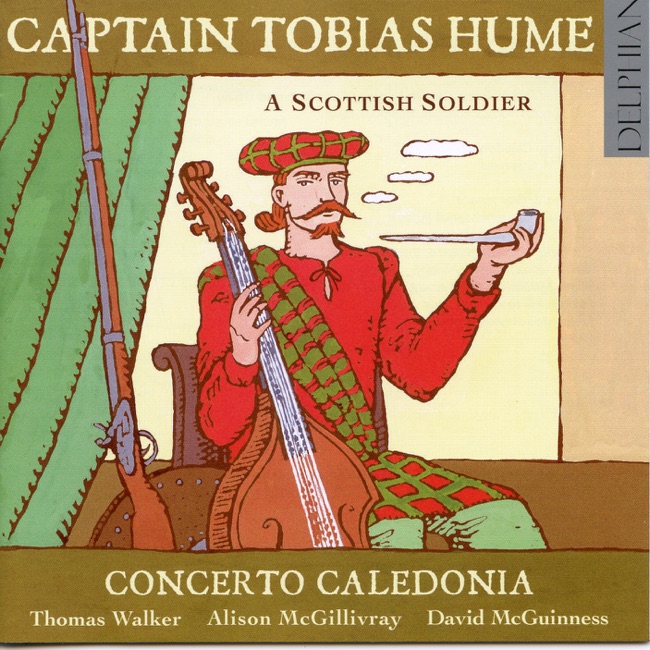 June 10, 2014
 -

Artist Info
Role:EnsembleGenre:ChamberConcerto Caledonia is a Scottish classical music ensemble that specializes in the performance of baroque and early classical music. The group was founded in 1992 by David McGuinness, a Scottish harpsichordist and conductor, and has since become one of the most respected and innovative early music ensembles in the world. The birth of Concerto Caledonia can be traced back to McGuinness's desire to explore the rich musical heritage of Scotland, which he felt had been largely overlooked in the classical music world. He began by researching and performing Scottish baroque music, which had been largely forgotten since the 18th century. He soon realized that there was a wealth of music from this period that had never been performed or recorded, and he set out to rectify this by forming a group of like-minded musicians. The early years of Concerto Caledonia were marked by a series of groundbreaking performances and recordings that helped to establish the group's reputation as a leading interpreter of early Scottish music. In 1995, the group released its first album, "Scottish Baroque Music," which featured works by Scottish composers such as James Oswald, William McGibbon, and Robert Mackintosh. The album was widely praised for its innovative approach to the music, which blended traditional Scottish folk melodies with the formal structures of baroque music. Over the next few years, Concerto Caledonia continued to explore the rich musical heritage of Scotland, performing and recording works by composers such as John Clerk of Penicuik, Alexander Munro, and Niel Gow. The group also began to expand its repertoire to include music from other parts of Europe, particularly France and Italy, which had a strong influence on Scottish music during the baroque period. One of the highlights of Concerto Caledonia's early career was its performance at the Edinburgh International Festival in 1999. The group performed a program of Scottish baroque music, which was widely praised for its virtuosity and musicality. The performance helped to establish Concerto Caledonia as a major force in the early music world, and led to invitations to perform at other major festivals and concert halls around the world. In 2001, Concerto Caledonia released its second album, "The Scottish Enlightenment," which explored the music of the Scottish Enlightenment period (roughly 1740-1790). The album featured works by Scottish composers such as James Beattie, Adam Smith, and Robert Burns, as well as music by European composers who were popular in Scotland at the time, such as Handel and Vivaldi. The album was widely praised for its innovative approach to the music, which blended traditional Scottish melodies with the formal structures of classical music. In the years that followed, Concerto Caledonia continued to push the boundaries of early music performance, exploring new repertoire and collaborating with other musicians and artists. In 2006, the group collaborated with the Scottish poet Robert Crawford to create a program of music and poetry inspired by the Scottish landscape. The program, titled "The Flowing Tide," was performed at the Edinburgh International Festival and was widely praised for its beauty and originality. In 2010, Concerto Caledonia released its most ambitious album to date, "A Scottish Lady Mass," which featured a reconstruction of a mass by the Scottish composer William McGibbon.More....
Recent Artist Music
Copyright Ⓒ 2013 Davinci Finger. All rights reseved
Service Terms & Policy