


Melchior Vulpius
Released Album
Vocal
-
 September 9, 2016
Choral
-
 November 11, 2016
 -
-
 February 11, 2014
 -
 September 11, 2012
 -
 March 13, 2007
Artist Info
Role:ComposerCountry: GermanyBirth:ca. 1570 in Wasungen, GermanyDeath:August, 1615 in Weimar, GermanyPeriod:RenaissanceGenre:VocalMelchior Vulpius was a German composer and musician who lived during the late Renaissance and early Baroque periods. He was born in Wasungen, Thuringia, Germany in 1570 and died in Weimar, Germany in 1615. Vulpius was a prolific composer of sacred music, including hymns, motets, and chorales, and is considered one of the most important composers of his time. Vulpius was born into a family of musicians and was trained in music from a young age. His father, Johannes Vulpius, was a musician and composer, and his mother, Anna, was a singer. Vulpius began his musical education in his hometown of Wasungen, where he learned to play the organ and other instruments. He later studied music in Erfurt, Germany, where he became a skilled composer and musician. In 1596, Vulpius was appointed as the cantor and music director at the St. Mary's Church in Weimar, Germany. He held this position for the rest of his life and was responsible for composing and directing music for the church's services. During his time in Weimar, Vulpius also taught music to students at the local school and was highly respected as a teacher and composer. Vulpius composed a large number of sacred works during his lifetime, including hymns, motets, and chorales. His most famous work is the hymn "Gelobet seist du, Jesu Christ" (Praise be to you, Jesus Christ), which is still widely sung in churches today. The hymn is a Christmas carol that tells the story of the birth of Jesus Christ and is known for its beautiful melody and harmonies. In addition to his sacred works, Vulpius also composed secular music, including songs and instrumental pieces. However, his sacred music is considered to be his most important contribution to music history. Vulpius was known for his use of polyphony, a musical technique that involves multiple voices singing different melodies at the same time. His music was also characterized by its use of rich harmonies and complex rhythms. Vulpius was highly respected by his contemporaries and was considered one of the most important composers of his time. He was a member of the prestigious Saxon Court Orchestra and was often called upon to compose music for important events and ceremonies. His music was widely performed and admired throughout Germany and other parts of Europe. Despite his success as a composer, Vulpius lived a relatively modest life. He was married and had several children, but little is known about his personal life. He died in Weimar in 1615 and was buried in the St. Mary's Church, where he had served as cantor for nearly 20 years. Today, Vulpius is remembered as one of the most important composers of the late Renaissance and early Baroque periods. His music continues to be performed and admired by musicians and music lovers around the world. His legacy as a composer and musician has had a lasting impact on the history of classical music, and his contributions to the genre will continue to be celebrated for generations to come.More....
Recent Artist Music
3
1:
4
1:49
8
1:33
14
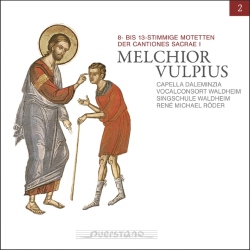
Exulllent et laetentur in te Cantiones Sacrae I No. 29
Exultent et laetentur in te, for 8 voices (Cantiones Sacrae I, XXIX)
4:12
15
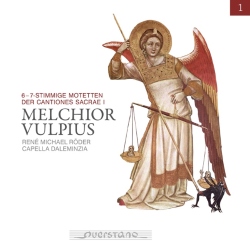
Jesu redemtor seculi (Pars prima Cantionum sacrarum)
Iesu redemtor seculi, Motet for 6 Voices
8:28
Copyright Ⓒ 2013 Davinci Finger. All rights reseved
Service Terms & Policy