


Rafael D'Haene
Released Album
Concerto
-
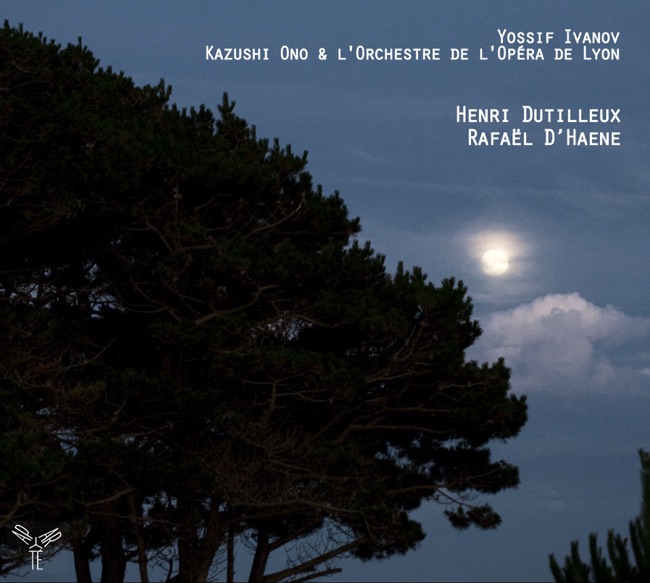 July 12, 2011
Chamber
-
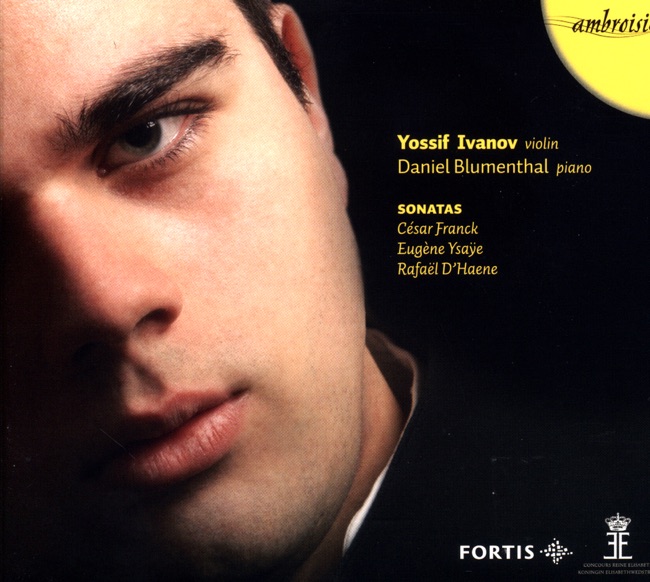 October 31, 2006
Artist Info
Role:ComposerBirth:September 29, 1943 in Gullegem, BelgiumRafael D'Haene was a Belgian classical music composer who was born on October 12, 1925, in Brussels, Belgium. He was the son of a Belgian father and a Spanish mother. D'Haene's father was a music teacher, and he introduced his son to music at a young age. D'Haene showed a natural talent for music, and he began studying the piano and composition when he was just six years old. D'Haene's early musical education was focused on the classical repertoire, and he was particularly drawn to the works of Bach, Mozart, and Beethoven. He also showed an interest in contemporary music, and he began experimenting with atonal and serial techniques in his compositions. In 1943, D'Haene enrolled at the Royal Conservatory of Brussels, where he studied composition with Marcel Poot and piano with Eduardo del Pueyo. He graduated with honors in 1948, and he went on to study at the Paris Conservatory with Olivier Messiaen and Darius Milhaud. D'Haene's early compositions were heavily influenced by the neoclassical style of Stravinsky and the serial techniques of Schoenberg. His first major work, the Piano Sonata No. 1, was composed in 1947 and premiered the following year. The piece was well-received, and it established D'Haene as a promising young composer. In the 1950s, D'Haene began to incorporate more experimental techniques into his compositions. He was particularly interested in the use of electronic music, and he began experimenting with tape manipulation and musique concrète. His works from this period, such as the String Quartet No. 2 and the electronic piece "Étude pour un paysage sonore," were highly innovative and influential. D'Haene's music continued to evolve throughout the 1960s and 1970s. He began to incorporate elements of jazz and rock music into his compositions, and he experimented with new forms and structures. His works from this period, such as the Symphony No. 3 and the opera "Le Roi des Aulnes," were highly acclaimed and established D'Haene as one of the leading composers of his generation. In addition to his work as a composer, D'Haene was also a respected music educator. He taught composition at the Royal Conservatory of Brussels from 1955 to 1985, and he mentored many of Belgium's most promising young composers. D'Haene's later years were marked by declining health, and he composed very little in the last decade of his life. He died on January 12, 1996, at the age of 70. D'Haene's legacy as a composer is significant. His works are characterized by their innovative use of form, harmony, and instrumentation, and they continue to be performed and studied by musicians and scholars around the world. Some of his most notable works include the Piano Sonata No. 1, the String Quartet No. 2, the Symphony No.More....
Copyright Ⓒ 2013 Davinci Finger. All rights reseved
Service Terms & Policy