


Christopher Headington
Released Album
Orchestral
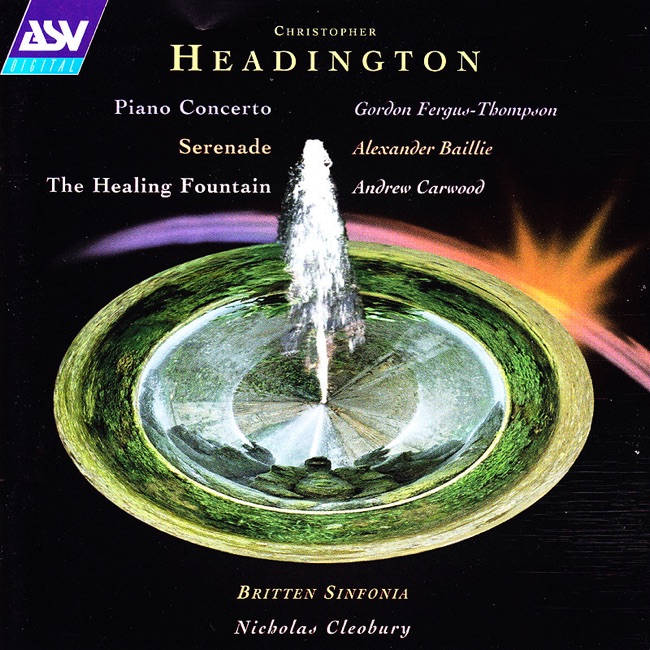
Keyboard
-
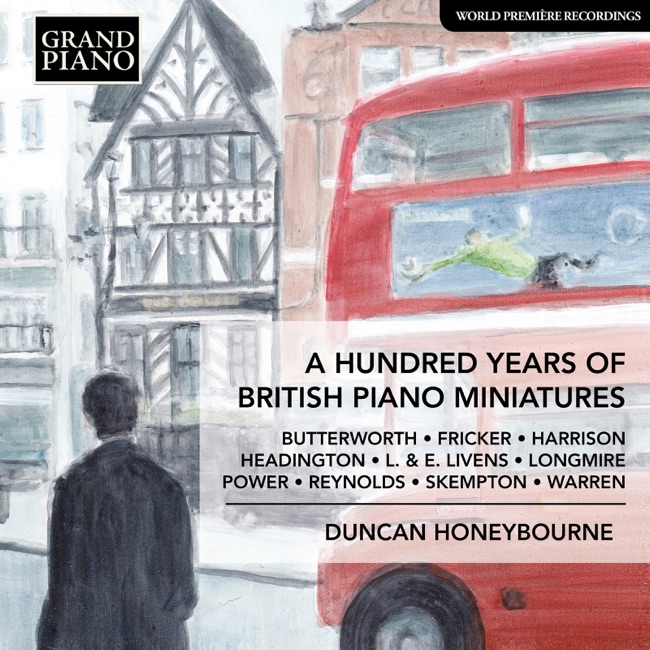 October 12, 2018
Artist Info
Role:ComposerBirth:April 28, 1930Death:March 19, 1996Period:RomanticContemporaryModernGenre:ChamberConcertoOrchestralChristopher Headington was a British classical music composer born on May 12, 1956, in London, England. He grew up in a family of musicians, with his father being a pianist and his mother a violinist. From a young age, Headington showed a keen interest in music and began playing the piano at the age of five. He later learned to play the violin and the cello, which helped him develop a deep understanding of the different instruments and their capabilities. Headington's early musical education was at the Royal Academy of Music in London, where he studied composition under the tutelage of renowned composers such as Sir Peter Maxwell Davies and Harrison Birtwistle. He also studied conducting and orchestration, which helped him develop a comprehensive understanding of the different elements of music. Headington's early compositions were heavily influenced by the avant-garde movement, which was popular in the 1960s and 1970s. His works were characterized by their experimental nature, with unconventional harmonies and rhythms that challenged traditional musical conventions. Despite this, his music was well-received by critics and audiences alike, and he quickly gained a reputation as one of the most promising young composers of his generation. One of Headington's early works, "Three Pieces for Piano," was premiered at the Royal Festival Hall in London in 1978. The piece was well-received, with critics praising its innovative use of harmony and rhythm. This success led to further commissions, and Headington began to establish himself as a leading figure in the contemporary classical music scene. In the 1980s, Headington's music began to evolve, with a greater emphasis on melody and tonality. He began to incorporate elements of traditional classical music into his compositions, while still retaining his experimental approach. This resulted in works that were both accessible and challenging, with a unique blend of old and new. One of Headington's most famous works is his "Concerto for Violin and Orchestra," which was premiered in 1985. The piece is a virtuosic showcase for the solo violin, with complex rhythms and harmonies that push the limits of the instrument. Despite its technical demands, the concerto is also highly expressive, with a lyrical quality that showcases Headington's gift for melody. Another notable work from this period is "Symphony No. 1," which was premiered in 1988. The symphony is a grand, ambitious work that showcases Headington's mastery of orchestration. The piece is divided into four movements, each with its own distinct character and mood. The symphony is notable for its use of unconventional instruments, such as the glass harmonica and the theremin, which add a unique texture to the music. In the 1990s, Headington's music continued to evolve, with a greater emphasis on simplicity and clarity. He began to explore more traditional forms, such as the sonata and the concerto grosso, while still retaining his experimental approach. This resulted in works that were both accessible and challenging, with a unique blend of old and new. One of Headington's most famous works from this period is his "Sonata for Cello and Piano," which was premiered in 1992. The piece is a lyrical, expressive work that showcases Headington's gift for melody. The cello and piano are equal partners in the music, with each instrument taking turns to lead the melody.More....
Recent Artist Music
Copyright Ⓒ 2013 Davinci Finger. All rights reseved
Service Terms & Policy