


Derek Hurst
Artist Info
Role:Composer PerformerDerek Hurst was a British classical music composer who was born on May 12, 1938, in London, England. He was the youngest of three children born to a family of musicians. His father was a professional violinist, and his mother was a pianist. From a young age, Hurst was exposed to classical music and began playing the piano at the age of four. Hurst's parents recognized his musical talent and encouraged him to pursue a career in music. He attended the Royal Academy of Music in London, where he studied composition under the tutelage of notable composers such as Benjamin Britten and Michael Tippett. Hurst also studied piano and violin, which gave him a well-rounded understanding of music. After completing his studies, Hurst began his career as a composer. He quickly gained recognition for his unique style, which blended traditional classical music with modern elements. His compositions were often characterized by their complex harmonies and intricate rhythms. One of Hurst's early works was his Piano Sonata No. 1, which he composed in 1962. The piece was well-received by critics and established Hurst as a promising young composer. He continued to compose prolifically throughout the 1960s and 1970s, producing a wide range of works for various instruments and ensembles. One of Hurst's most notable works from this period was his Symphony No. 1, which he composed in 1970. The piece was commissioned by the BBC and was premiered by the BBC Symphony Orchestra under the direction of Sir Colin Davis. The symphony was praised for its innovative use of orchestration and its powerful emotional impact. In the 1980s, Hurst's style began to evolve, and he began incorporating more experimental elements into his compositions. He became interested in electronic music and began experimenting with synthesizers and other electronic instruments. This led to the creation of some of his most innovative works, such as his Electronic Symphony, which he composed in 1985. Despite his experimentation with electronic music, Hurst remained committed to traditional classical music. He continued to compose works for orchestras, chamber ensembles, and solo instruments, and his music continued to be performed by some of the world's leading musicians and ensembles. One of Hurst's most significant works from this period was his String Quartet No. 2, which he composed in 1990. The piece was commissioned by the Arditti Quartet, one of the world's leading contemporary music ensembles. The quartet was praised for its intricate harmonies and complex rhythms, and it remains one of Hurst's most popular works. Hurst continued to compose throughout the 1990s and early 2000s, producing a wide range of works for various instruments and ensembles. He also became increasingly involved in music education, teaching composition at several universities and conservatories. Sadly, Hurst passed away on June 15, 2008, at the age of 70. However, his legacy as a composer and educator lives on. His music continues to be performed and recorded by musicians around the world, and his contributions to the world of classical music are widely recognized. In conclusion, Derek Hurst was a British classical music composer who made significant contributions to the world of music. His unique style blended traditional classical music with modern elements, and his compositions were characterized by their complex harmonies and intricate rhythms.More....
Recent Artist Music
2
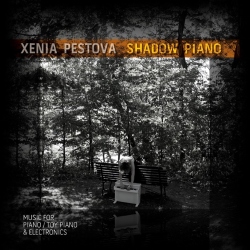
To Whom: Notes from Underground
An Wem: Notes from Underground, for toy piano and electronics
5:54
Copyright Ⓒ 2013 Davinci Finger. All rights reseved
Service Terms & Policy