


Endre Szervánszky
Released Album
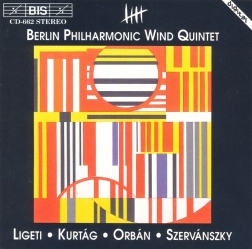
Chamber
-
 February 3, 2017
 -
 July 9, 2012
 -
 March 10, 2006
 -
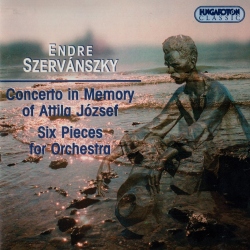
 October 14, 1994
Orchestral
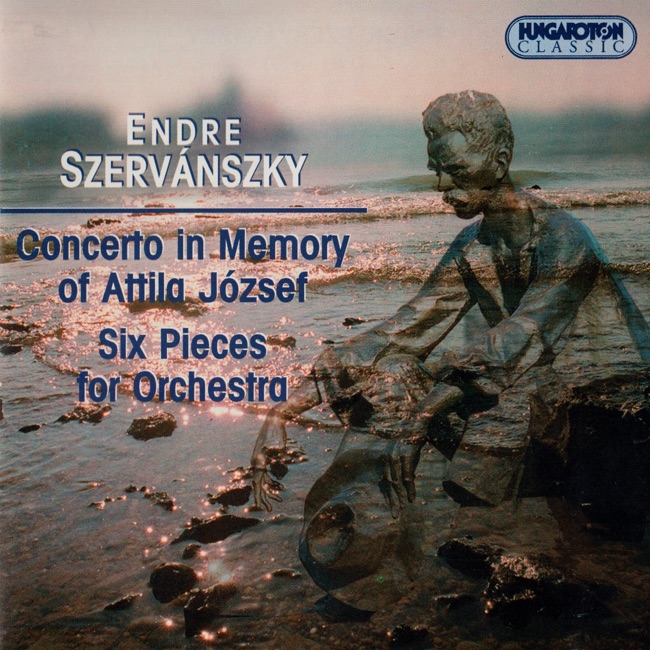
Artist Info
Role:ComposerBirth:December 27, 1911Death:June 25, 1977Period:ModernGenre:ChamberOrchestralEndre Szervánszky was a Hungarian composer who was born on June 27, 1911, in the city of Szeged, Hungary. He was the son of a music teacher, and his father played a significant role in his early musical education. Szervánszky began playing the piano at a young age and showed a natural talent for music. He went on to study at the Franz Liszt Academy of Music in Budapest, where he was taught by some of the most prominent composers of the time, including Zoltán Kodály and Béla Bartók. Szervánszky's early works were heavily influenced by the folk music of Hungary, which he had been exposed to from a young age. He was particularly interested in the music of the Hungarian gypsies, and this influence can be heard in many of his compositions. His first major work, the Suite for Orchestra, was composed in 1933 and was well-received by audiences and critics alike. This work showcased Szervánszky's talent for orchestration and his ability to blend traditional Hungarian folk music with modern compositional techniques. In the years that followed, Szervánszky continued to compose works that were heavily influenced by Hungarian folk music. One of his most famous works, the Concerto for Cimbalom and Orchestra, was composed in 1940 and is considered a masterpiece of Hungarian music. The cimbalom is a traditional Hungarian instrument that is similar to a hammered dulcimer, and Szervánszky's concerto showcases the instrument's unique sound and capabilities. During World War II, Szervánszky was conscripted into the Hungarian army and served on the Eastern Front. He was captured by the Soviet army in 1944 and spent several years in a prisoner-of-war camp. Despite the difficult conditions, Szervánszky continued to compose music during his captivity, and some of his most famous works were composed during this time. After the war, Szervánszky returned to Hungary and resumed his career as a composer. He continued to compose works that were heavily influenced by Hungarian folk music, but he also began to experiment with new compositional techniques. One of his most famous works from this period is the Symphony No. 2, which was composed in 1951. This work is notable for its use of serialism, a compositional technique that was popular among many European composers at the time. In the years that followed, Szervánszky continued to compose works that were well-received by audiences and critics alike. He was awarded numerous prizes and honors for his contributions to Hungarian music, including the Kossuth Prize, Hungary's highest cultural award. Some of his most famous works from this period include the String Quartet No. 3, the Piano Concerto No. 2, and the Symphony No. 4. Szervánszky continued to compose music until his death in 1977. His legacy as one of Hungary's greatest composers lives on, and his works continue to be performed and recorded by orchestras and ensembles around the world. His music is known for its unique blend of traditional Hungarian folk music and modern compositional techniques, and his contributions to Hungarian music have had a lasting impact on the country's cultural heritage.More....
Recent Artist Music

Copyright Ⓒ 2013 Davinci Finger. All rights reseved
Service Terms & Policy