


Joseph Saggione

Artist Info
Role:ComposerJoseph Saggione was a renowned American composer of classical music, known for his unique style and innovative approach to composition. Born on May 12, 1924, in New York City, Saggione grew up in a family of musicians. His father was a violinist, and his mother was a pianist, both of whom encouraged their son's interest in music from an early age. Saggione began his formal music education at the age of six, studying piano and violin with his parents. He showed a natural talent for music and quickly progressed, eventually studying composition with the renowned composer Aaron Copland. Copland recognized Saggione's talent and encouraged him to pursue a career in music. In 1942, Saggione enlisted in the United States Army and served in World War II. During his time in the military, he continued to study music and compose, even writing a symphony while stationed in Europe. After the war, Saggione returned to the United States and continued his music education at the Juilliard School in New York City. Saggione's early compositions were heavily influenced by the works of Copland and other American composers of the time. However, he soon developed his own unique style, blending elements of classical music with jazz and other genres. His compositions were characterized by their complex harmonies, intricate rhythms, and use of unconventional instruments. One of Saggione's most famous works is his Symphony No. 1, which he composed in 1952. The symphony is a four-movement work that showcases Saggione's innovative approach to composition. The first movement is a lively and energetic piece that features a prominent trumpet solo. The second movement is a slow and contemplative piece that showcases Saggione's skill at creating beautiful melodies. The third movement is a lively and rhythmic piece that features a prominent percussion section. The final movement is a triumphant and celebratory piece that brings the symphony to a thrilling conclusion. Another notable work by Saggione is his Concerto for Piano and Orchestra, which he composed in 1960. The concerto is a three-movement work that features a virtuosic piano soloist accompanied by a full orchestra. The first movement is a lively and energetic piece that showcases the piano soloist's technical skill. The second movement is a slow and contemplative piece that features a beautiful melody played by the piano soloist. The final movement is a fast and rhythmic piece that brings the concerto to a thrilling conclusion. Saggione's music was well-received by critics and audiences alike, and he received numerous awards and honors throughout his career. In 1963, he was awarded a Guggenheim Fellowship, which allowed him to travel to Europe and study with some of the leading composers of the time. He was also a recipient of the American Academy of Arts and Letters Music Award and the National Endowment for the Arts Composer's Grant. In addition to his work as a composer, Saggione was also a respected music educator. He taught at several universities throughout his career, including the University of Michigan, the University of California, Los Angeles, and the University of Southern California. He was known for his dedication to his students and his ability to inspire them to pursue their own unique musical paths. Saggione continued to compose and teach until his death on December 22, 1999, at the age of 75.More....
Recent Artist Music
2

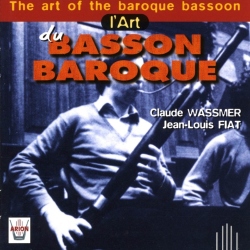
Si Je Fais l'Amour (from Recueil d'Airs François dans le Goût Italy, Sérieux et à Une, II & III Voix)
Si Je Fais l'Amour (Recueil d'Airs François dans le Goût Italien, Sérieux et à Une, II & III Voix)
1:56
Copyright Ⓒ 2013 Davinci Finger. All rights reseved
Service Terms & Policy