


Will Ogdon
Released Album
Keyboard
-
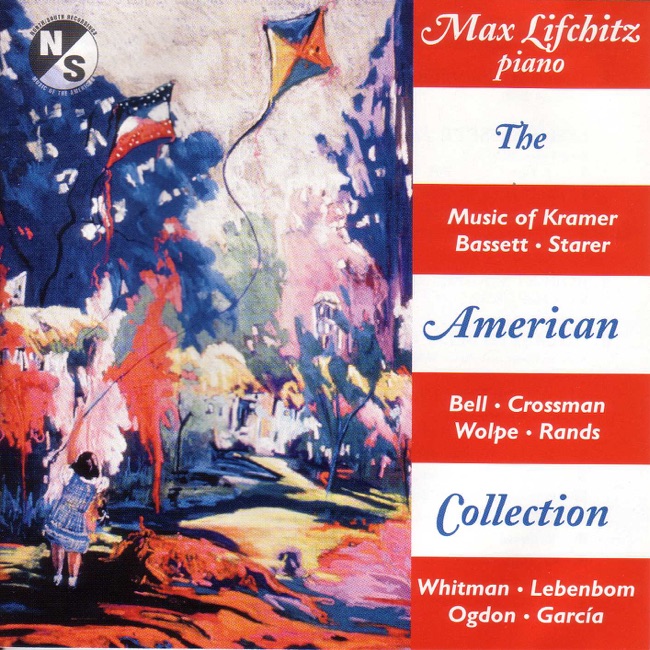 February 3, 1998
Chamber
-
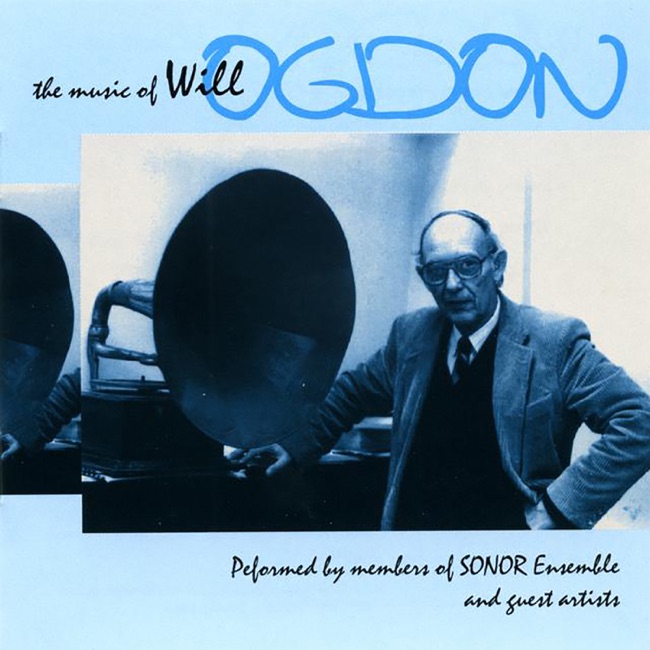 August 19, 1997
Artist Info
Role:ComposerPeriod:ContemporaryGenre:ChamberKeyboardVocalWill Ogdon was an American composer, pianist, and music educator who was born on June 23, 1921, in Salt Lake City, Utah. He was the youngest of three children born to his parents, who were both musicians. His father was a violinist and his mother was a pianist, and they both taught music at the University of Utah. Ogdon showed an early interest in music and began taking piano lessons at the age of five. He was a prodigious talent and quickly became known for his exceptional musical abilities. He gave his first public performance at the age of six and went on to perform regularly in concerts and recitals throughout his childhood. In 1939, Ogdon enrolled at the University of Utah to study music. He studied piano with his mother and composition with Leroy Robertson, a prominent American composer. He also studied conducting with Maurice Abravanel, who was the conductor of the Utah Symphony Orchestra. After completing his undergraduate studies, Ogdon moved to New York City to pursue a career in music. He studied composition with Aaron Copland and Roger Sessions at the New School for Social Research and piano with Rosina Lhévinne at the Juilliard School. He also studied conducting with Leonard Bernstein at the Tanglewood Music Center. Ogdon's early compositions were influenced by the neoclassical style of Stravinsky and the serialism of Schoenberg. His music was characterized by its rhythmic complexity, harmonic dissonance, and use of unconventional instrumental combinations. In 1951, Ogdon was awarded a Fulbright scholarship to study music in Paris. He studied composition with Olivier Messiaen and piano with Yvonne Loriod. He also attended the Darmstadt Summer Courses, where he was exposed to the avant-garde music of Boulez, Stockhausen, and Cage. Ogdon returned to the United States in 1953 and began teaching at the University of Illinois at Urbana-Champaign. He taught composition, theory, and piano and was known for his innovative teaching methods. He encouraged his students to experiment with new techniques and styles and to explore the boundaries of traditional musical forms. Ogdon's compositions from this period include "Three Pieces for Piano," "String Quartet No. 1," and "Symphony No. 1." These works continued to explore the use of unconventional instrumental combinations and complex rhythmic structures. In 1961, Ogdon was appointed the director of the electronic music studio at the University of Illinois. He began experimenting with electronic music and created several works that combined electronic and acoustic instruments. His electronic works include "Electronic Study No. 1" and "Electronic Study No. 2." Ogdon's later compositions were characterized by a more tonal and lyrical style. He began incorporating elements of jazz and popular music into his works and experimented with new forms and structures. His compositions from this period include "Concerto for Piano and Orchestra," "String Quartet No. 2," and "Symphony No. 2." In addition to his work as a composer, Ogdon was also a respected pianist. He performed regularly in concerts and recitals and was known for his virtuosic technique and expressive playing. He recorded several albums of classical piano music, including works by Beethoven, Chopin, and Debussy. Ogdon retired from teaching in 1986 and moved to Santa Fe, New Mexico. He continued to compose and perform music until his death on June 1, 2013, at the age of 91.More....
Recent Artist Music
Copyright Ⓒ 2013 Davinci Finger. All rights reseved
Service Terms & Policy