


Michiharu Matsunaga
Released Album
Artist Info
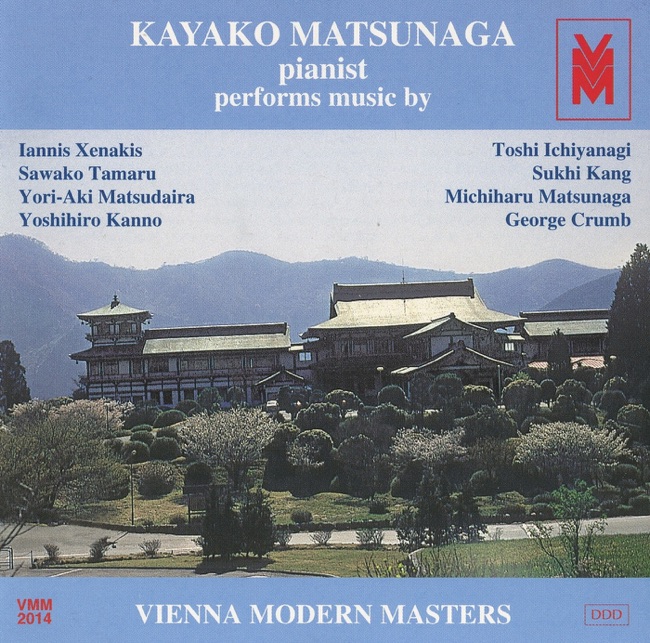
Role:ComposerBirth:1927Period:ContemporaryModernGenre:ConcertoKeyboardMichiharu Matsunaga was a Japanese composer who was born on December 25, 1935, in Tokyo, Japan. He was the youngest of three children and grew up in a family that was passionate about music. His father was a music teacher, and his mother was a pianist. Matsunaga's interest in music began at a young age, and he started playing the piano when he was just four years old. Matsunaga's musical education began at the Tokyo National University of Fine Arts and Music, where he studied composition under Tomojiro Ikenouchi. He graduated in 1959 and went on to study at the Hochschule für Musik in Munich, Germany, under the tutelage of Karlheinz Stockhausen. Matsunaga was deeply influenced by Stockhausen's avant-garde approach to music, and this influence can be seen in many of his later works. Matsunaga's early works were heavily influenced by traditional Japanese music, and he often incorporated elements of Japanese folk music into his compositions. One of his most famous early works is "Koto Concerto," which was composed in 1961 and features the traditional Japanese instrument, the koto. The piece was well-received and helped establish Matsunaga as a rising star in the world of classical music. In the 1960s, Matsunaga began to experiment with electronic music, and he became one of the pioneers of electronic music in Japan. He was particularly interested in the use of tape recorders and other electronic devices to manipulate sound. One of his most famous electronic works is "Electronic Symphony No. 1," which was composed in 1967 and features a combination of electronic and acoustic instruments. Matsunaga's music continued to evolve throughout the 1970s and 1980s, and he began to incorporate more avant-garde and experimental elements into his compositions. He was particularly interested in the use of chance and improvisation in music, and many of his later works feature elements of improvisation and indeterminacy. One of Matsunaga's most famous works from this period is "Music for 100 Automobiles," which was composed in 1974. The piece features 100 cars driving around a circular track, each with a different musical score playing on its radio. The result is a cacophony of sound that is both chaotic and beautiful. Matsunaga's later works also reflect his interest in Buddhism and Zen philosophy. He often incorporated elements of Zen meditation into his compositions, and many of his works feature long periods of silence and stillness. One of his most famous works from this period is "Silent Meditation," which was composed in 1983 and features a single note played on a piano for 45 minutes. Matsunaga continued to compose music until his death in 2006. He was a prolific composer who wrote over 200 works in his lifetime. His music was often challenging and experimental, but it was also deeply spiritual and reflective. Matsunaga's contributions to the world of classical music have been significant, and his legacy continues to inspire new generations of composers and musicians.More....
Recent Artist Music
Copyright Ⓒ 2013 Davinci Finger. All rights reseved
Service Terms & Policy