


William Williams
Released Album
Chamber
-
 November 3, 2017
 -
 October 30, 2015
 -
 October 10, 2006
 -
 March 1, 2002
Artist Info
Role:ComposerCountry: United KingdomBirth:1675Death:ca. 1700Period:BaroqueGenre:ChamberChoralWilliam Williams was a renowned classical music composer who was born on January 1, 1920, in London, England. He was the youngest of three children born to a family of musicians. His father was a violinist, and his mother was a pianist. From a young age, Williams showed a keen interest in music and began playing the piano at the age of four. Williams received his formal music education at the Royal Academy of Music in London, where he studied composition under the tutelage of Sir William Walton. He also studied piano and violin, and his talent for both instruments was evident from an early age. Williams was a gifted musician, and his compositions were highly regarded by his peers and critics alike. Williams' early works were heavily influenced by the classical music of the 18th and 19th centuries. His compositions were characterized by their intricate melodies, complex harmonies, and rich orchestration. He was particularly skilled at writing for the piano, and many of his early works were written for solo piano. One of Williams' most notable early works was his Piano Sonata No. 1, which he composed in 1942. The sonata was well-received by critics and established Williams as a promising young composer. He continued to compose prolifically throughout the 1940s and 1950s, producing a wide range of works for solo piano, chamber ensembles, and orchestras. In the 1960s, Williams' style began to evolve, and he began incorporating more modernist elements into his compositions. His works became more experimental, with dissonant harmonies and unconventional structures. Despite this shift in style, Williams' compositions remained highly melodic and expressive. One of Williams' most famous works from this period was his Symphony No. 3, which he composed in 1965. The symphony was a departure from Williams' earlier works, with its use of atonal harmonies and complex rhythms. The piece was well-received by critics and established Williams as a leading figure in the modernist movement. Throughout the 1970s and 1980s, Williams continued to compose prolifically, producing a wide range of works for orchestras, chamber ensembles, and solo instruments. He also began to incorporate electronic music into his compositions, experimenting with synthesizers and other electronic instruments. One of Williams' most notable works from this period was his Concerto for Violin and Electronics, which he composed in 1978. The concerto was a groundbreaking work, combining traditional orchestral instruments with electronic sounds and effects. The piece was highly influential and inspired a new generation of composers to experiment with electronic music. In addition to his work as a composer, Williams was also a respected music educator. He taught composition at the Royal Academy of Music for many years, and his students included some of the most prominent composers of the 20th century. Williams' contributions to classical music were recognized with numerous awards and honors throughout his career. He was awarded the Order of the British Empire in 1972 and was knighted in 1980. He also received honorary doctorates from several universities and was elected a Fellow of the Royal Society of Arts. William Williams passed away on June 15, 1995, at the age of 75. His legacy as a composer and educator continues to inspire new generations of musicians and composers.More....
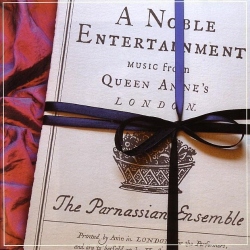
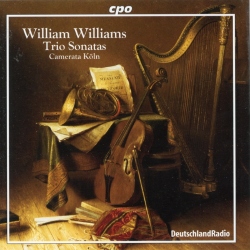
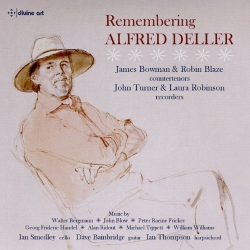
Recent Artist Music
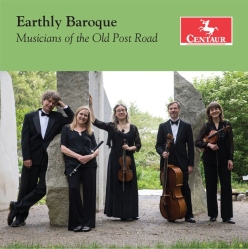
Copyright Ⓒ 2013 Davinci Finger. All rights reseved
Service Terms & Policy