


Wilhelm Gottlieb Hauff
Released Album
Chamber
-
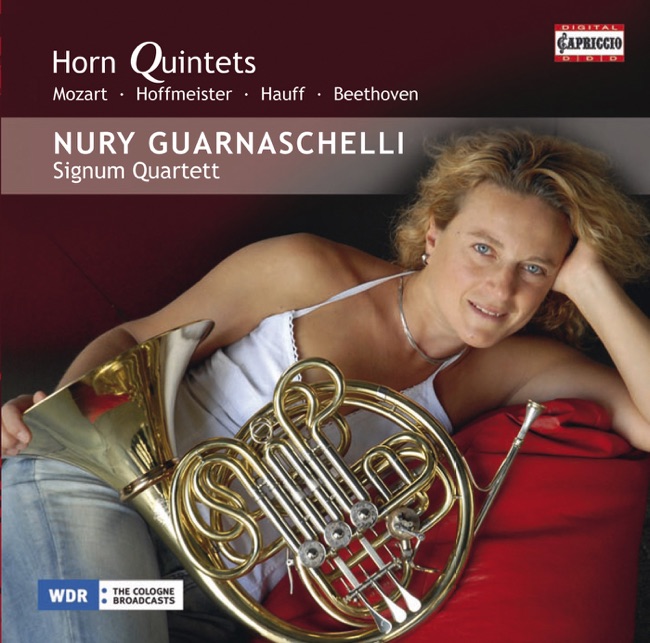 September 27, 2011
 -
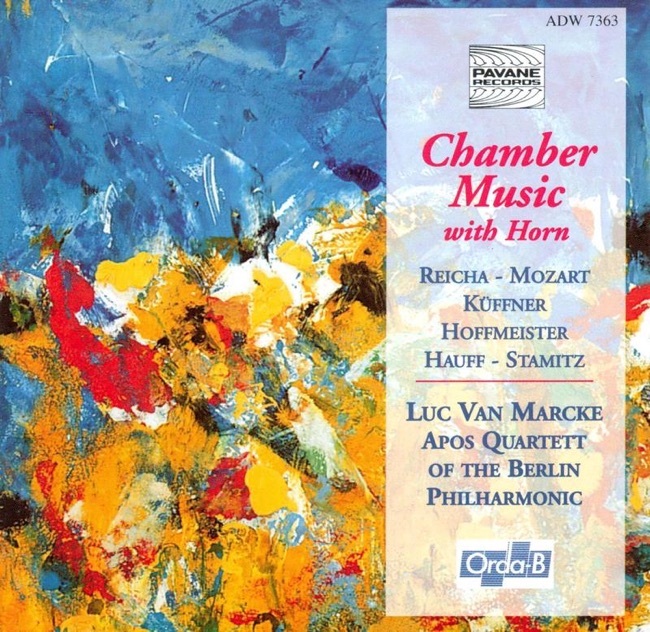 December 17, 1996
Artist Info
Role:ComposerBirth:1755Death:1807Period:ClassicalGenre:ChamberWilhelm Gottlieb Hauff was a German composer and music theorist who lived from 1750 to 1805. He was born in the town of Cannstatt, which is now a suburb of Stuttgart, in the state of Baden-Württemberg. Hauff was the son of a schoolteacher and showed an early aptitude for music. He began his musical education at a young age, studying with local musicians and eventually attending the University of Tübingen, where he studied music theory and composition. Hauff's early compositions were influenced by the music of Johann Sebastian Bach and other Baroque composers. He wrote a number of keyboard works, including preludes, fugues, and sonatas, as well as vocal music such as cantatas and motets. In 1775, Hauff was appointed court organist in Stuttgart, where he remained for the rest of his life. He also served as music director for the city's Stiftskirche, or collegiate church. Hauff's music from this period reflects the changing musical tastes of the time. He began to incorporate elements of the emerging Classical style into his compositions, such as the use of sonata form and the development of a more lyrical, expressive style. His keyboard works from this period include a set of six sonatas for harpsichord or piano, which were published in 1783. These works are notable for their use of ornamentation and their virtuosic keyboard writing. Hauff also wrote a number of vocal works during this period, including several operas. His most successful opera was "Die Entführung aus dem Serail," which premiered in Stuttgart in 1782. The opera was a German-language adaptation of Mozart's "Die Entführung aus dem Serail," and was well-received by audiences and critics alike. Hauff's other operas include "Der Dorfbarbier" and "Die Schwestern von Prag." In addition to his work as a composer, Hauff was also a respected music theorist. He wrote several treatises on music theory and composition, including "Grundriss der Musiktheorie" (Outline of Music Theory) and "Anleitung zur Composition" (Guide to Composition). These works were widely read and influential in their time, and helped to establish Hauff as an important figure in the development of music theory. Hauff's later works reflect his continued interest in the Classical style. He wrote a number of chamber music works, including string quartets and trios, as well as a set of six symphonies. These works are notable for their use of Classical forms and their elegant, refined style. Hauff's music from this period is often compared to that of Haydn and Mozart, and is considered to be among the finest examples of the Classical style in German music. Hauff died in Stuttgart in 1805, leaving behind a legacy of music that continues to be admired and studied today. His contributions to the development of music theory and composition were significant, and his music remains an important part of the German Classical repertoire. Hauff's works are notable for their elegance, refinement, and expressive lyricism, and continue to be performed and recorded by musicians around the world.More....
Recent Artist Music
Copyright Ⓒ 2013 Davinci Finger. All rights reseved
Service Terms & Policy