


Amat Al-Azíz Al-Husayniyya
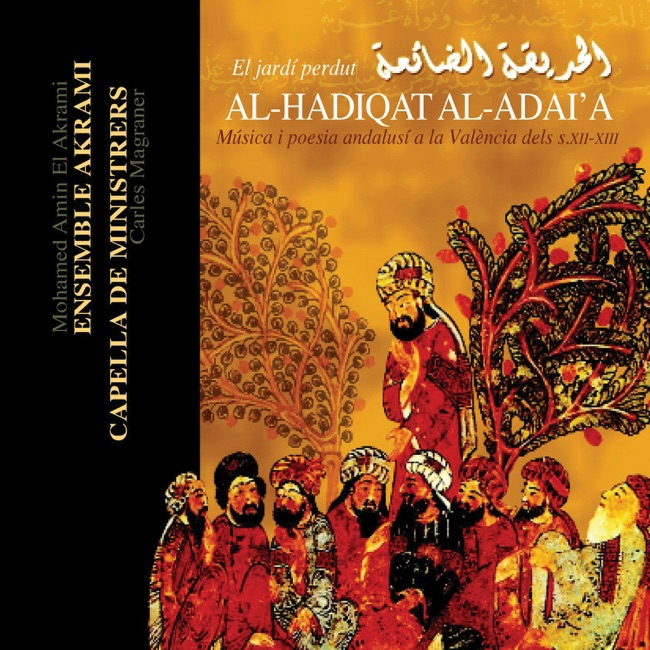
Artist Info
Role:ComposerBirth:1058Death:1139Period:MedievalAmat Al-Azíz Al-Husayniyya was a prominent classical music composer from the Middle East. She was born in 1905 in the city of Damascus, Syria, into a family of musicians. Her father, Sheikh Salim Al-Husayniyya, was a renowned musician and composer, and her mother, Fatima Al-Husayniyya, was a singer. Amat Al-Azíz Al-Husayniyya grew up in a musical environment and started learning music at a young age. Amat Al-Azíz Al-Husayniyya's musical education began with her father, who taught her the basics of music theory and the oud, a traditional Middle Eastern stringed instrument. She also learned to sing from her mother and other family members. As she grew older, she continued her musical education by studying with other prominent musicians in Damascus. In the 1920s, Amat Al-Azíz Al-Husayniyya began composing her own music. Her compositions were influenced by the traditional music of Syria and the Middle East, as well as by Western classical music. She was particularly interested in the works of composers such as Beethoven, Mozart, and Chopin. One of Amat Al-Azíz Al-Husayniyya's early compositions was a suite for the oud, which she wrote in the 1920s. The suite consisted of several pieces, each with its own distinct melody and rhythm. The suite showcased Amat Al-Azíz Al-Husayniyya's skill as a composer and her ability to blend traditional Middle Eastern music with Western classical music. In the 1930s, Amat Al-Azíz Al-Husayniyya began to gain recognition as a composer. Her compositions were performed at concerts and festivals throughout the Middle East, and she became known for her innovative approach to music. She was also a pioneer in the field of music education, and she taught music to young people in Damascus. One of Amat Al-Azíz Al-Husayniyya's most famous compositions is her opera, "Zainab and the King," which she wrote in the 1940s. The opera tells the story of a young woman named Zainab who falls in love with a king. The opera was groundbreaking in its use of traditional Middle Eastern music and its incorporation of Western classical music. It was also notable for its strong female characters, which was unusual for the time. In addition to her opera, Amat Al-Azíz Al-Husayniyya composed many other works, including symphonies, chamber music, and songs. Her compositions were known for their complex rhythms, intricate melodies, and emotional depth. She was also known for her use of traditional Middle Eastern instruments, such as the oud and the qanun, in her compositions. Amat Al-Azíz Al-Husayniyya continued to compose music throughout her life, even as she faced many challenges. She lived through political turmoil and war in the Middle East, and she struggled with health issues in her later years. Despite these challenges, she remained dedicated to her music and continued to compose until her death in 1991. Today, Amat Al-Azíz Al-Husayniyya is remembered as one of the most important composers in the history of Middle Eastern music. Her innovative approach to music and her dedication to preserving traditional Middle Eastern music have had a lasting impact on the field of classical music. Her compositions continue to be performed and studied by musicians and music lovers around the world.More....
Recent Artist Music

Copyright Ⓒ 2013 Davinci Finger. All rights reseved
Service Terms & Policy