


Alexander Knapp
Released Album
Vocal
-
-
 January 26, 2010
Artist Info
Role:ComposerPeriod:ModernGenre:ChoralOperaOrchestralSymphonyAlexander Knapp was a classical music composer born on May 22, 1945, in New York City. He grew up in a family of musicians, with his father being a violinist and his mother a pianist. From a young age, Knapp showed a keen interest in music and began playing the piano at the age of four. He later learned to play the violin and the viola, which would become his primary instrument. Knapp attended the Juilliard School of Music in New York City, where he studied composition with Vincent Persichetti and Roger Sessions. He also studied conducting with Jean Morel and Pierre Monteux. During his time at Juilliard, Knapp was awarded the prestigious Naumburg Scholarship, which allowed him to study in Europe for a year. After completing his studies at Juilliard, Knapp moved to Europe, where he spent several years studying and working as a composer and conductor. He lived in Paris, where he studied with Nadia Boulanger, and in Vienna, where he studied with Hans Swarowsky. During this time, Knapp also worked as a conductor, leading orchestras in France, Austria, and Germany. Knapp's early compositions were heavily influenced by the music of the Second Viennese School, particularly the works of Arnold Schoenberg and Alban Berg. His music was characterized by its atonal and dissonant harmonies, complex rhythms, and intricate textures. However, as he matured as a composer, Knapp began to incorporate more tonal elements into his music, while still retaining his distinctive style. One of Knapp's most significant works is his Symphony No. 1, which he composed in 1975. The symphony is a large-scale work for orchestra, consisting of four movements. The first movement is marked by its driving rhythms and angular melodies, while the second movement is more lyrical and introspective. The third movement is a scherzo, characterized by its playful and whimsical character, while the final movement is a grand and triumphant finale. Another notable work by Knapp is his String Quartet No. 1, which he composed in 1982. The quartet is a challenging and complex work, featuring intricate counterpoint and dense textures. The first movement is marked by its frenetic energy and dissonant harmonies, while the second movement is more introspective and contemplative. The third movement is a lively scherzo, while the final movement is a complex and virtuosic tour de force. In addition to his orchestral and chamber music, Knapp also composed several works for solo instruments. One of his most famous solo works is his Sonata for Viola, which he composed in 1978. The sonata is a challenging and virtuosic work, featuring complex rhythms and intricate textures. The first movement is marked by its driving energy and angular melodies, while the second movement is more lyrical and introspective. The final movement is a lively and playful scherzo, showcasing the viola's versatility and range. Throughout his career, Knapp was recognized for his contributions to the world of classical music. He was awarded numerous prizes and honors, including the Rome Prize, the Guggenheim Fellowship, and the American Academy of Arts and Letters Award. He was also a member of the American Academy of Arts and Sciences and the American Academy of Arts and Letters. Knapp continued to compose and perform music until his death on December 31, 1996, at the age of 51. His legacy lives on through his music, which continues to be performed and admired by musicians and audiences around the world.More....
Recent Artist Music
1
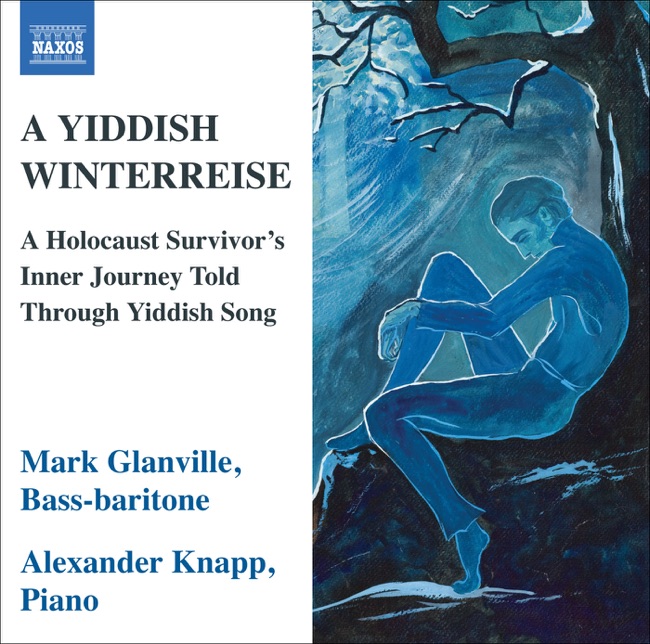
A Yiddish Winter Journey
Vos vet zayn az moshiach vet kumen (What will happen when Messiah comes?)
2:32
2
4:13
Copyright Ⓒ 2013 Davinci Finger. All rights reseved
Service Terms & Policy