


Charles Noblet
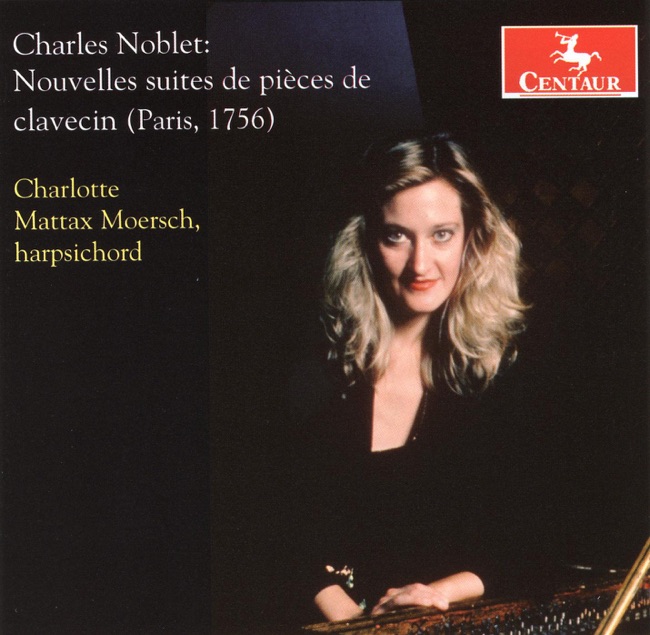
Artist Info
Role:ComposerCharles Noblet was a French composer born on January 15, 1866, in the city of Lyon. He was the son of a music teacher and grew up in a family that was passionate about music. His father recognized his son's talent at an early age and began teaching him music theory and piano. Charles showed a natural aptitude for music and quickly became proficient in playing the piano. At the age of 14, Charles was admitted to the Conservatoire de Lyon, where he studied under the tutelage of Antoine Marmontel. He excelled in his studies and won several awards for his compositions. In 1885, he moved to Paris to continue his studies at the Conservatoire de Paris, where he studied under the famous composer Jules Massenet. During his time in Paris, Charles Noblet became part of a group of young composers who were experimenting with new musical styles. He was particularly interested in the music of Richard Wagner and was influenced by his use of leitmotifs and chromaticism. Charles also became interested in the music of Claude Debussy and Maurice Ravel, who were part of the Impressionist movement in music. In 1892, Charles Noblet won the prestigious Prix de Rome, which allowed him to study music in Italy for four years. During his time in Italy, he was exposed to the music of Italian composers such as Giuseppe Verdi and Gioachino Rossini. He also traveled to Germany, where he studied the music of Johann Sebastian Bach and Ludwig van Beethoven. Charles Noblet returned to Paris in 1896 and began composing music in earnest. He was a prolific composer and wrote music in a variety of genres, including opera, ballet, chamber music, and orchestral music. His music was characterized by its lush harmonies, intricate melodies, and use of chromaticism. One of Charles Noblet's most famous works is his opera, "La Belle Hélène." The opera premiered in Paris in 1900 and was an instant success. It tells the story of the Trojan War from the perspective of Helen of Troy. The music is characterized by its use of leitmotifs and lush harmonies. The opera was performed throughout Europe and was later adapted into a film. Another notable work by Charles Noblet is his ballet, "Les Sylphides." The ballet premiered in Paris in 1909 and was choreographed by Michel Fokine. The music is a suite of pieces by Frédéric Chopin, arranged and orchestrated by Charles Noblet. The ballet is considered a masterpiece of the Romantic era and is still performed today. Charles Noblet also wrote several pieces of chamber music, including his String Quartet No. 1. The quartet was composed in 1905 and is characterized by its use of chromaticism and lush harmonies. The quartet is still performed today and is considered one of Charles Noblet's most important works. In addition to his compositions, Charles Noblet was also a respected music teacher. He taught at the Conservatoire de Paris from 1900 until his retirement in 1936. He was known for his rigorous teaching style and for his ability to inspire his students to reach their full potential. Charles Noblet died on December 22, 1940, in Paris. He left behind a legacy of beautiful music that continues to be performed and appreciated today. His music is characterized by its lush harmonies, intricate melodies, and use of chromaticism. He was a true master of his craft and is considered one of the most important composers of the late Romantic era.More....
Recent Artist Music

Copyright Ⓒ 2013 Davinci Finger. All rights reseved
Service Terms & Policy