


Gioseffo Zarlino
Released Album
Vocal
-
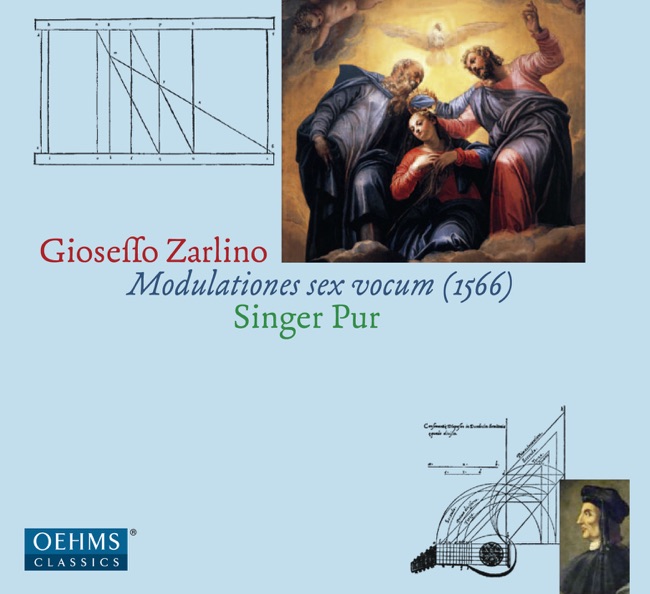 June 24, 2013
Choral
-
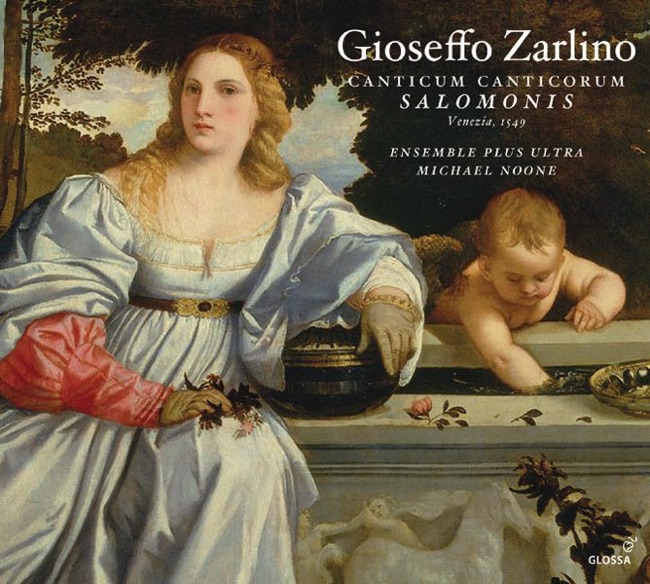 January 7, 2008
Artist Info
Role:ComposerCountry: ItalyBirth:ca. 1517 in Chioggia, ItalyDeath:February 4, 1590 in Venice, ItalyPeriod:RenaissanceGenre:ChoralGioseffo Zarlino was a prominent Italian composer and music theorist of the Renaissance era. He was born on January 31, 1517, in Chioggia, a small town near Venice, Italy. Zarlino was the son of a boatman and grew up in a humble family. However, he showed an early interest in music and began his musical education at a young age. Zarlino's musical education began in Venice, where he studied under the guidance of Adrian Willaert, a renowned composer and music theorist of the time. Willaert was the maestro di cappella at St. Mark's Basilica in Venice, and Zarlino was one of his most talented students. Under Willaert's tutelage, Zarlino learned the art of composition and music theory, which would later become his life's work. After completing his studies with Willaert, Zarlino began his career as a musician and composer. He worked as a singer and organist in various churches in Venice, including St. Mark's Basilica. During this time, he also began to write his own compositions, which were well-received by his contemporaries. Zarlino's most significant contribution to music was his work as a music theorist. He wrote several treatises on music theory, which became influential in the development of Western music. His most famous work was the "Istitutioni harmoniche," which was published in 1558. This treatise was a comprehensive study of music theory, covering topics such as harmony, counterpoint, and tuning systems. In the "Istitutioni harmoniche," Zarlino proposed a new tuning system based on the natural harmonics of the overtone series. This system, known as the "just intonation" system, was a significant departure from the previously used Pythagorean tuning system. Zarlino's system was more in line with the natural acoustics of sound and allowed for greater harmonic complexity in music. Zarlino's work as a music theorist was highly influential in the development of Western music. His ideas on harmony and counterpoint were adopted by many composers of the time, including Palestrina and Monteverdi. His treatises on music theory were also widely read and studied by musicians and composers for centuries after his death. In addition to his work as a music theorist, Zarlino was also a prolific composer. He wrote a variety of vocal and instrumental music, including masses, motets, madrigals, and instrumental pieces. His compositions were known for their intricate harmonies and contrapuntal textures, which were influenced by his work as a music theorist. One of Zarlino's most famous compositions was his "Missa Paschalis," which was written in 1565. This mass was written for the Easter season and was known for its complex harmonies and intricate counterpoint. The "Missa Paschalis" was widely performed and admired by Zarlino's contemporaries and is still performed today. Zarlino's other notable compositions include his "Modulationes sex vocum," a collection of six-part motets, and his "Diminutioni sopra la Spagna," a set of variations on a popular Spanish tune. His instrumental music includes works for keyboard, such as his "Intavolatura di organo," and works for lute, such as his "Intavolatura di liuto." Zarlino's contributions to music theory and composition were significant and influential. His work as a music theorist helped to shape the development of Western music, and his compositions were admired for their intricate harmonies and contrapuntal textures.More....
Recent Artist Music
Copyright Ⓒ 2013 Davinci Finger. All rights reseved
Service Terms & Policy