


Carlo Besozzi
Released Album
Concerto
-
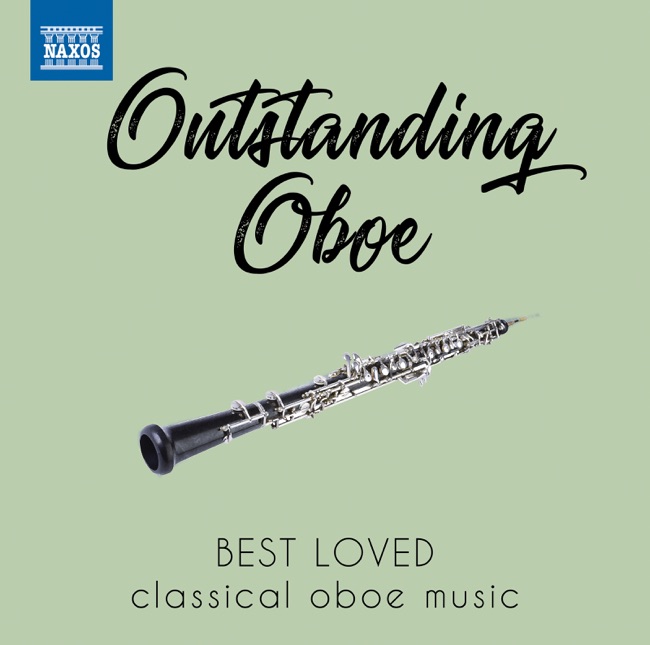 March 8, 2019
 -
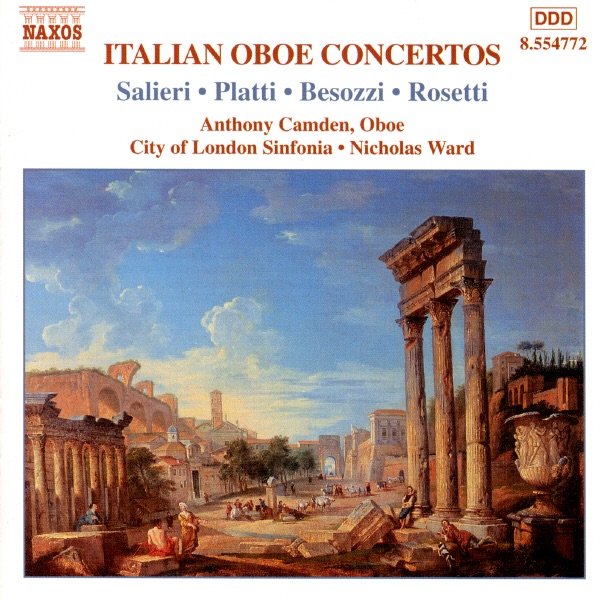 January 15, 2002
Chamber
-
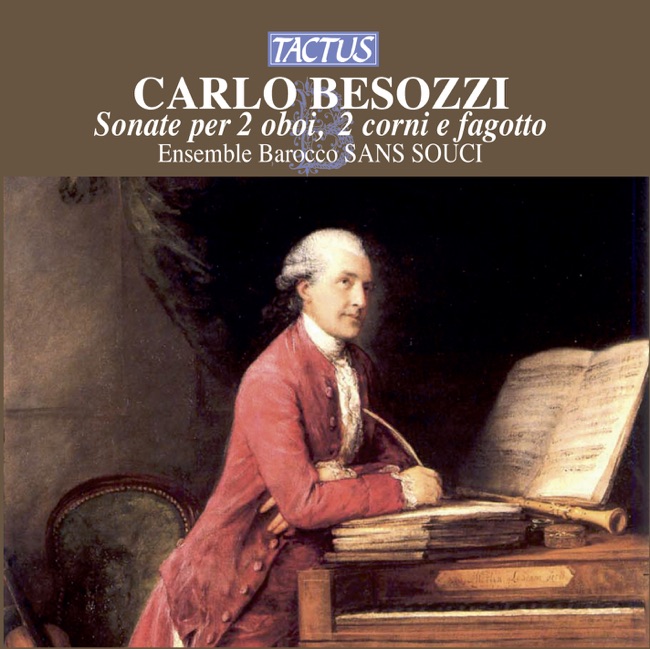 September 12, 2006
Artist Info
Role:ComposerCountry: ItalyBirth:1738Death:ca. 1798Period:ClassicalGenre:ConcertoCarlo Besozzi was an Italian composer and oboist who lived during the 18th century. He was born on February 4, 1738, in Milan, Italy, to a family of musicians. His father, Giovanni Battista Besozzi, was a renowned oboist and composer, and his brothers, Alessandro and Luigi, were also accomplished musicians. Carlo Besozzi began his musical education under the tutelage of his father, who taught him to play the oboe. He quickly showed a natural talent for the instrument and began performing in public at a young age. In 1758, he joined the orchestra of the Teatro Regio Ducal in Milan, where he played alongside his father and brothers. Besozzi's early compositions were primarily for the oboe, and he quickly gained a reputation as a skilled composer in his own right. In 1760, he published his first collection of oboe sonatas, which were well-received by critics and audiences alike. He continued to compose for the oboe throughout his career, and his works for the instrument are still performed and studied today. In addition to his work as a composer, Besozzi was also a highly sought-after oboist. He performed in many of the major cities of Europe, including Paris, London, and Vienna. He was particularly well-regarded in Vienna, where he played in the court orchestra of Emperor Joseph II. Besozzi's compositions were influenced by the music of his time, which was characterized by the development of the classical style. His works are known for their elegance and refinement, and they often feature virtuosic passages for the oboe. He was also known for his use of counterpoint, which he used to create complex and intricate musical textures. One of Besozzi's most famous works is his Oboe Concerto in C major, which was composed in the late 1760s. The concerto is a virtuosic showcase for the oboe, and it features a lively and energetic first movement, a lyrical second movement, and a lively and playful third movement. The concerto is still widely performed today and is considered one of the most important works in the oboe repertoire. Besozzi also composed a number of chamber works, including sonatas for various instruments and string quartets. His chamber music is characterized by its elegance and refinement, and it often features intricate counterpoint and virtuosic passages for the individual instruments. Besozzi's career was cut short by his untimely death in 1792. He was only 54 years old at the time of his death, but he had already made a significant contribution to the world of classical music. His works for the oboe and his chamber music are still performed and studied today, and they continue to be admired for their elegance, refinement, and virtuosity.More....
Recent Artist Music
Copyright Ⓒ 2013 Davinci Finger. All rights reseved
Service Terms & Policy