


Richard Felciano
Released Album
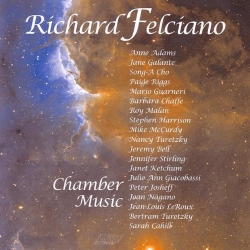
Chamber
-
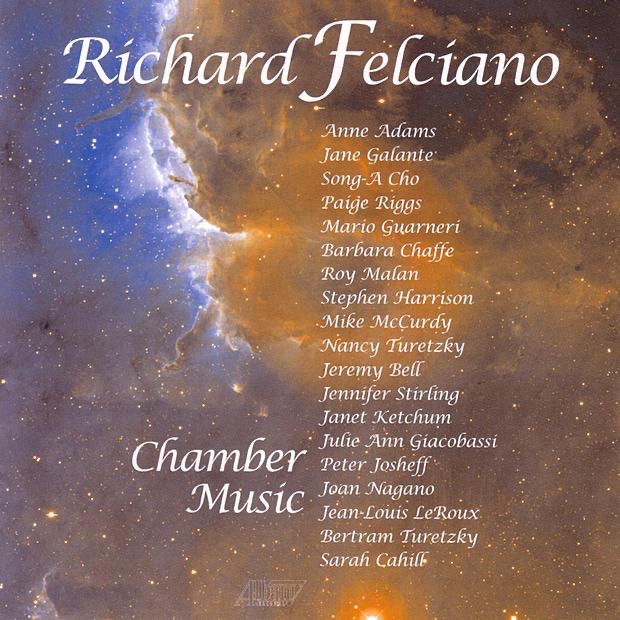 June 29, 2004
 -
 June 4, 2002
 -
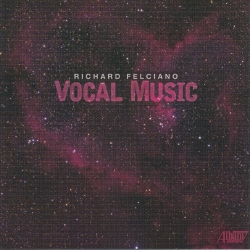
Vocal
-
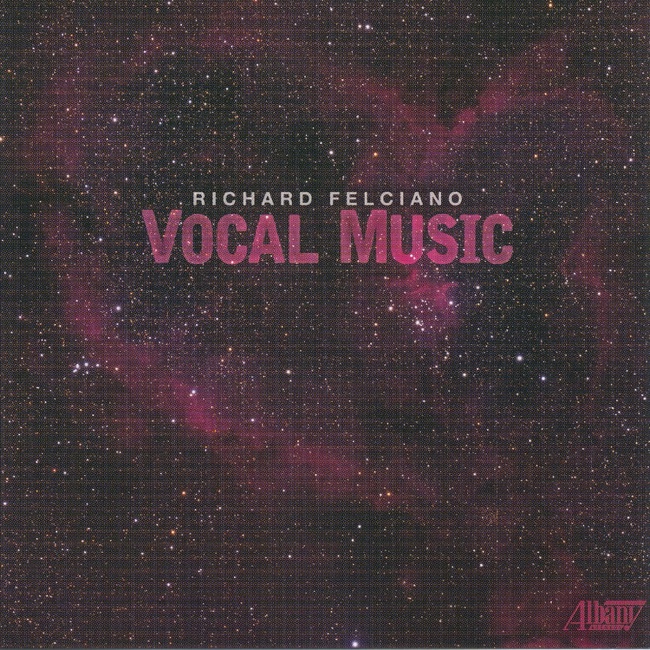 October 13, 2015
 -
 March 25, 2003
Artist Info
Role:Composer ConductorBirth:December 7, 1930Period:ContemporaryGenre:ChamberChoralConcertoSymphonyVocalRichard Felciano is an American composer who was born on January 19, 1930, in San Francisco, California. He grew up in a musical family, with his father being a violinist and his mother a pianist. Felciano began playing the piano at a young age and later learned to play the violin and viola. He attended the San Francisco Conservatory of Music, where he studied composition with Darius Milhaud and conducting with Pierre Monteux. Felciano's early compositions were influenced by the serialism of Arnold Schoenberg and Anton Webern. He also drew inspiration from the music of Igor Stravinsky and Bela Bartok. In 1954, Felciano won the Prix de Rome, which allowed him to study in Europe for three years. During this time, he studied with Luigi Dallapiccola in Italy and Olivier Messiaen in France. Felciano's compositions from this period include his String Quartet No. 1, which was premiered in 1955 by the Juilliard String Quartet. The quartet is a twelve-tone work that features complex rhythms and harmonies. Felciano's other works from this period include his Piano Sonata No. 1 and his Symphony No. 1. In the 1960s, Felciano's music began to incorporate elements of jazz and rock music. He was influenced by the music of John Coltrane and Jimi Hendrix, as well as the avant-garde jazz of Ornette Coleman. Felciano's compositions from this period include his String Quartet No. 2, which features improvisation and extended techniques, and his Symphony No. 2, which incorporates elements of rock music. Felciano's music from the 1970s and 1980s continued to explore new sounds and techniques. He began to incorporate electronic music into his compositions, using synthesizers and tape loops. He also experimented with microtonal music, using intervals smaller than the traditional half-step. Felciano's compositions from this period include his String Quartet No. 3, which features microtonal harmonies, and his Symphony No. 3, which incorporates electronic music. In addition to his work as a composer, Felciano was also a professor of music at the University of California, Santa Cruz. He taught composition and music theory, and he was known for his innovative teaching methods. Felciano retired from teaching in 1995 but continued to compose music. Felciano's later compositions include his String Quartet No. 4, which was premiered in 2000 by the Del Sol String Quartet. The quartet features a wide range of textures and colors, including pizzicato and harmonics. Felciano's other works from this period include his Piano Sonata No. 2 and his Symphony No. 4. Throughout his career, Felciano has been recognized for his contributions to contemporary classical music. He has received numerous awards and honors, including a Guggenheim Fellowship and a grant from the National Endowment for the Arts. His music has been performed by orchestras and ensembles around the world, and he has been commissioned to write works for a variety of performers and organizations. In conclusion, Richard Felciano is a composer who has made significant contributions to contemporary classical music. His compositions have explored a wide range of styles and techniques, from twelve-tone music to jazz and rock influences. Felciano's music has been performed and recorded by many prominent musicians and ensembles, and he has been recognized for his innovative teaching methods as well. Felciano's legacy as a composer and educator continues to inspire new generations of musicians and composers.More....
Recent Artist Music
1
14:1
7
The Angels of Turtle Island
The Angels of Turtle Island an Environment for Four Performers with Live Digital Spatial Processing
15:27
8
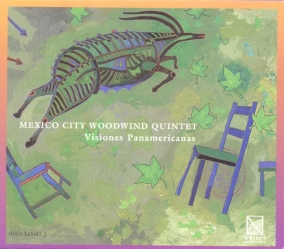
11:13
Copyright Ⓒ 2013 Davinci Finger. All rights reseved
Service Terms & Policy