


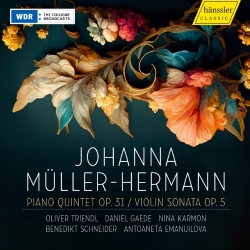
Johanna Müller-Hermann
Released Album
Chamber
-
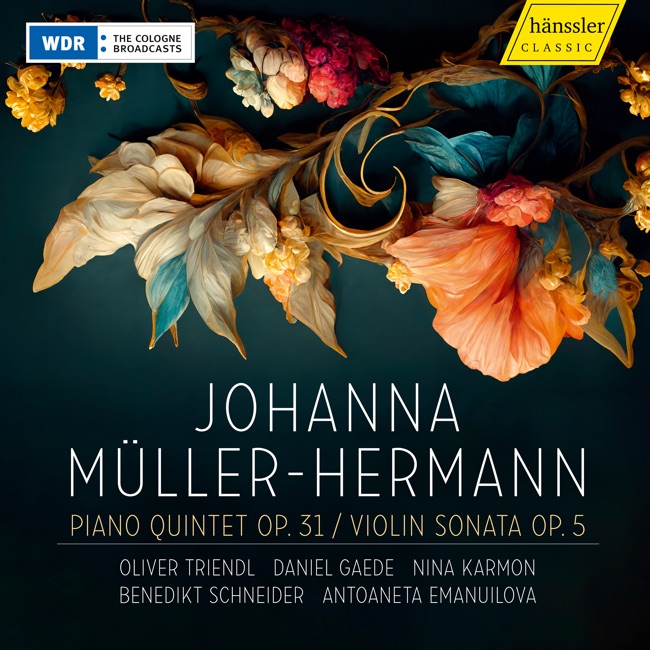
-
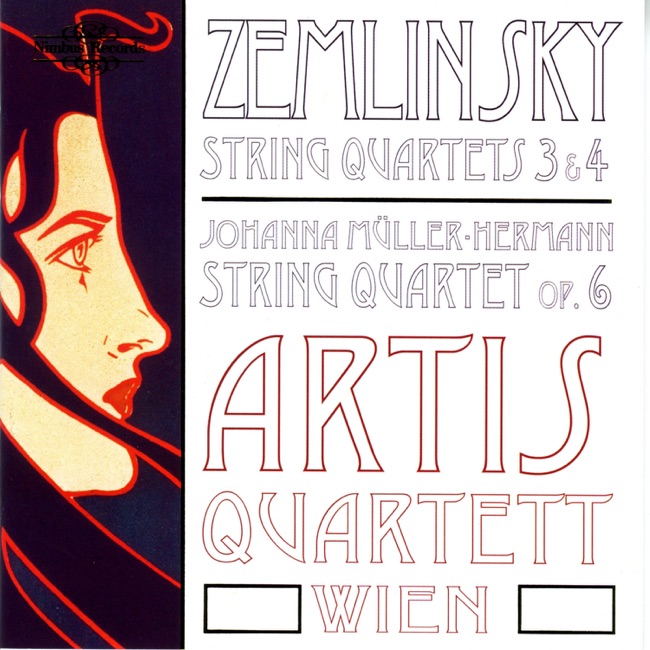 June 15, 1999
Artist Info
Role:ComposerGenre:ChamberOrchestralJohanna Müller-Hermann was a German composer and pianist who lived from 1868 to 1941. She was born in the city of Leipzig, which was a hub of musical activity during the 19th century. Her father was a music teacher, and her mother was a singer, so it was natural for Johanna to be exposed to music from a young age. She showed an early talent for the piano, and began taking lessons at the age of six. Johanna's musical education continued throughout her childhood and adolescence. She studied piano with several prominent teachers in Leipzig, including Carl Reinecke and Salomon Jadassohn. She also studied composition with Heinrich von Herzogenberg, who was a close friend of Johannes Brahms. Under Herzogenberg's guidance, Johanna developed a deep understanding of the principles of counterpoint and harmony, which would serve her well in her later compositions. In 1890, Johanna married the German composer and conductor Hermann Müller. The couple settled in Berlin, where they became part of the city's vibrant musical scene. Johanna continued to perform as a pianist, and also began to compose her own music. Her early works were mostly for piano, and showed a strong influence from the Romantic composers of the time, such as Brahms and Schumann. As Johanna's career progressed, she began to branch out into other genres. She wrote several songs, which were well-received by audiences and critics alike. She also composed chamber music, including a string quartet and a piano trio. Her chamber music showed a mastery of form and structure, as well as a keen sense of melody and harmony. One of Johanna's most significant works was her Piano Concerto in A minor, which she composed in 1905. The concerto was premiered in Berlin the following year, with Johanna herself as the soloist. The piece was a critical and popular success, and helped to establish Johanna's reputation as a composer of note. The concerto is notable for its virtuosic piano writing, as well as its lush orchestration and dramatic sense of pacing. Johanna continued to compose throughout her life, even as she faced personal and professional challenges. Her husband Hermann died in 1913, leaving her to raise their two children on her own. She also faced discrimination as a female composer in a male-dominated field. Despite these obstacles, Johanna remained committed to her art, and continued to produce works of great beauty and depth. One of Johanna's final works was her Symphony in C minor, which she composed in 1930. The symphony was premiered in Berlin the following year, and was well-received by audiences and critics. The piece is notable for its grandeur and sweep, as well as its use of thematic development and orchestral color. Johanna Müller-Hermann died in Berlin in 1941, at the age of 73. She left behind a legacy of beautiful and innovative music, which continues to be appreciated by musicians and audiences today. Her works are characterized by their lyricism, their harmonic richness, and their sense of emotional depth. Johanna Müller-Hermann was a true pioneer in the field of classical music, and her contributions to the art form will be remembered for generations to come.More....
Recent Artist Music

Copyright Ⓒ 2013 Davinci Finger. All rights reseved
Service Terms & Policy