


David Cope
Released Album
Keyboard
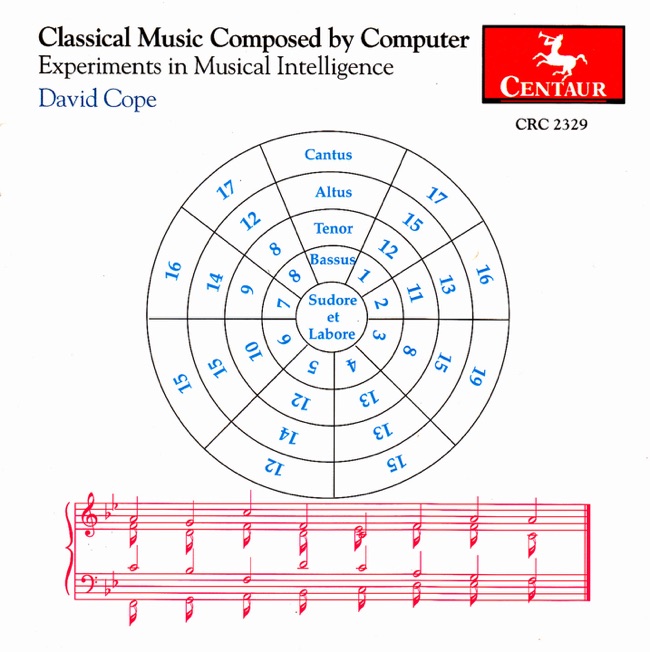
Concerto
-
 November 25, 2008
Artist Info
Role:Composer Conductor PerformerDavid Cope is a renowned American composer, music theorist, and computer scientist who has made significant contributions to the field of classical music. He was born on August 17, 1941, in San Francisco, California, and grew up in a musical family. His father was a jazz pianist, and his mother was a singer, which exposed him to music at an early age. Cope began his musical training at the age of six, learning to play the piano and the violin. He later studied composition at the University of California, Berkeley, where he earned his Bachelor's and Master's degrees in music. During his time at Berkeley, Cope was heavily influenced by the works of composers such as Arnold Schoenberg, Igor Stravinsky, and Anton Webern, who were known for their innovative approaches to music composition. After completing his studies, Cope began his career as a composer, and his works were well-received by critics and audiences alike. His early compositions were characterized by their use of serialism, a technique that involves organizing musical elements based on a predetermined series of pitches, rhythms, or other parameters. Cope's works from this period include "String Quartet No. 1" (1965) and "Sonata for Violin and Piano" (1967). In the 1970s, Cope began to experiment with computer-generated music, which would become a major focus of his career. He developed a program called Experiments in Musical Intelligence (EMI), which used artificial intelligence to analyze and generate music. EMI was groundbreaking in its ability to create music that sounded like it was composed by a human, and it attracted the attention of musicians and researchers around the world. Cope's work with EMI led to the creation of several notable compositions, including "Bach by Design" (1992), which features music that was generated by the program in the style of Johann Sebastian Bach. The piece was controversial at the time, as some critics argued that it was not true "Bach" music since it was not composed by the man himself. However, others praised the work for its innovative use of technology and its ability to create new music in the style of a great composer. In addition to his work with EMI, Cope has also composed several other notable works, including "Symphony No. 1" (1978), "String Quartet No. 2" (1980), and "Fantasia on a Theme by William Billings" (1983). His compositions are known for their complex harmonies, intricate rhythms, and innovative use of technology. Cope's contributions to the field of music have been recognized with numerous awards and honors. He has received grants from the National Endowment for the Arts and the Rockefeller Foundation, and he was awarded a Guggenheim Fellowship in 1981. In 2002, he was elected to the American Academy of Arts and Sciences, and in 2010, he was awarded the Lifetime Achievement Award from the International Society for Artificial Intelligence and Music. Despite his many accomplishments, Cope's career has not been without controversy. Some critics have accused him of "cheating" by using a computer program to generate music, arguing that true artistry comes from the human mind and not from a machine. However, Cope has defended his work, arguing that his use of technology is simply a tool to help him create music that is innovative and unique. In conclusion, David Cope is a highly influential composer and music theorist who has made significant contributions to the field of classical music.More....

Copyright Ⓒ 2013 Davinci Finger. All rights reseved
Service Terms & Policy