


A.F. Ricciusi
Artist Info
Role:ComposerA.F. Ricciusi was a classical music composer who was born on May 12, 1925, in Rome, Italy. He was the youngest of three children and grew up in a family that was passionate about music. His father was a violinist, and his mother was a pianist, so it was no surprise that Ricciusi showed an interest in music from a young age. Ricciusi began his musical education at the age of six when he started taking piano lessons. He quickly showed a talent for the instrument and began composing his own music by the age of ten. His parents recognized his talent and encouraged him to pursue a career in music. In 1943, Ricciusi enrolled at the Conservatorio di Santa Cecilia in Rome, where he studied composition with Goffredo Petrassi. Petrassi was a prominent Italian composer who had a significant influence on Ricciusi's musical style. Ricciusi also studied piano with Carlo Zecchi and conducting with Bernardino Molinari. After completing his studies at the Conservatorio di Santa Cecilia, Ricciusi began his career as a composer. He quickly gained recognition for his work and was awarded several prizes for his compositions. In 1951, he won the prestigious Premio Italia for his opera "La Fiamma." Throughout his career, Ricciusi composed music in a variety of genres, including opera, chamber music, orchestral music, and choral music. His music was characterized by its lyrical melodies, rich harmonies, and complex rhythms. He was also known for his use of unconventional instruments, such as the harpsichord and the mandolin. One of Ricciusi's most famous works is his opera "La Fiamma," which premiered in 1951. The opera tells the story of a young woman who is accused of witchcraft and sentenced to death. The music is dramatic and intense, with soaring melodies and powerful choral sections. The opera was a critical and commercial success and helped establish Ricciusi as one of Italy's leading composers. Another notable work by Ricciusi is his "Concerto for Mandolin and Orchestra," which was composed in 1962. The concerto is a virtuosic showcase for the mandolin, with fast-paced runs and intricate arpeggios. The music is also infused with Italian folk melodies, giving it a distinctly Italian flavor. Ricciusi's music was performed by some of the world's leading orchestras and conductors, including the London Symphony Orchestra, the New York Philharmonic, and Leonard Bernstein. He also collaborated with some of the world's leading soloists, including the pianist Martha Argerich and the violinist Salvatore Accardo. In addition to his work as a composer, Ricciusi was also a respected music educator. He taught composition at the Conservatorio di Santa Cecilia for many years and mentored several generations of young composers. Ricciusi continued to compose music well into his later years. His final work, "Concerto for Violin and Orchestra," was completed in 2002, just a few years before his death. The concerto is a beautiful and poignant work, with lyrical melodies and rich harmonies. A.F. Ricciusi was a prolific and talented composer who made significant contributions to the world of classical music. His music was characterized by its lyrical melodies, rich harmonies, and complex rhythms, and he was known for his use of unconventional instruments. His work continues to be performed and admired by musicians and audiences around the world.More....
Recent Artist Music
1
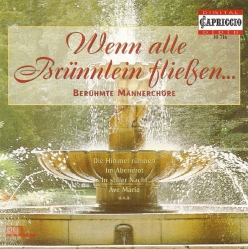
3:25
2
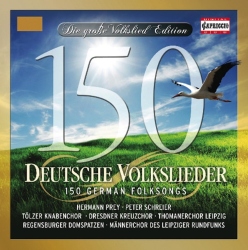
The funny musicians "It's a wonderful thing"
Die lustigen Musikanten (Ein herrlich Ding ist's)
3:24
Copyright Ⓒ 2013 Davinci Finger. All rights reseved
Service Terms & Policy