


Ursula Mamlok
Released Album
Chamber
-
 August 9, 2016
 -
 May 10, 2016
 -
 July 8, 2014
 -
 April 9, 2013
 -
 December 14, 2010
 -
 July 15, 2010
Keyboard
-
-
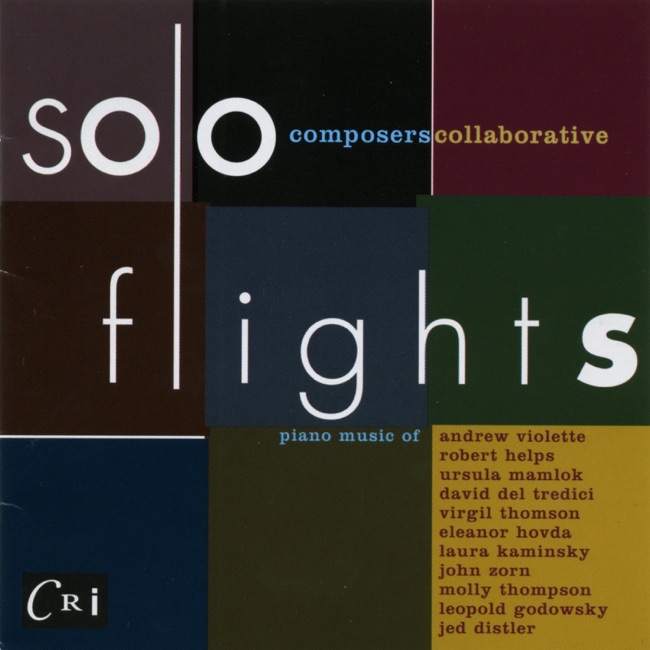 November 21, 2000
Vocal
-
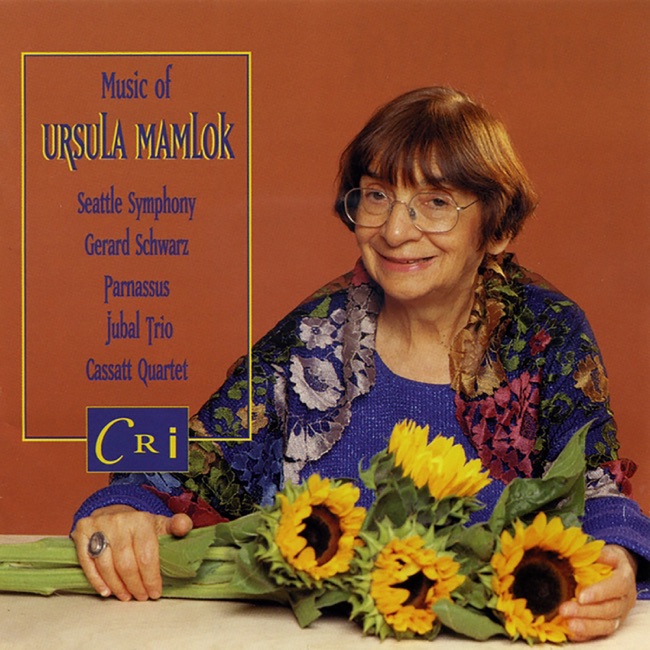 April 13, 1999
Artist Info
Role:ComposerCountry: GermanyBirth:February 1, 1923 in Berlin, GermanyDeath:May 4, 2016 in Berlin, GermanyPeriod:ContemporaryGenre:ChamberUrsula Mamlok was a German-born American composer who was known for her contributions to the world of classical music. She was born on January 1, 1923, in Berlin, Germany, to a Jewish family. Her father was a businessman, and her mother was a pianist. Mamlok showed an early interest in music and began playing the piano at the age of five. Mamlok's family fled Germany in 1938 due to the rise of the Nazi regime. They settled in Ecuador, where Mamlok continued her music education. She studied piano with a local teacher and also took lessons in music theory and composition. In 1940, Mamlok and her family moved to New York City, where she continued her music studies. Mamlok attended the Mannes School of Music in New York City, where she studied composition with George Szell and piano with Carl Friedberg. She also studied with Stefan Wolpe, a composer who had a significant influence on her work. Mamlok received her Bachelor of Music degree from the Juilliard School in 1946. Mamlok's early works were influenced by the Second Viennese School, a group of composers that included Arnold Schoenberg, Alban Berg, and Anton Webern. She was particularly interested in the use of serialism, a compositional technique that involves using a series of musical pitches to create a piece of music. Mamlok's early works, such as her String Quartet No. 1 (1950) and her Piano Sonata No. 1 (1951), were characterized by their use of serialism. In the 1950s, Mamlok began to experiment with other compositional techniques, such as aleatoric music, which involves introducing chance elements into a piece of music. Her works from this period, such as her Concerto for Oboe and Chamber Orchestra (1957) and her String Quartet No. 2 (1959), were characterized by their use of aleatoric techniques. Mamlok's music was well-received by critics and audiences alike. In 1959, she was awarded a Guggenheim Fellowship, which allowed her to travel to Europe and study with the composer Luigi Dallapiccola. Mamlok's works were performed by many prominent musicians and ensembles, including the New York Philharmonic, the Chicago Symphony Orchestra, and the Juilliard String Quartet. In the 1960s, Mamlok's music became more experimental. She began to incorporate electronic music into her compositions, and she also began to explore the use of non-traditional instruments, such as the harpsichord and the accordion. Her works from this period, such as her Concerto for Harpsichord and Chamber Orchestra (1967) and her String Quartet No. 3 (1969), were characterized by their use of unconventional instrumentation and electronic sounds. Mamlok continued to compose throughout the 1970s and 1980s. Her works from this period, such as her Concerto for Flute and Orchestra (1976) and her String Quartet No. 4 (1982), were characterized by their use of complex rhythms and harmonies. Mamlok's music was also influenced by her interest in literature and poetry. Many of her works were inspired by the writings of Samuel Beckett, Paul Celan, and Emily Dickinson. Mamlok's music was recognized with many awards and honors throughout her career. In 1986, she was awarded the Koussevitzky Music Foundation Commission, which allowed her to compose a new work for the Boston Symphony Orchestra. In 1994, she was awarded the Aaron Copland Award, which recognizes outstanding achievement in composition. Mamlok was also a member of the American Academy of Arts and Letters and the American Academy of Arts and Sciences.More....
Recent Artist Music
6
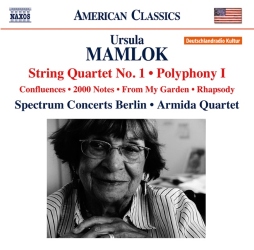
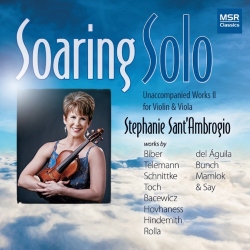
Confluences
1. Introduciton: Presto - Grazioso - Agitato - Still, as if suspended - Suddenly fast
2:32



Copyright Ⓒ 2013 Davinci Finger. All rights reseved
Service Terms & Policy