


Karl Gerok
Artist Info
Karl Gerok was a German classical music artist who was born on August 22, 1815, in Stuttgart, Germany. He was the son of a pastor and grew up in a religious household. From a young age, Gerok showed a great interest in music and began playing the piano and singing in his church choir. Gerok's musical talent was recognized early on, and he was sent to study music at the Stuttgart Conservatory. There, he studied under some of the most renowned music teachers of the time, including Johann Nepomuk Hummel and Carl Maria von Weber. Gerok's talent and dedication to music quickly became apparent, and he soon began to make a name for himself in the music world. In 1837, Gerok made his debut as a concert pianist, performing in Stuttgart to great acclaim. He continued to perform throughout Germany, and his reputation as a talented musician grew. In addition to his piano performances, Gerok also began to compose his own music, including several piano sonatas and songs. In 1842, Gerok was appointed as the music director of the court chapel in Stuttgart. This was a prestigious position, and it allowed Gerok to work with some of the most talented musicians of the time. He continued to compose and perform his own music, but he also began to focus on conducting and directing musical performances. One of Gerok's most notable achievements as a conductor was his work on the oratorio "Elias" by Felix Mendelssohn. Gerok conducted the premiere performance of the oratorio in Stuttgart in 1847, and it was a huge success. The performance was praised for its precision and emotional depth, and it cemented Gerok's reputation as a talented conductor. In addition to his work as a conductor, Gerok also continued to perform as a pianist and composer. He composed several more piano sonatas and songs, and he performed in concerts throughout Germany. He also began to teach music, and he became a respected music teacher in Stuttgart. Gerok's career continued to flourish throughout the 1850s and 1860s. He conducted several more successful performances of Mendelssohn's "Elias," and he also conducted performances of other major works, including Beethoven's Ninth Symphony and Handel's "Messiah." He continued to compose his own music, and he also wrote several books on music theory and history. In 1868, Gerok was appointed as the director of the Stuttgart Conservatory. This was a major achievement for Gerok, and it allowed him to shape the education of future generations of musicians. He worked tirelessly to improve the curriculum and facilities of the conservatory, and he also continued to teach music theory and history. Gerok's career continued to be successful until his death on January 30, 1890. He was mourned by the music world, and his legacy as a talented musician, conductor, composer, and teacher lives on to this day. Throughout his career, Gerok received many awards and honors for his contributions to the music world. He was awarded the Order of the Crown of Württemberg in 1869, and he was also awarded the title of "Royal Professor" in 1870. In 1885, he was awarded the title of "Doctor of Philosophy" by the University of Tübingen. In conclusion, Karl Gerok was a talented and influential classical music artist who made significant contributions to the music world. His career as a pianist, conductor, composer, and teacher spanned several decades, and he was recognized for his talent and dedication with numerous awards and honors.More....
Recent Artist Music
1
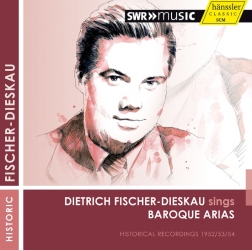
By the waters of Babylon we sat
An den Wassern zu Babel saßen wir, Kantate für Alt, Tenor, Bariton, 2 Violinen und Basso continuo
10:5
Copyright Ⓒ 2013 Davinci Finger. All rights reseved
Service Terms & Policy