


Halsey Stevens
Released Album
Chamber
-
 June 15, 2018
 -
 August 25, 2015
 -
 August 11, 2015
 -
 May 8, 2012
 -
 November 8, 2011
 -
 March 25, 2008
Choral
-
 December 30, 2003
 -
 December, 1994
 -
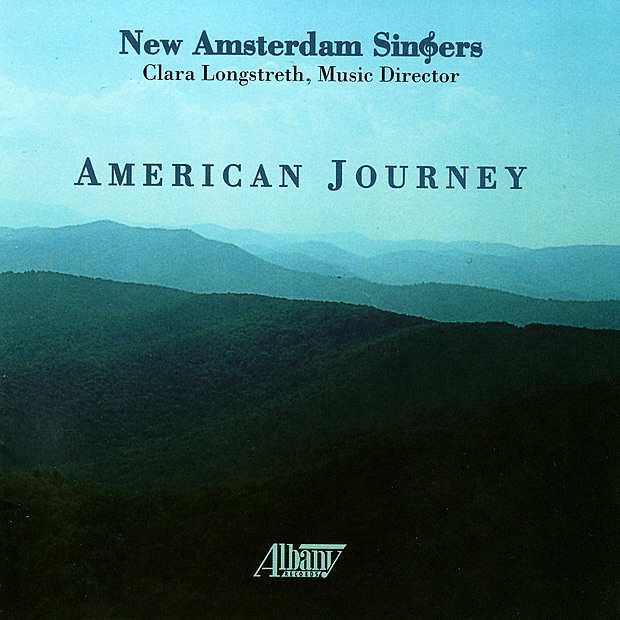 July, 1994
Artist Info
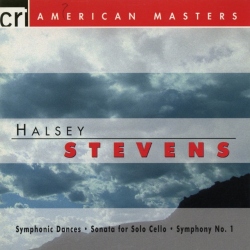
Role:ComposerBirth:December 3, 1908Death:1989Genre:ChamberChoralOrchestralVocalHalsey Stevens was an American composer and music educator who was born on December 3, 1908, in Scottsbluff, Nebraska. He was the son of a Methodist minister and grew up in a musical family. His mother was a pianist, and his father played the violin. Stevens began playing the piano at a young age and showed an early interest in music. Stevens attended the University of Nebraska, where he studied music theory and composition. He received his Bachelor of Music degree in 1930 and went on to study at the Eastman School of Music in Rochester, New York. There, he studied with Howard Hanson, a prominent American composer and conductor. Stevens received his Master of Music degree from Eastman in 1932. After completing his studies, Stevens worked as a music educator and composer. He taught at several universities, including the University of Southern California, the University of Michigan, and the University of California, Los Angeles. He also served as the president of the American Musicological Society from 1961 to 1963. Stevens was a prolific composer who wrote in a variety of genres, including orchestral music, chamber music, and vocal music. His music is characterized by its use of complex harmonies and rhythms, as well as its incorporation of elements of jazz and other popular music styles. One of Stevens' most famous works is his Symphony No. 1, which was premiered by the Los Angeles Philharmonic in 1943. The symphony is a large-scale work that features a wide range of musical ideas and textures. It is notable for its use of jazz-inspired rhythms and harmonies, as well as its incorporation of folk melodies. Stevens also wrote several works for chamber ensembles, including his String Quartet No. 2, which was premiered by the Juilliard String Quartet in 1952. The quartet is a complex and challenging work that features intricate counterpoint and shifting harmonies. In addition to his instrumental music, Stevens also wrote several vocal works, including his Three Songs for Soprano and Orchestra, which were premiered by the Los Angeles Philharmonic in 1950. The songs are set to texts by the American poet Edna St. Vincent Millay and feature Stevens' characteristic use of complex harmonies and rhythms. Stevens' music was well-received by critics and audiences alike. He was awarded several prestigious prizes and honors during his lifetime, including the Guggenheim Fellowship and the American Academy of Arts and Letters Award. He was also elected to the National Institute of Arts and Letters in 1962. Stevens continued to compose and teach until his death on January 20, 1989, in Los Angeles, California. His legacy as a composer and educator continues to be celebrated by musicians and music lovers around the world.More....
Recent Artist Music
8
4:51
10
1:55

Copyright Ⓒ 2013 Davinci Finger. All rights reseved
Service Terms & Policy