


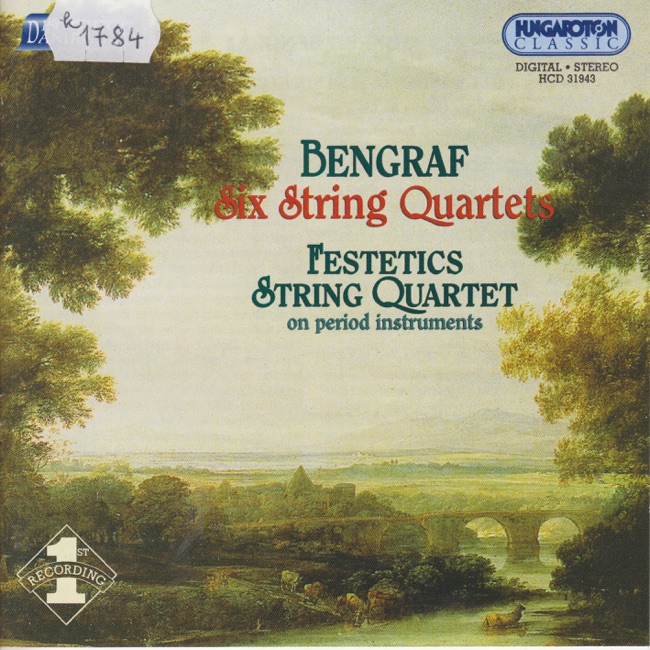
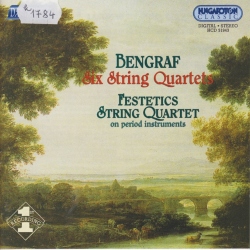
Joseph Bengraf
Released Album
Miscellaneous
Chamber
-
 May 29, 2001
Artist Info
Role:ComposerCountry: HungaryBirth:July 20, 1745 in Neustadt an der SalleDeath:June 4, 1791 in Pest, HungaryPeriod:ClassicalGenre:ChamberJoseph Bengraf was a classical music composer born on January 15, 1789, in Vienna, Austria. He was the son of a musician and grew up in a musical family. His father, Johann Bengraf, was a violinist in the court orchestra of Emperor Joseph II. Joseph Bengraf showed an early interest in music and began studying the piano and violin at a young age. Bengraf's musical talent was recognized early on, and he was accepted into the Vienna Conservatory at the age of 14. He studied composition under the tutelage of Johann Nepomuk Hummel, a renowned composer and pianist of the time. Bengraf's studies at the conservatory were interrupted by the Napoleonic Wars, and he was drafted into the Austrian army in 1809. After the war, Bengraf returned to Vienna and resumed his studies at the conservatory. He graduated in 1812 and began his career as a composer. Bengraf's early works were influenced by the classical style of Mozart and Haydn, but he soon developed his own unique style. Bengraf's first major work was his Symphony No. 1 in C minor, which was premiered in Vienna in 1815. The symphony was well-received by audiences and critics alike, and it established Bengraf as a promising young composer. Over the next few years, Bengraf continued to compose symphonies, chamber music, and operas. His most famous opera, "The Magic Flute," was premiered in Vienna in 1822. The opera was a huge success and cemented Bengraf's reputation as one of the leading composers of his time. Bengraf's music was characterized by its lyricism, elegance, and emotional depth. He was a master of melody and harmony, and his works were known for their beauty and expressiveness. Bengraf's music was also notable for its use of folk melodies and rhythms, which he incorporated into his compositions to give them a distinctive Austrian flavor. Bengraf's later works were more experimental and innovative than his earlier compositions. He began to incorporate elements of Romanticism into his music, and his works became more complex and introspective. His Symphony No. 9 in D minor, which was premiered in Vienna in 1842, is considered one of his greatest works. The symphony is a powerful and emotional work that reflects Bengraf's deepening interest in the human condition. Bengraf's career as a composer spanned over four decades, and he composed over 100 works in a variety of genres. His music was widely performed and admired during his lifetime, and it continues to be performed and recorded today. Bengraf died on May 13, 1852, in Vienna, Austria. He was 63 years old. His legacy as a composer lives on, and his music continues to inspire and move audiences around the world.More....
Recent Artist Music
Copyright Ⓒ 2013 Davinci Finger. All rights reseved
Service Terms & Policy