


Ernst Levy
Released Album
Keyboard
-
 April 1, 2011
Symphony
-
 January, 2012
 -
 January, 2012
 -
 April 25, 2006
 -
 December 24, 2002
Chamber

Orchestral
-
 October 24, 2000
Artist Info
Role:ComposerBirth:November 18, 1895 in Basel, SwitzerlandDeath:April 19, 1981 in Morges, SwitzerlandPeriod:ModernGenre:ConcertoKeyboardOrchestralSymphonyErnst Levy was a Swiss-American composer, pianist, and music theorist who was born on September 26, 1895, in Basel, Switzerland. He was the son of a prominent physician and grew up in a family that valued education and culture. From a young age, Levy showed a strong interest in music and began taking piano lessons at the age of six. He quickly demonstrated a natural talent for the instrument and began composing his own music by the age of ten. Levy's musical education began in earnest when he enrolled at the Basel Conservatory at the age of 14. There, he studied piano with Rudolf Waser and composition with Hans Huber. He also studied music theory with Heinrich Schwarz and Hermann Suter. Levy was a dedicated student and quickly distinguished himself as one of the most promising young musicians at the conservatory. After completing his studies at the Basel Conservatory, Levy continued his education at the Hochschule für Musik in Berlin. There, he studied composition with Arnold Schoenberg, who was one of the most influential composers of the 20th century. Levy was deeply influenced by Schoenberg's innovative approach to music, which emphasized atonality and the use of serialism. Levy's early compositions were heavily influenced by Schoenberg's style, but he soon began to develop his own unique voice as a composer. His music was characterized by its complex harmonies, intricate rhythms, and unconventional forms. Levy was particularly interested in exploring the possibilities of polytonality, which involves the use of multiple keys simultaneously. One of Levy's most significant early works was his Piano Sonata No. 1, which he composed in 1920. The piece is a tour-de-force of virtuosic piano writing, with complex rhythms and harmonies that push the boundaries of tonality. The sonata was well-received by critics and established Levy as a major new voice in contemporary music. In 1922, Levy moved to Paris, where he became part of a vibrant community of avant-garde artists and musicians. He continued to compose and perform his own music, as well as collaborating with other artists on interdisciplinary projects. Levy was particularly interested in the intersection of music and dance, and he worked closely with choreographers and dancers to create innovative new works. One of Levy's most significant collaborations during this period was with the dancer and choreographer Jean Borlin. Together, they created a groundbreaking new ballet called La Création du Monde, which premiered in 1923. The ballet was based on African mythology and featured a score by Levy that incorporated elements of jazz and blues music. The piece was a huge success and helped to establish Levy as one of the most innovative composers of his generation. In 1927, Levy moved to the United States, where he began teaching at the University of Chicago. He continued to compose and perform his own music, as well as teaching music theory and composition to a new generation of young musicians. Levy was a highly respected teacher, and many of his students went on to become successful composers and performers in their own right. One of Levy's most significant works from this period was his Symphony No. 1, which he composed in 1935. The piece is a complex and ambitious work that showcases Levy's mastery of orchestration and his innovative approach to harmony and form. The symphony was well-received by critics and established Levy as one of the leading composers of his generation.More....
Recent Artist Music
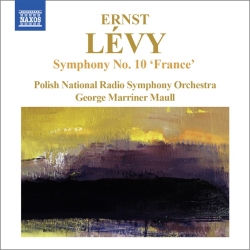
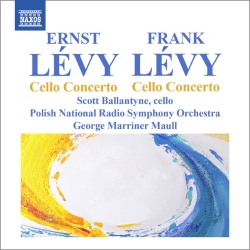


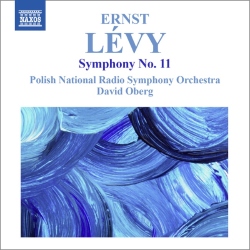

9
3:3

Copyright Ⓒ 2013 Davinci Finger. All rights reseved
Service Terms & Policy