


Michael Amann
Released Album
Keyboard
-
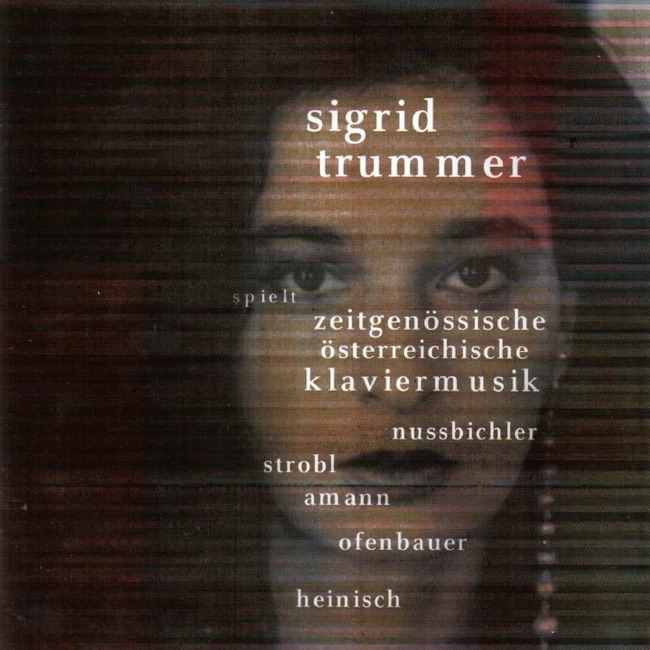 September 4, 2000
Artist Info
Role:ComposerMichael Amann was born on May 12, 1965, in Vienna, Austria. He grew up in a family of musicians, with his father being a renowned pianist and his mother a violinist. From a young age, Amann showed a keen interest in music and began playing the piano at the age of four. He was also exposed to a wide range of classical music, which helped shape his musical tastes and style. Amann's early musical education was primarily focused on the piano, and he quickly developed a talent for the instrument. He began composing his own music at the age of 10, and by the time he was a teenager, he had already written several pieces for piano and chamber ensembles. Amann's parents recognized his talent and encouraged him to pursue a career in music. After completing his secondary education, Amann enrolled at the Vienna Conservatory, where he studied composition under the tutelage of renowned composer Wolfgang Rihm. During his time at the conservatory, Amann developed a deep appreciation for the works of the Viennese classical composers, particularly Mozart and Beethoven. He also became interested in the music of the Second Viennese School, including the works of Arnold Schoenberg and Alban Berg. Amann's early compositions were heavily influenced by the music of these composers, and he began to develop his own unique style, which blended elements of classical and modern music. His works were characterized by their complex harmonies, intricate rhythms, and use of unconventional instruments and techniques. One of Amann's early works, the Piano Sonata No. 1, was premiered in Vienna in 1987 to critical acclaim. The piece showcased Amann's virtuosic piano playing and his ability to create complex, multi-layered compositions. The success of the sonata led to several commissions for Amann, including a string quartet and a piano concerto. In the early 1990s, Amann began to experiment with electronic music, incorporating synthesizers and other electronic instruments into his compositions. This marked a significant departure from his earlier works, which had been primarily acoustic. Amann's electronic compositions were characterized by their use of ambient sounds and textures, and their incorporation of elements of techno and other electronic genres. One of Amann's most notable works from this period was the electronic opera "The Machine," which premiered in Vienna in 1994. The opera was a collaboration between Amann and visual artist Peter Kogler, and featured a combination of live performers and electronic music and visuals. The piece was praised for its innovative use of technology and its exploration of the relationship between humans and machines. Throughout the 1990s and early 2000s, Amann continued to compose a wide range of works, including orchestral pieces, chamber music, and electronic compositions. He also collaborated with a number of other artists, including dancers, visual artists, and filmmakers. One of Amann's most notable works from this period was the "Vienna Symphony," which premiered in 2001. The piece was a tribute to the rich musical history of Vienna, and featured a combination of classical and modern elements. The symphony was praised for its lush orchestration and its ability to capture the essence of Vienna's musical heritage. In addition to his work as a composer, Amann was also a respected music educator.More....
Recent Artist Music
Copyright Ⓒ 2013 Davinci Finger. All rights reseved
Service Terms & Policy