


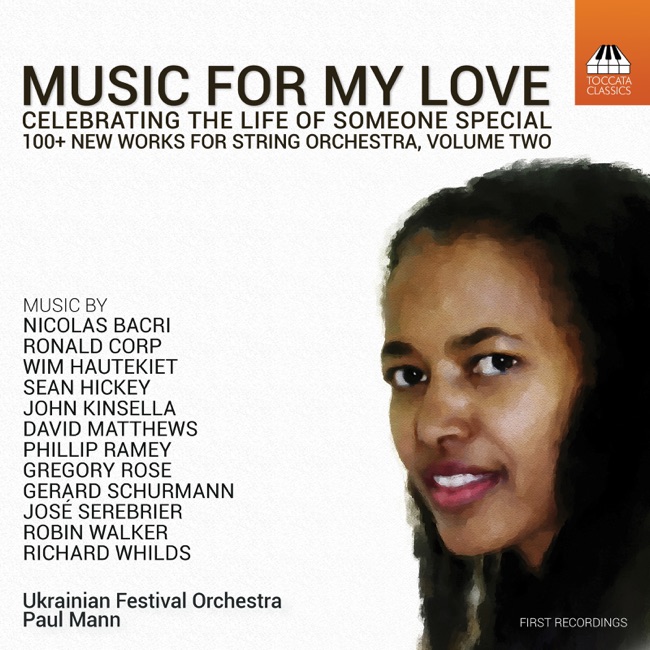
Richard Whilds
Released Album
Orchestral
Choral
-
 November 4, 2022
Artist Info
Role:ComposerRichard Whilds was a British classical music composer who was born on May 12, 1925, in London, England. He was the youngest of three children born to a family of musicians. His father was a violinist, and his mother was a pianist. Whilds showed an early interest in music and began playing the piano at the age of four. Whilds received his formal music education at the Royal Academy of Music in London, where he studied composition with William Alwyn and piano with Harold Craxton. He graduated with honors in 1946 and went on to pursue a career as a composer. Whilds' early works were heavily influenced by the music of his contemporaries, including Benjamin Britten and Michael Tippett. His first major composition, a piano concerto, was premiered in 1948 and received critical acclaim. This success led to commissions for other works, including a string quartet and a symphony. In the 1950s, Whilds began to experiment with serialism, a compositional technique that uses a series of pitches to create a musical structure. His use of serialism in his compositions was controversial at the time, as many critics felt that it was too academic and lacked emotional depth. However, Whilds continued to explore this technique, and his later works showed a greater balance between intellectual rigor and emotional expression. One of Whilds' most famous works is his opera, "The Tempest," which was premiered in 1962. The opera is based on Shakespeare's play of the same name and features a libretto by the composer. The work was praised for its innovative use of electronic music and its dramatic intensity. Whilds continued to compose throughout the 1960s and 1970s, producing a wide range of works, including chamber music, orchestral works, and choral music. He also became involved in music education, teaching composition at the Royal Academy of Music and serving as a visiting professor at several universities in the United States. In the 1980s, Whilds' music began to receive renewed attention, and he was recognized as one of the leading British composers of his generation. His works were performed by major orchestras and ensembles around the world, and he received numerous awards and honors for his contributions to music. Whilds' later works showed a greater interest in tonality and a more accessible style, while still retaining his characteristic intellectual rigor and emotional depth. His final work, a setting of the Requiem Mass, was completed in 1995, just months before his death. Richard Whilds' contributions to classical music were significant, both in terms of his innovative use of serialism and electronic music and his ability to create works that were both intellectually challenging and emotionally engaging. His legacy continues to inspire composers and musicians around the world, and his music remains an important part of the classical repertoire.More....
Recent Artist Music
1
9:12


Copyright Ⓒ 2013 Davinci Finger. All rights reseved
Service Terms & Policy