


Theodor Kullak
Released Album
Keyboard
-
 September 8, 2017
 -
 June 17, 2015
 -
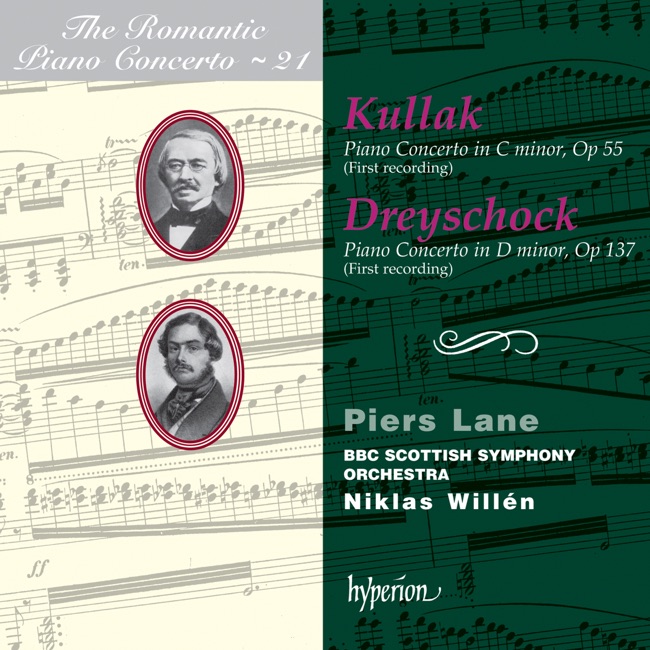 August, 1999
Artist Info
Role:ComposerBirth:August 12, 1818Death:March 1, 1882Period:RomanticGenre:KeyboardTheodor Kullak was a German pianist, composer, and music educator who lived from September 12, 1818, to March 1, 1882. He was born in Krotoschin, a town in the Grand Duchy of Posen, which is now part of Poland. Kullak was the son of a schoolteacher, and he showed an early interest in music. He began taking piano lessons at the age of six, and by the time he was ten, he was already performing in public. Kullak's family moved to Berlin when he was twelve, and he continued his musical studies there. He studied piano with Ludwig Berger and composition with Carl Friedrich Rungenhagen. Kullak was a prodigious talent, and he made his debut as a pianist at the age of fourteen. He quickly gained a reputation as one of the most promising young musicians in Berlin. In 1836, Kullak traveled to Paris to study with the renowned pianist and composer Frédéric Chopin. Chopin was impressed with Kullak's talent and agreed to take him on as a student. Kullak spent two years studying with Chopin, and the experience had a profound impact on his musical development. He returned to Berlin in 1838, and he quickly established himself as one of the leading pianists and composers in the city. Kullak's compositions were influenced by the Romantic style that was popular in the mid-19th century. He wrote music for piano, chamber ensembles, and orchestra. His piano music was particularly popular, and he wrote a number of virtuosic pieces that were designed to showcase his own technical abilities as a pianist. Some of his most famous piano works include the "Concerto in C minor," the "Sonata in B-flat minor," and the "Etudes de Salon." In addition to his work as a composer, Kullak was also a highly respected music educator. He founded the Neue Akademie der Tonkunst (New Academy of Music) in Berlin in 1855. The academy was designed to provide a comprehensive music education to students of all ages and abilities. Kullak was a firm believer in the importance of music education, and he worked tirelessly to promote the study of music in Germany. Kullak's contributions to music education were recognized by the Prussian government, and he was awarded the title of "Royal Professor" in 1864. He continued to teach at the Neue Akademie der Tonkunst until his death in 1882. Despite his many accomplishments, Kullak's life was not without its challenges. He suffered from poor health throughout his life, and he was forced to take extended breaks from his work on several occasions. He also struggled with financial difficulties, and he was forced to sell his personal music library to make ends meet. Despite these challenges, Kullak remained dedicated to his work as a musician and educator. He was a tireless advocate for the study of music, and his contributions to the field continue to be felt to this day. His legacy lives on through his compositions, his teaching, and the many students he inspired over the course of his career.More....
Recent Artist Music
1
16:24


Copyright Ⓒ 2013 Davinci Finger. All rights reseved
Service Terms & Policy