


Jean-Louis Duport
Released Album
Chamber
-
 April 17, 2020
 -
 April 17, 2012
 -
 June 5, 2007
 -
 October 26, 2004
 -
 November 30, 1999
 -
 March 26, 1996
Artist Info
Role:ComposerCountry: FranceBirth:October 4, 1749Death:September 7, 1819Period:ClassicalGenre:ChamberJean-Louis Duport was a French cellist and composer who lived from 1749 to 1819. He was born in Paris into a family of musicians, with his father and two older brothers also being cellists. Jean-Louis began his musical education at a young age, studying with his father and later with the renowned cellist Martin Berteau. Duport quickly gained a reputation as a virtuoso cellist, and in 1774 he was appointed to the court of King Louis XVI as a member of the royal orchestra. He remained in this position for over 30 years, during which time he also performed extensively throughout Europe, including in London, Vienna, and St. Petersburg. In addition to his performing career, Duport was also a prolific composer. He wrote numerous works for the cello, including concertos, sonatas, and études, as well as chamber music and vocal works. His compositions were highly regarded by his contemporaries, and he was considered one of the leading cellist-composers of his time. One of Duport's most famous works is his 21 Etudes for the Cello, which were published in 1806. These études are still widely used today as a standard part of the cello repertoire, and are considered essential for developing technical proficiency on the instrument. They are known for their challenging technical demands, as well as their musicality and expressive qualities. Duport's other notable works for the cello include his six cello concertos, which were composed between 1783 and 1809. These concertos showcase Duport's virtuosic playing style, as well as his skill as a composer. They are characterized by their lyrical melodies, intricate passagework, and dramatic contrasts. In addition to his works for the cello, Duport also composed chamber music, including string quartets and trios. His String Quartet in G Major, Op. 4, is particularly noteworthy for its innovative use of the cello as a solo instrument, with the cello taking on a more prominent role than was typical for the time. Duport's vocal works include several cantatas and songs, as well as a setting of the Requiem Mass. His Requiem, which was composed in 1816, is notable for its use of the cello as a solo instrument in the opening movement, and for its expressive and dramatic qualities. Throughout his career, Duport was known for his technical mastery of the cello, as well as his musicality and expressive playing style. He was also highly regarded as a teacher, and his students included some of the leading cellists of the next generation, including Friedrich Dotzauer and Bernhard Romberg. Jean-Louis Duport died in 1819 in Paris, leaving behind a legacy as one of the most important cellist-composers of the late 18th and early 19th centuries. His works continue to be performed and studied today, and his influence can be seen in the works of later composers such as Frédéric Chopin and Robert Schumann.More....
Recent Artist Music
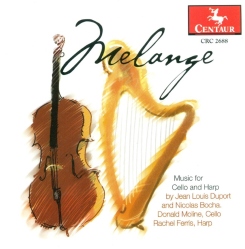
5
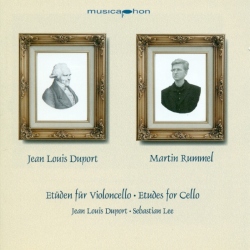
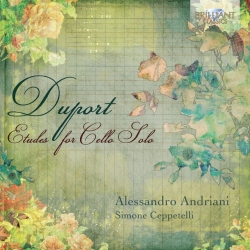
Exercises (21) following the fingering test
Nr. 12 in E major. Allegro moderato presqu' Andante
9:30

Copyright Ⓒ 2013 Davinci Finger. All rights reseved
Service Terms & Policy