


Vissarion Shebalin
Released Album
Chamber
-
 September 7, 2018
 -
 July 27, 2018
 -
 January 1, 2005
Orchestral
-
 February 7, 2020
 -
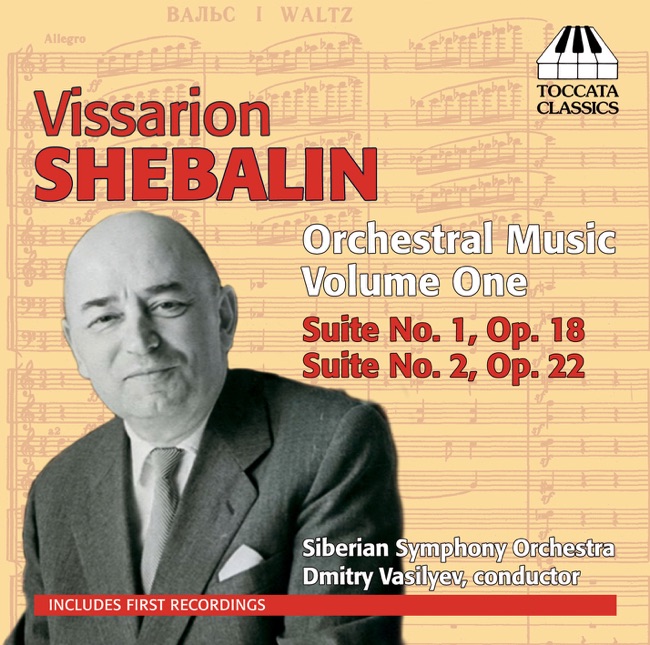 October 29, 2012
Symphony
-
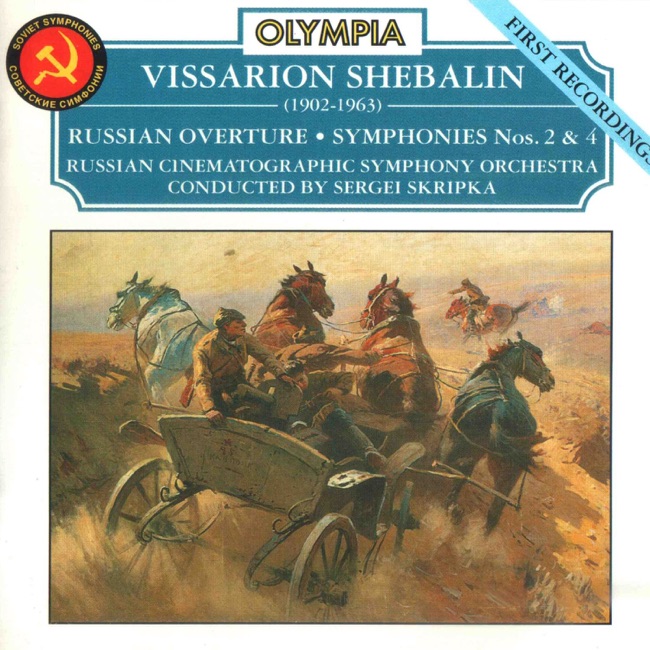 October 10, 1997
 -
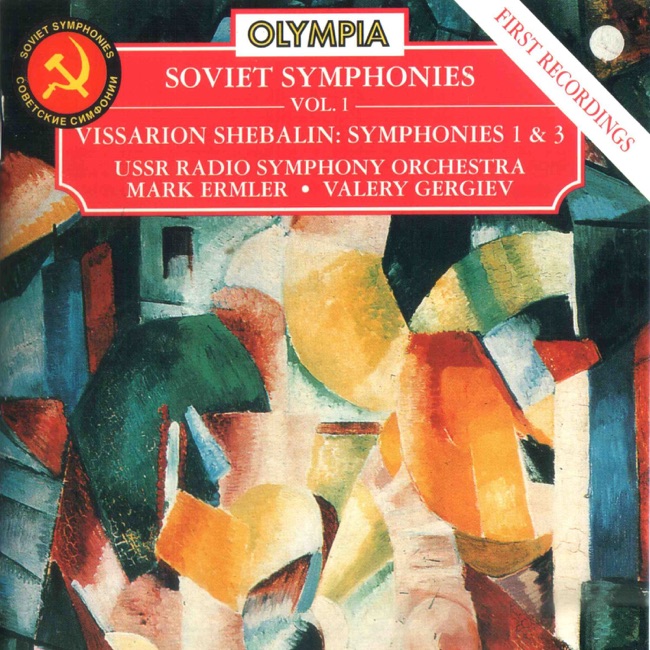 October 10, 1995
Artist Info
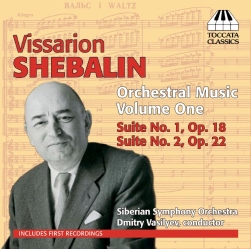
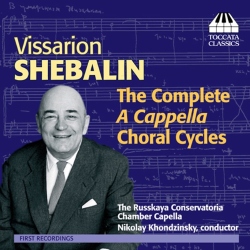
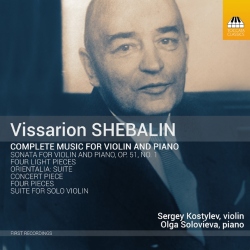
Role:ComposerCountry: RussiaBirth:June 11, 1902 in Omsk, RussiaDeath:May 28, 1963 in Moscow, RussiaPeriod:ModernGenre:ChamberOrchestralSymphonyVissarion Yakovlevich Shebalin was a prominent Soviet composer and music educator who was born on 11 June 1902 in Omsk, Siberia. He was the son of a railway engineer and grew up in a family that was passionate about music. Shebalin's mother was a pianist, and his father played the violin. As a child, Shebalin showed a keen interest in music and began taking piano lessons at the age of six. Shebalin's family moved to Moscow in 1912, where he continued his music education. He studied piano with Konstantin Igumnov and composition with Nikolai Myaskovsky at the Moscow Conservatory. Shebalin was a talented student and won several awards for his compositions while still a student. In 1925, he graduated from the conservatory with honors. After graduation, Shebalin began working as a composer and music educator. He taught at the Moscow Conservatory from 1927 to 1935 and was appointed as the head of the composition department in 1935. Shebalin was a respected teacher and mentor to many young composers, including Dmitri Shostakovich. Shebalin's music was heavily influenced by the Soviet government's cultural policies, which emphasized the importance of music as a tool for propaganda. His early works were characterized by their optimistic and patriotic themes, and he often incorporated folk melodies and rhythms into his compositions. Shebalin's music was also influenced by the works of his contemporaries, including Shostakovich and Sergei Prokofiev. One of Shebalin's most significant works is his Symphony No. 1, which he composed in 1935. The symphony was well-received by audiences and critics alike and was praised for its innovative use of orchestration and its powerful emotional impact. Shebalin's Symphony No. 1 was also notable for its use of folk melodies and rhythms, which were incorporated into the work in a way that was both subtle and effective. In 1937, Shebalin was appointed as the head of the Moscow Conservatory, a position he held until 1948. During his tenure, he worked to modernize the conservatory's curriculum and to promote the works of Soviet composers. Shebalin also continued to compose during this time, and his works from this period were characterized by their more complex harmonies and darker themes. One of Shebalin's most significant works from this period is his Symphony No. 2, which he composed in 1941. The symphony was written during the early days of World War II and was dedicated to the Soviet people. Shebalin's Symphony No. 2 was notable for its use of dissonance and its powerful emotional impact, which was heightened by the wartime context in which it was composed. After the war, Shebalin continued to compose and teach. He was awarded the Stalin Prize in 1946 for his Symphony No. 3, which was composed in 1944. Shebalin's Symphony No. 3 was notable for its use of folk melodies and its optimistic themes, which were seen as a reflection of the Soviet Union's post-war reconstruction efforts. In the 1950s, Shebalin's music fell out of favor with the Soviet government, which was becoming increasingly conservative in its cultural policies. Shebalin's works were criticized for their formalism and lack of adherence to socialist realism, which was the dominant aesthetic of the time. Despite this, Shebalin continued to compose and teach, and his works from this period were characterized by their more experimental and avant-garde qualities. One of Shebalin's most significant works from this period is his Symphony No.More....
Recent Artist Music
4
8:9
8
11:42

Copyright Ⓒ 2013 Davinci Finger. All rights reseved
Service Terms & Policy