


Elena Firsova
Released Album
Chamber
-
 January 12, 2018
 -
 September 4, 2015
 -
 March 11, 2002
 -
 May 29, 2001
Vocal
-
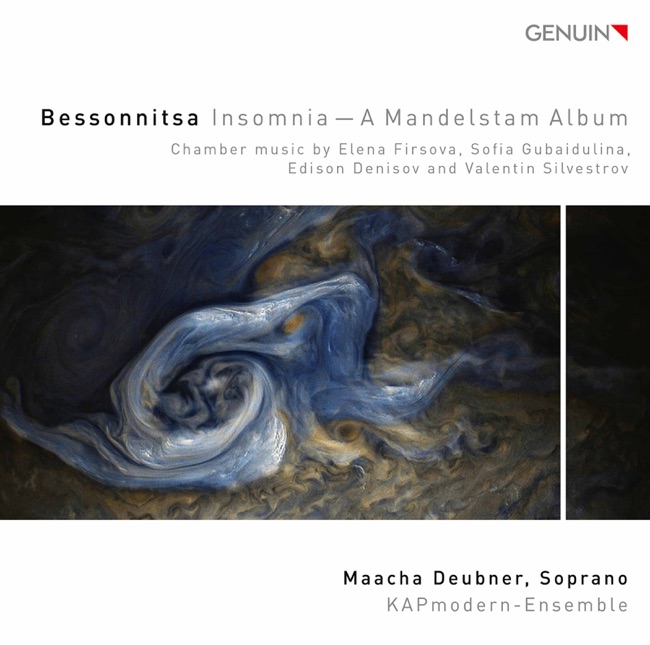 May 7, 2021
Orchestral
-
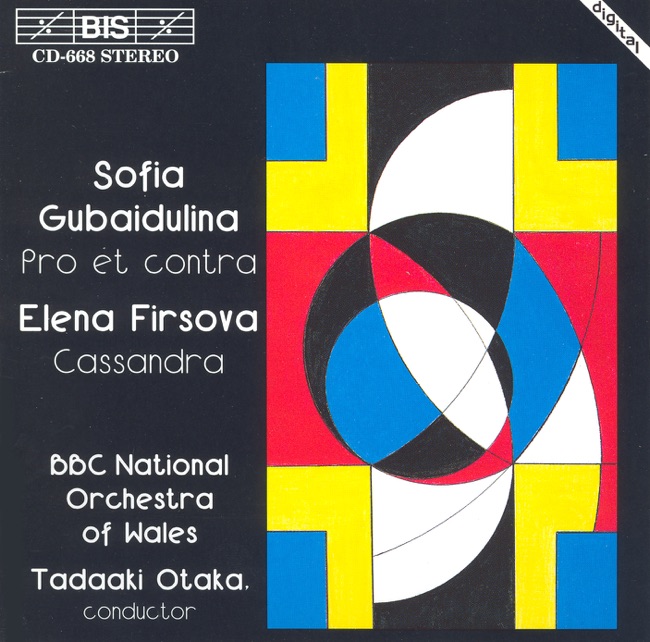 October 14, 1994
Artist Info
Role:ComposerCountry: RussiaBirth:March 21, 1950 in Leningrad, RussiaPeriod:ContemporaryGenre:ChamberKeyboardElena Firsova is a Russian-born composer who has made a significant contribution to the world of classical music. She was born on April 21, 1950, in Leningrad (now St. Petersburg), Russia. Her father, Boris Firsov, was a well-known composer and musicologist, and her mother, Zoya Firsova, was a pianist. Elena grew up in a musical family and was exposed to classical music from a young age. Elena Firsova began her musical education at the Leningrad Conservatory, where she studied composition with Boris Arapov and piano with Tatiana Kravchenko. She graduated in 1973 with a degree in composition. After graduation, she continued her studies at the Moscow Conservatory, where she studied with Edison Denisov and Yuri Kholopov. Firsova's early works were influenced by the avant-garde music of the 1960s and 1970s. Her music was characterized by complex rhythms, dissonant harmonies, and unconventional forms. However, over time, her style evolved, and she began to incorporate more traditional elements into her music. One of Firsova's early works, "Music for Flute, Harp, and Strings," was written in 1975 and premiered in Leningrad the same year. The piece is characterized by its use of extended techniques, such as flutter-tonguing and glissandi, and its unconventional form, which consists of a series of short, contrasting sections. In the 1980s, Firsova's music became more tonal and melodic. She began to incorporate elements of Russian folk music and Orthodox chant into her compositions. One of her most famous works from this period is "Requiem," which was written in memory of her father, who died in 1971. The piece is scored for soprano, mezzo-soprano, tenor, baritone, and orchestra and is based on texts from the Russian Orthodox liturgy. Another notable work from this period is "Concerto for Violin and Orchestra," which was written in 1986 and premiered in Moscow the same year. The piece is characterized by its use of folk melodies and its virtuosic violin writing. In the 1990s, Firsova's music became more introspective and personal. She began to explore themes of loss, memory, and identity in her compositions. One of her most famous works from this period is "The Stone Guest," which was written in 1990 and premiered in London the same year. The piece is based on the story of Don Juan and is scored for soprano, mezzo-soprano, tenor, baritone, and orchestra. Firsova's music has been performed by some of the world's leading orchestras and ensembles, including the London Symphony Orchestra, the BBC Symphony Orchestra, and the Moscow Philharmonic Orchestra. She has also received numerous awards and honors for her work, including the State Prize of the Russian Federation in 1995. In addition to her work as a composer, Firsova is also a respected musicologist and has written extensively on the music of her father, Boris Firsov. She has also translated the works of several Western composers, including Arnold Schoenberg and Alban Berg, into Russian. In conclusion, Elena Firsova is a highly respected composer who has made a significant contribution to the world of classical music. Her music is characterized by its use of unconventional forms, extended techniques, and traditional elements, and it has been performed by some of the world's leading orchestras and ensembles. Firsova's work has evolved over time, reflecting her personal and artistic growth, and she continues to be an important figure in the world of contemporary classical music.More....
Recent Artist Music
Copyright Ⓒ 2013 Davinci Finger. All rights reseved
Service Terms & Policy