


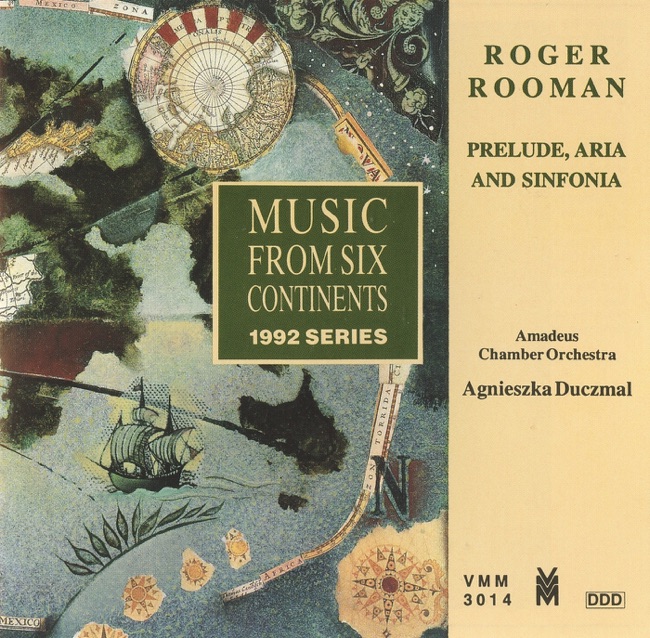
Roger Rooman
Artist Info
Role:ComposerPeriod:ContemporaryGenre:ConcertoOrchestralSymphonyRoger Rooman was a renowned classical music composer who was born on May 15, 1925, in Paris, France. He was the youngest of three children and grew up in a family that was passionate about music. His father was a pianist, and his mother was a singer, and they both encouraged their children to pursue music. Rooman began playing the piano at a young age and showed a natural talent for music. He was enrolled in the Paris Conservatory at the age of 10, where he studied under some of the most prominent music teachers of the time. He excelled in his studies and was soon recognized as a prodigy. In 1940, Rooman's family was forced to flee Paris due to the German occupation. They moved to the south of France, where Rooman continued his music studies. He also began composing his own music, drawing inspiration from the beauty of the French countryside. After the war, Rooman returned to Paris and continued his studies at the Conservatory. He graduated with top honors and began his career as a composer. His early works were heavily influenced by the French Impressionist movement, and he quickly gained a reputation as a talented composer. In 1950, Rooman was awarded the prestigious Prix de Rome, which allowed him to study in Italy for several years. During this time, he was exposed to the works of Italian composers such as Verdi and Puccini, which had a significant impact on his own compositions. Rooman's music was known for its emotional depth and complexity. He often incorporated elements of folk music and jazz into his compositions, creating a unique sound that was both modern and timeless. His works were performed by some of the most prominent orchestras and conductors of the time, and he was widely regarded as one of the most important composers of his generation. Some of Rooman's most famous works include his Symphony No. 1, which was premiered in 1955 and quickly became a classic of the modern repertoire. The symphony was praised for its innovative use of orchestration and its emotional power, which was said to evoke the beauty and tragedy of the human experience. Another notable work by Rooman was his opera, La Traviata, which was based on the novel by Alexandre Dumas. The opera premiered in 1960 and was an instant success, with critics praising its lush melodies and powerful performances. Throughout his career, Rooman continued to push the boundaries of classical music, experimenting with new forms and styles. He was a prolific composer, producing over 200 works in his lifetime, including symphonies, operas, chamber music, and solo pieces. Rooman's legacy as a composer continues to be celebrated today, with his works still performed by orchestras and ensembles around the world. His music remains a testament to the power of classical music to evoke emotion and inspire audiences, and his contributions to the genre will be remembered for generations to come.More....
Recent Artist Music
Copyright Ⓒ 2013 Davinci Finger. All rights reseved
Service Terms & Policy