


Philip Cannon
Released Album
Vocal
-
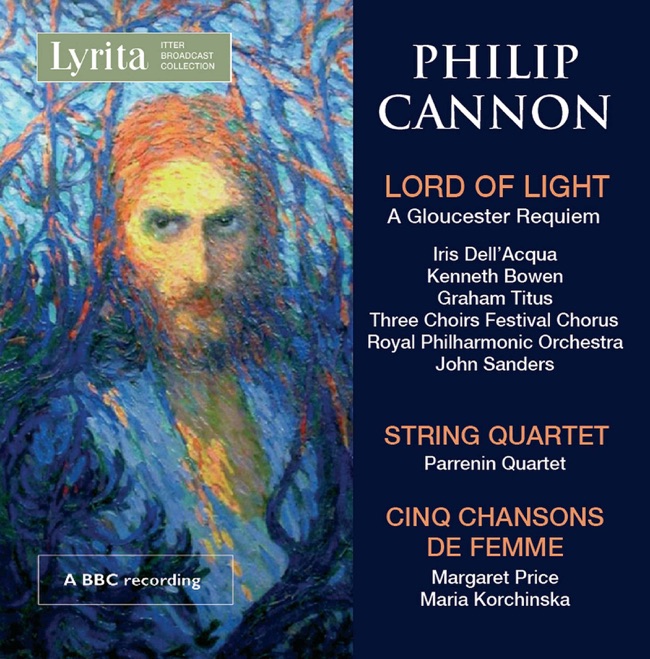
-
 April 8, 2003
Artist Info
Role:ComposerPeriod:ContemporaryGenre:ChamberVocalPhilip Cannon was a renowned classical music composer who was born on May 12, 1925, in London, England. He was the youngest of three children born to a family of musicians. His father was a violinist, and his mother was a pianist. From a young age, Cannon was exposed to music and began playing the piano at the age of four. Cannon's parents recognized his talent and enrolled him in the Royal Academy of Music in London when he was just six years old. He studied piano, composition, and conducting at the academy and showed great promise in all three areas. He was a prodigious talent and won numerous awards and accolades during his time at the academy. After completing his studies at the Royal Academy of Music, Cannon began his career as a composer. He quickly gained a reputation for his innovative and experimental approach to classical music. His early works were heavily influenced by the avant-garde movement, and he was known for his use of dissonance and unconventional harmonies. One of Cannon's early works, "Symphony No. 1," was premiered in 1950 and received critical acclaim. The piece was noted for its complex rhythms and intricate orchestration. It was a sign of things to come, as Cannon continued to push the boundaries of classical music throughout his career. In the 1950s and 1960s, Cannon became increasingly interested in electronic music. He began experimenting with tape loops and synthesizers, creating a unique sound that was ahead of its time. His electronic works, such as "Electronic Symphony" and "Electronic Concerto," were groundbreaking and helped to establish him as a pioneer in the field of electronic music. Despite his interest in electronic music, Cannon never abandoned traditional classical music. He continued to compose symphonies, concertos, and chamber music throughout his career. His works were performed by some of the world's leading orchestras and ensembles, including the London Symphony Orchestra, the Berlin Philharmonic, and the New York Philharmonic. One of Cannon's most famous works is his "Concerto for Piano and Orchestra." The piece was composed in 1962 and is considered one of the greatest piano concertos of the 20th century. It is noted for its virtuosic piano writing and its use of unconventional harmonies. The concerto has been performed by many of the world's leading pianists, including Vladimir Horowitz and Martha Argerich. Another notable work by Cannon is his "String Quartet No. 3." The piece was composed in 1975 and is considered one of his most personal works. It is a deeply emotional and introspective piece that reflects Cannon's struggles with depression and anxiety. The quartet has been performed by many of the world's leading string quartets, including the Emerson Quartet and the Tokyo Quartet. Cannon's music was not only innovative and groundbreaking, but it was also deeply personal. He often drew inspiration from his own life experiences, and his music was a reflection of his innermost thoughts and emotions. His works were often characterized by their intensity and emotional depth. Cannon continued to compose music until his death in 1995. He left behind a legacy of innovative and groundbreaking works that continue to inspire and influence musicians today. His music was a testament to his creativity and his unwavering commitment to pushing the boundaries of classical music.More....
Recent Artist Music
Copyright Ⓒ 2013 Davinci Finger. All rights reseved
Service Terms & Policy