


Daniel Friderici
Released Album
Vocal
Artist Info
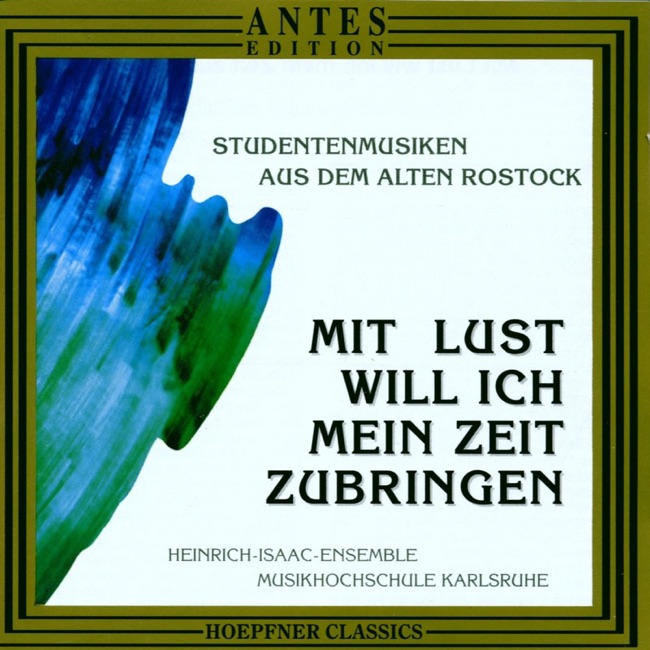
Role:ComposerCountry: GermanyBirth:1584Death:September 23, 1638Period:BaroqueDaniel Friderici was a German composer who lived during the Baroque era. He was born in 1597 in the town of Königsberg, which is now known as Kaliningrad, Russia. Friderici was the son of a Lutheran pastor, and he grew up in a musical family. His father was a skilled musician who taught him how to play the organ and the violin. Friderici began his musical education at a young age, and he quickly showed a talent for composition. He studied music theory and composition with some of the most prominent musicians of his time, including Johann Stobäus and Heinrich Schütz. Friderici also studied theology at the University of Königsberg, where he received a degree in 1620. After completing his studies, Friderici began his career as a musician and composer. He worked as an organist and choir director in various churches throughout Germany, including in the cities of Danzig, Königsberg, and Rostock. Friderici was known for his skill as an organist, and he was often called upon to perform at important events and ceremonies. Friderici's music was heavily influenced by the Baroque style, which was characterized by its ornate melodies, complex harmonies, and elaborate instrumentation. His compositions were often written for the church, and they included hymns, cantatas, and other sacred music. Friderici was also known for his instrumental music, including his sonatas for violin and his suites for harpsichord. One of Friderici's most famous works is his "Passion According to St. John," which was written in 1640. This piece is a musical retelling of the story of Jesus' crucifixion, and it is considered one of the most important works of the Baroque era. The "Passion According to St. John" is a complex and emotional work, with intricate harmonies and powerful melodies that convey the drama and intensity of the story. Friderici's other notable works include his "Te Deum," which is a hymn of praise that is often performed at religious services, and his "Magnificat," which is a musical setting of the biblical text known as the Song of Mary. Friderici's music was highly regarded during his lifetime, and it continues to be performed and studied by musicians and scholars today. Despite his success as a composer, Friderici's life was not without its challenges. He lived during a time of political and religious upheaval in Germany, and he was forced to navigate the complex and often dangerous world of church politics. Friderici was also affected by the Thirty Years' War, which devastated much of Germany and caused widespread suffering and hardship. Friderici died in 1663 at the age of 66. His legacy as a composer and musician lives on, however, and his music continues to be celebrated and performed by musicians around the world. Friderici's contributions to the Baroque era helped to shape the course of classical music, and his work remains an important part of the musical canon.More....
Recent Artist Music
Copyright Ⓒ 2013 Davinci Finger. All rights reseved
Service Terms & Policy