


Vassos Nicolaou
Released Album
Chamber
-
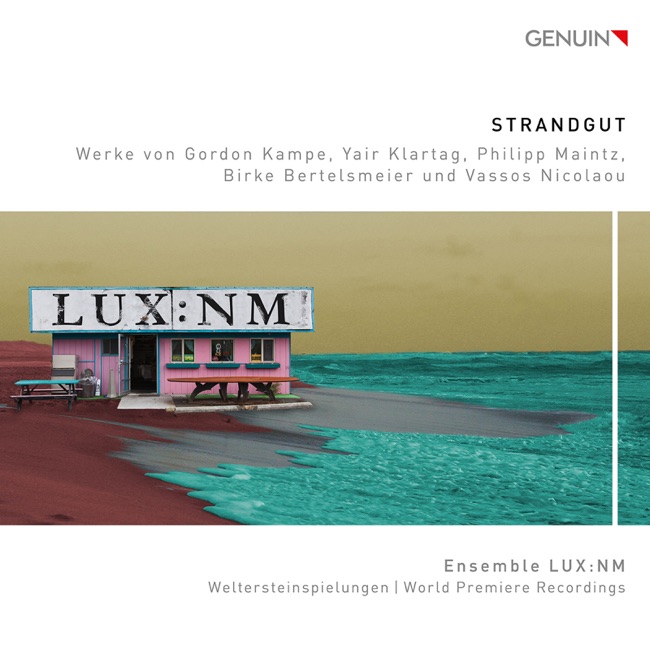 November 2, 2018
 -
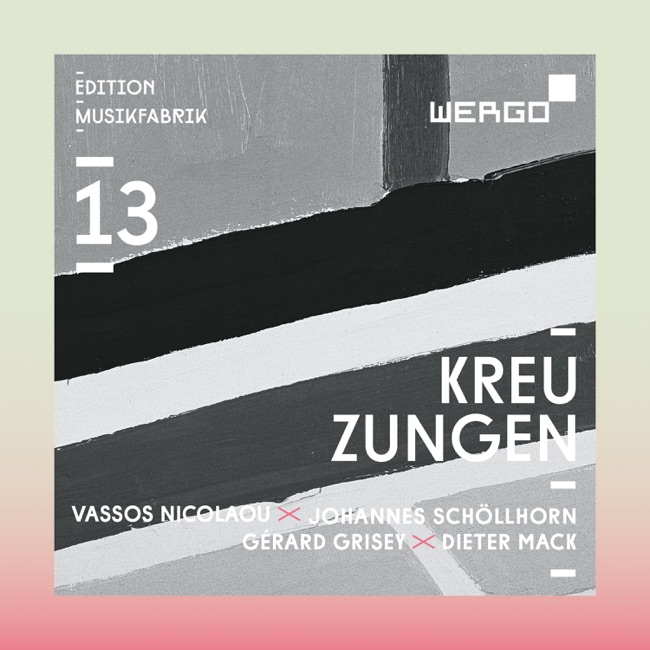 March 2, 2018
Artist Info
Role:ComposerVassos Nicolaou was a Cypriot composer who was born on October 10, 1929, in the village of Kato Drys, Larnaca, Cyprus. He was the youngest of six children and grew up in a family that was deeply involved in music. His father was a violinist, and his mother was a singer, and they both encouraged their children to pursue music. Nicolaou began his musical education at a young age, studying the violin and piano with his father. He showed a natural talent for music and quickly progressed in his studies. At the age of 14, he was accepted into the Cyprus Conservatory, where he studied composition with the renowned composer Solon Michaelides. After completing his studies at the conservatory, Nicolaou moved to Athens, Greece, to continue his musical education. He studied composition with Yannis Papaioannou and piano with Gina Bachauer. During this time, he also began to establish himself as a composer, with his works being performed by various orchestras and ensembles in Greece and Cyprus. In 1957, Nicolaou moved to London, England, to further his studies at the Royal Academy of Music. He studied composition with Lennox Berkeley and piano with Harold Craxton. While in London, he also became involved in the contemporary music scene, attending concerts and meeting other composers and performers. Nicolaou's early works were influenced by the folk music of Cyprus and Greece, as well as the classical music of Western Europe. His compositions often featured traditional Cypriot instruments, such as the bouzouki and the tzouras, and incorporated elements of Greek and Turkish music. One of Nicolaou's most significant works from this period is his "Concerto for Bouzouki and Orchestra," which was premiered in 1956 by the Athens State Orchestra. The concerto features a solo bouzouki, accompanied by a full orchestra, and showcases Nicolaou's skill in blending traditional Cypriot music with Western classical music. In the 1960s, Nicolaou's style began to evolve, and he began to incorporate more avant-garde elements into his compositions. He became interested in serialism and other modernist techniques, and his works became more experimental and abstract. One of Nicolaou's most notable works from this period is his "Symphony No. 1," which was premiered in 1963 by the Cyprus State Orchestra. The symphony is a complex and challenging work, featuring dissonant harmonies and intricate rhythms. It showcases Nicolaou's skill in using modernist techniques to create a unique and compelling musical language. In the 1970s, Nicolaou's style continued to evolve, and he began to incorporate elements of electronic music into his compositions. He became interested in the possibilities of synthesizers and other electronic instruments, and his works began to feature more experimental sounds and textures. One of Nicolaou's most significant works from this period is his "Electronic Music No. 1," which was premiered in 1972 at the Cyprus National Theatre. The piece is a groundbreaking work of electronic music, featuring a wide range of sounds and textures created using synthesizers and other electronic instruments. Throughout his career, Nicolaou remained deeply connected to his Cypriot roots, and many of his works were inspired by the culture and traditions of Cyprus. He was also a passionate advocate for contemporary music, and he worked tirelessly to promote the work of other composers and performers.More....
Recent Artist Music
Copyright Ⓒ 2013 Davinci Finger. All rights reseved
Service Terms & Policy