


Nicolaus Adam Strungk
Released Album
Chamber
-
 September 25, 2007
Vocal
-
 June 28, 2011
 -
 September 28, 2010
Artist Info
Role:ComposerCountry: GermanyBirth:November 15, 1640Death:September 23, 1700Period:BaroqueGenre:ChamberKeyboardNicolaus Adam Strungk was a German composer and musician who lived during the Baroque period. He was born in 1640 in Frankfurt an der Oder, a city in the eastern part of Germany. His father, also named Nicolaus Strungk, was a musician and composer who served as the Kapellmeister (music director) of the court in Frankfurt an der Oder. It is likely that Strungk received his early musical training from his father. In 1657, Strungk moved to Hamburg, a city that was known for its vibrant musical scene. There, he became a student of the composer Johann Rist, who was also a poet and theologian. Rist was a prominent figure in Hamburg's cultural life, and he had a significant influence on Strungk's development as a composer. Strungk also studied with the organist and composer Heinrich Scheidemann, who was one of the most important musicians in Hamburg at the time. In 1661, Strungk was appointed as the organist of the St. Jacobi church in Hamburg. This was a prestigious position, and it gave him the opportunity to compose music for the church's services. Strungk's music was well-received, and he soon became known as one of the leading composers in Hamburg. In 1665, he was appointed as the Kapellmeister of the court in Wolfenbüttel, a city in northern Germany. This was a significant promotion, and it gave him the opportunity to compose music for the court's ceremonies and events. Strungk's music was characterized by its rich harmonies, expressive melodies, and intricate counterpoint. He was particularly skilled at writing vocal music, and his choral works were highly regarded. He composed a number of cantatas, motets, and oratorios, many of which were based on biblical texts. One of his most famous works is the oratorio "Die Erbauung des Tempels" (The Building of the Temple), which was first performed in 1670. This work tells the story of the construction of the Temple of Solomon, and it features a large choir, soloists, and an orchestra. The music is grand and majestic, with soaring melodies and intricate harmonies. In addition to his vocal music, Strungk also composed instrumental music. He wrote a number of sonatas for various instruments, including the violin, viola da gamba, and harpsichord. His instrumental music was characterized by its virtuosity and technical skill, and it was often performed by some of the leading musicians of the day. Strungk's career was not without its challenges. In 1677, he was accused of embezzlement and was forced to leave his position as Kapellmeister in Wolfenbüttel. He returned to Hamburg, where he continued to compose and perform music. However, his reputation had been tarnished, and he struggled to find steady employment. He died in Hamburg in 1700, at the age of 60. Despite the challenges he faced, Strungk left behind a significant body of work that has been admired by musicians and music lovers for centuries. His music is characterized by its beauty, complexity, and emotional depth, and it continues to be performed and recorded today. Strungk was a master of the Baroque style, and his music is a testament to the richness and diversity of the musical traditions of his time.More....
Recent Artist Music
1
5:15
3
4:14
6
11:9
7
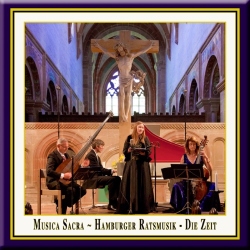
The image of his deceased appears again in his dream (from 'Leucoleons Galamelite')
Das Bildnis (aus "Leucoleons Galamelite oder Allerhand Keusche Lust- und Libeslieder", für Soprano und Bc. Frankfurt ca 1670)
3:38
8
34
Copyright Ⓒ 2013 Davinci Finger. All rights reseved
Service Terms & Policy