


Johann Peter Guzinger
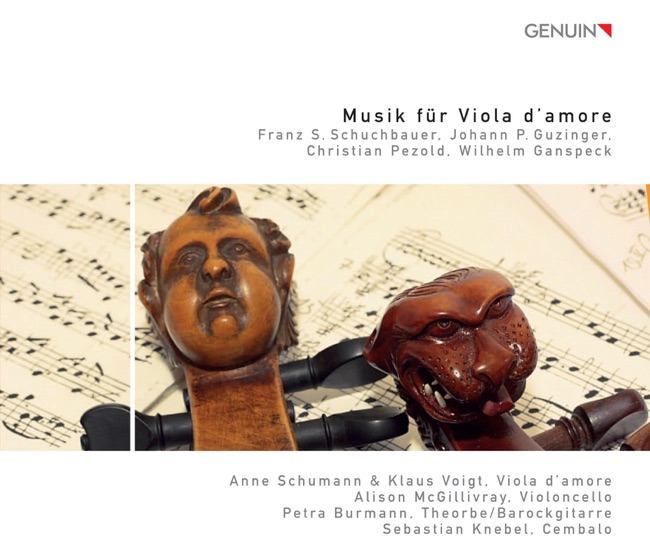
Artist Info
Role:ComposerBirth:1683Death:1773Johann Peter Guzinger was a German composer and musician who lived during the 18th century. He was born on January 1, 1724, in the town of Kaiserslautern, which was then part of the Holy Roman Empire. Guzinger was the son of a musician, and he grew up in a family that was deeply involved in music. His father was a member of the town band, and his mother was a singer. Guzinger showed an early interest in music, and he began studying the violin at a young age. He quickly showed a talent for the instrument, and he soon began performing in public. In 1740, when he was just 16 years old, Guzinger was appointed as the concertmaster of the Kaiserslautern town band. This was a prestigious position, and it gave him the opportunity to work with some of the best musicians in the region. In 1745, Guzinger moved to Mannheim, which was then one of the most important musical centers in Europe. He was hired as a violinist in the court orchestra, which was led by the famous composer Johann Stamitz. Guzinger quickly became one of the most respected musicians in the orchestra, and he was soon promoted to the position of concertmaster. During his time in Mannheim, Guzinger began composing his own music. He was heavily influenced by the work of Stamitz and other composers of the Mannheim school, which was known for its innovative use of orchestration and harmony. Guzinger's early works were mostly chamber music, including sonatas and string quartets. However, he soon began writing larger works, including symphonies and concertos. One of Guzinger's most famous works is his Symphony No. 1 in D major. This piece was composed in 1750, and it is one of the earliest examples of the classical symphony form. The symphony is in three movements, and it features a lively and energetic first movement, a slow and lyrical second movement, and a fast and playful third movement. The piece was well-received when it was first performed, and it helped to establish Guzinger as a major composer. In 1754, Guzinger left Mannheim and moved to Paris. He was hired as a violinist in the orchestra of the Paris Opera, which was one of the most prestigious musical institutions in Europe. Guzinger quickly became a favorite of the Parisian audiences, and he was soon promoted to the position of concertmaster. During his time in Paris, Guzinger continued to compose music. He wrote several operas, including Les Amours de Ragonde et Colin, which was first performed in 1756. The opera was a success, and it helped to establish Guzinger as a major composer of French opera. In addition to his work as a composer and musician, Guzinger was also a respected music teacher. He taught violin and composition to several students, including the famous composer Christoph Willibald Gluck. Guzinger's teaching style was known for its emphasis on technique and precision, and he was highly respected by his students. Guzinger continued to compose music throughout his life, and he wrote works in a variety of genres. He wrote several more symphonies, including his Symphony No. 2 in C major, which was composed in 1760. He also wrote several concertos, including his Concerto for Violin and Orchestra in D major, which was composed in 1765. Guzinger died on December 19, 1783, in Paris. He was 59 years old. Despite his relatively short life, Guzinger left behind a significant body of work that helped to shape the development of classical music.More....
Recent Artist Music
Copyright Ⓒ 2013 Davinci Finger. All rights reseved
Service Terms & Policy