


Johann Georg Lickl
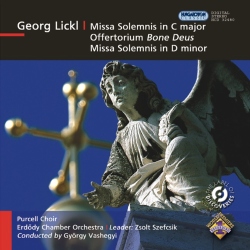
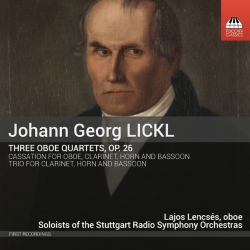
Released Album
Chamber
-
 November 12, 2008
 -
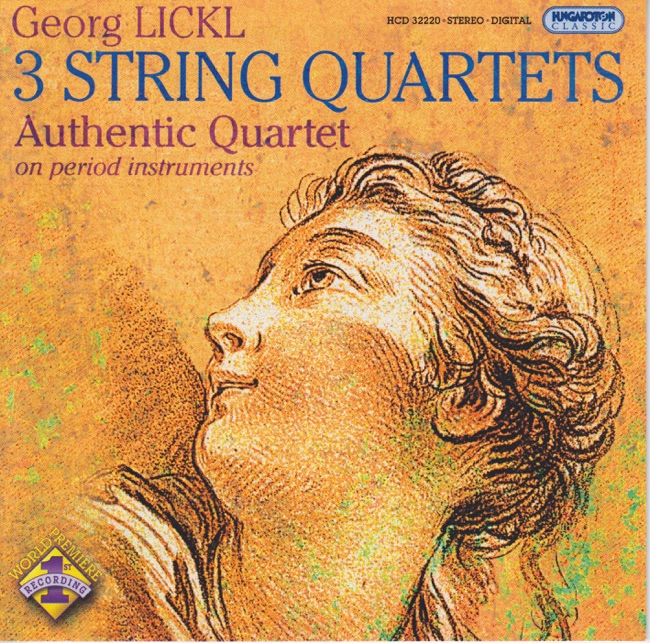 October 6, 2004
Choral
-
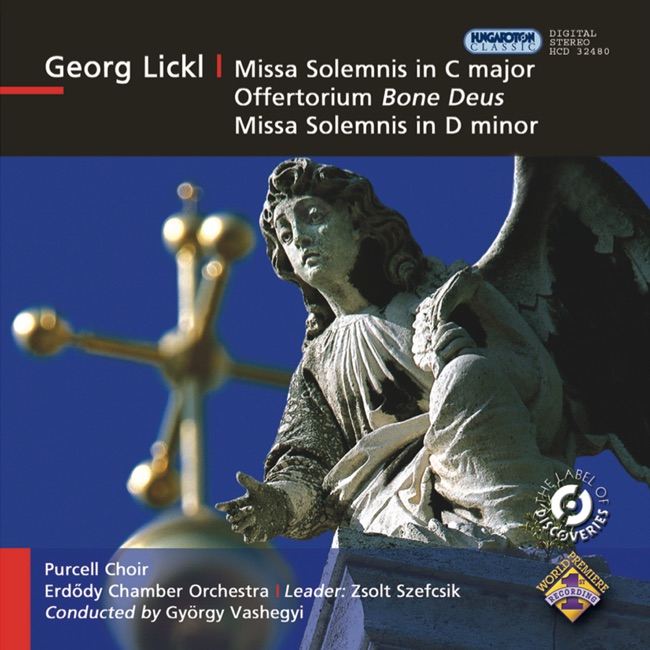 March 25, 2008
Artist Info
Role:ComposerCountry: AustriaBirth:April 11, 1769 in Korneuburg, AustriaDeath:May 12, 1843Period:ClassicalGenre:ChamberChoralJohann Georg Lickl was a classical music composer born on September 28, 1769, in the town of Korneuburg, Austria. He was the son of a schoolteacher and organist, and his father recognized his musical talent at an early age. Lickl began his musical education at the age of six, studying the violin and keyboard with his father. He later studied with other local musicians, including the composer Franz Joseph Aumann. In 1785, Lickl moved to Vienna to further his musical education. He studied composition with Johann Georg Albrechtsberger, a prominent teacher of counterpoint and harmony. Lickl also studied with the composer and conductor Antonio Salieri, who was a close friend of Mozart. Salieri recognized Lickl's talent and helped him secure a position as a violinist in the orchestra of the Burgtheater, one of Vienna's leading theaters. Lickl's career as a composer began in earnest in the early 1790s. He composed a number of works for the Burgtheater, including incidental music for plays and operas. He also composed chamber music, including string quartets and piano sonatas. In 1794, Lickl was appointed Kapellmeister (music director) at the court of Prince Joseph Franz von Lobkowitz. This position gave him the opportunity to compose larger works, including symphonies and operas. One of Lickl's most famous works is his Symphony in D major, which he composed in 1802. The symphony is in four movements and features a lively and energetic first movement, a lyrical second movement, a playful minuet, and a lively finale. The symphony was well-received by audiences and critics alike and helped establish Lickl's reputation as a composer. Lickl's operas were also well-regarded during his lifetime. His first opera, Die Schwestern von Prag (The Sisters of Prague), was premiered in 1798 and was a success. The opera tells the story of two sisters who fall in love with the same man and features a number of memorable arias and ensembles. Lickl went on to compose several more operas, including Der Dorfbarbier (The Village Barber) and Der Schatzgräber (The Treasure Hunter). In addition to his work as a composer, Lickl was also a respected conductor. He conducted the premieres of several important works, including Beethoven's Symphony No. 2 and Symphony No. 4. He also conducted the first performance of Mozart's Requiem after the composer's death. Lickl's career continued to flourish throughout the early 19th century. He composed a number of works for the court of Lobkowitz, including several masses and a Te Deum. He also continued to compose operas, including Die Zauberflöte (The Magic Flute), which he adapted from Mozart's original score. Despite his success, Lickl's career was cut short by his untimely death in 1843. He was 74 years old at the time of his death and had been suffering from a long illness. Lickl's legacy as a composer and conductor lives on, however, through his surviving works and the influence he had on the composers who came after him. His music is characterized by its lyricism, energy, and technical skill, and his contributions to the development of classical music in the late 18th and early 19th centuries cannot be overstated.More....
Recent Artist Music
3
6:
Copyright Ⓒ 2013 Davinci Finger. All rights reseved
Service Terms & Policy