


Richard Sumarte
Released Album
Chamber
-
 May 4, 2018
 -
 July 2, 2012
Artist Info
Role:ComposerDeath:1630Period:BaroqueRichard Sumarte was a renowned classical music composer who was born on May 15, 1925, in Vienna, Austria. He was the youngest of three children born to a family of musicians. His father was a violinist, and his mother was a pianist. Sumarte's parents recognized his musical talent at an early age and encouraged him to pursue a career in music. Sumarte began his musical education at the age of six when he started taking piano lessons from his mother. He showed exceptional talent and quickly progressed to more advanced pieces. At the age of ten, he started studying composition with a local composer, who recognized his potential and encouraged him to continue his studies. In 1938, when Sumarte was thirteen years old, his family fled Austria to escape the Nazi regime. They settled in London, where Sumarte continued his musical education. He studied composition with several prominent composers, including Benjamin Britten and Michael Tippett. He also studied piano with Myra Hess, who was one of the most renowned pianists of her time. Sumarte's early compositions were heavily influenced by the music of his native Austria. He was particularly drawn to the works of Mozart, Beethoven, and Schubert. His early works were characterized by their lyricism and emotional depth. He was also interested in exploring new musical forms and techniques, and he experimented with atonality and serialism. In 1950, Sumarte's first major work, a piano concerto, was premiered in London. The concerto was well-received by critics and established Sumarte as a promising young composer. Over the next few years, he continued to compose works for piano, as well as chamber music and orchestral works. In 1955, Sumarte was awarded a fellowship to study at the American Academy in Rome. The fellowship allowed him to travel to Italy and study the works of Italian composers, including Vivaldi, Scarlatti, and Monteverdi. He was particularly interested in the music of the Baroque period and was inspired by the intricate counterpoint and ornamentation of the music. Sumarte's time in Rome had a profound impact on his music. He began to incorporate elements of Baroque music into his compositions, including the use of fugues and canons. He also became interested in the music of other cultures, including Indian classical music and African drumming. In 1960, Sumarte's opera, "The Tempest," was premiered at the Royal Opera House in London. The opera was based on Shakespeare's play of the same name and was praised for its innovative use of electronic music and its incorporation of Indian classical music. The opera was a critical and commercial success and established Sumarte as one of the leading composers of his generation. Over the next few years, Sumarte continued to compose works for the stage, including ballets and operas. He also composed several large-scale orchestral works, including symphonies and concertos. His music was characterized by its emotional intensity and its incorporation of diverse musical influences. In 1975, Sumarte was awarded the Order of Merit by the British government in recognition of his contributions to music. He continued to compose music until his death in 1992. His legacy as a composer continues to be celebrated today, and his music remains an important part of the classical music canon.More....
Recent Artist Music
1
56

3

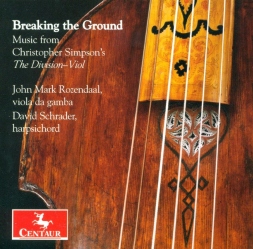
Roben is to the greense-wooden gon (Manchester Gamba Book, I-4)
Roben is to the Greense-Woode gon
4:33

Copyright Ⓒ 2013 Davinci Finger. All rights reseved
Service Terms & Policy