


Andrew Imbrie
Released Album
Chamber
-
 January 31, 2009
 -

-
 October 1, 1999
 -
 June 10, 1994
Choral
-
 December 13, 2016
 -
 October 29, 2002
 -
 August 17, 1999
Orchestral
Keyboard
-
 November 30, 2004
Artist Info
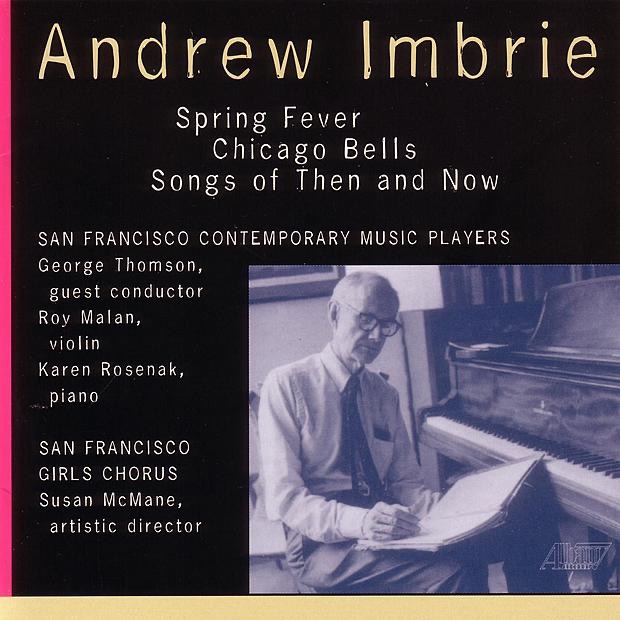
Role:ComposerCountry: United States of AmericaBirth:April 6, 1921 in New York City, NYDeath:December 5, 2007 in Berkeley, CAPeriod:ContemporaryGenre:ChamberVocalAndrew Imbrie was an American composer who was born on April 6, 1921, in New York City. He was the son of a prominent lawyer and a mother who was a pianist. Imbrie's parents were both musically inclined, and they encouraged their son to pursue music from a young age. He began playing the piano at the age of five and started composing music when he was just eight years old. Imbrie's family moved to California when he was a teenager, and he continued his musical education there. He studied composition with Darius Milhaud at Mills College in Oakland, California, and later with Roger Sessions at Princeton University. Imbrie also studied with Aaron Copland at Tanglewood, where he was a fellow in 1941. Imbrie's early works were influenced by the neoclassical style of Stravinsky and the twelve-tone technique of Schoenberg. His first major work, the String Quartet No. 1, was written in 1945 and premiered by the Juilliard String Quartet in 1947. The quartet was well-received and established Imbrie as a promising young composer. In the 1950s, Imbrie's style began to evolve, and he started incorporating more expressive and emotional elements into his music. His Symphony No. 1, which was premiered by the San Francisco Symphony in 1952, was a breakthrough work that showcased his new style. The symphony was praised for its lyrical melodies and dramatic intensity. Imbrie continued to compose throughout the 1950s and 1960s, and his works were performed by major orchestras and ensembles across the United States. He also taught composition at the University of California, Berkeley, where he was a professor from 1951 to 1991. One of Imbrie's most significant works is his Piano Concerto, which was written in 1963 and premiered by the San Francisco Symphony with pianist John Browning as the soloist. The concerto is a virtuosic and challenging work that showcases Imbrie's mastery of orchestration and his ability to create complex and intricate musical structures. Imbrie's music continued to evolve in the 1970s and 1980s, and he began incorporating more experimental and avant-garde elements into his works. His String Quartet No. 4, which was written in 1975, is a prime example of this new direction. The quartet features extended techniques and unconventional playing methods, such as playing behind the bridge and using mutes. Imbrie's later works also reflect his interest in literature and poetry. His song cycle, "Songs of Then and Now," which was written in 1985, sets poems by Robert Lowell and Elizabeth Bishop to music. The cycle is a poignant and introspective work that showcases Imbrie's ability to capture the emotional depth and complexity of the texts. Imbrie's music has been performed by many of the world's leading orchestras and ensembles, including the New York Philharmonic, the Boston Symphony Orchestra, and the Chicago Symphony Orchestra. He received numerous awards and honors throughout his career, including a Guggenheim Fellowship, a Fulbright Scholarship, and the American Academy of Arts and Letters Music Award. Andrew Imbrie passed away on December 5, 2007, at the age of 86. He left behind a legacy of innovative and expressive music that continues to inspire and captivate audiences today.More....
Recent Artist Music
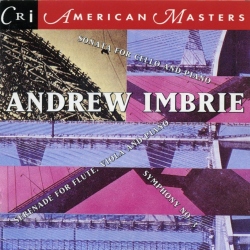



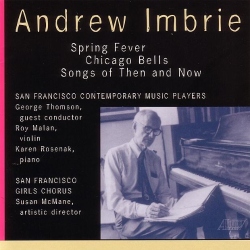



12
14:1

Copyright Ⓒ 2013 Davinci Finger. All rights reseved
Service Terms & Policy