


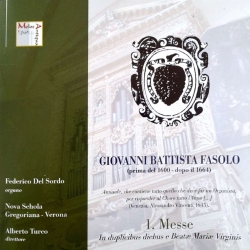
Giovanni Battista Fasolo
Released Album
Choral
-
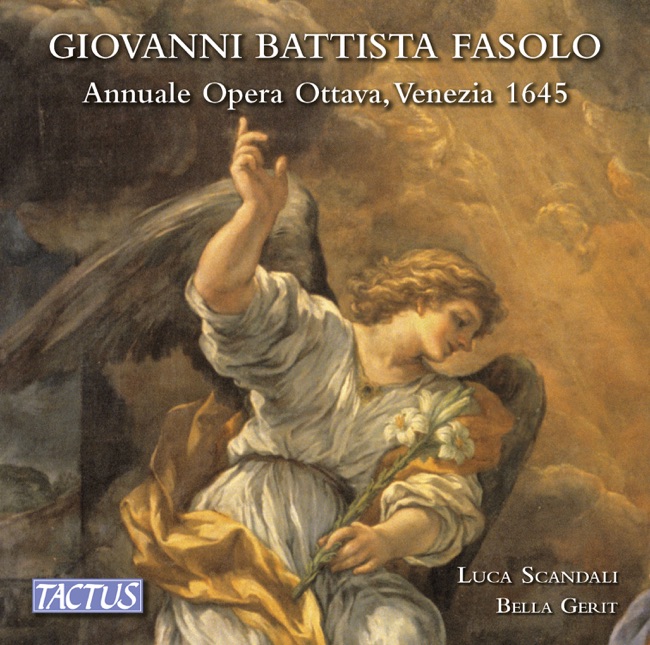
-
 December 15, 2001
Vocal
-
 July 20, 2004
Keyboard
-
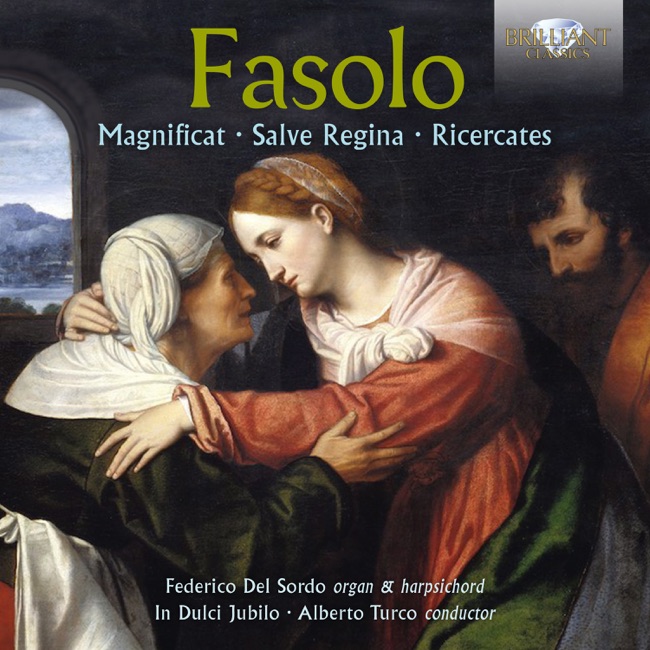 December 15, 2017
Artist Info
Role:ComposerBirth:ca. 1598Death:ca. 1664Period:BaroqueGenre:ChoralGiovanni Battista Fasolo was an Italian composer and musician who lived during the Baroque period. He was born in Verona, Italy in 1598 and was the son of a musician. Fasolo showed an early interest in music and began studying the organ and composition at a young age. Fasolo's musical education was extensive, and he studied with some of the most prominent musicians of his time. He studied with Giovanni Gabrieli in Venice and later with Claudio Monteverdi in Mantua. Fasolo's education was not limited to music, and he also studied philosophy and theology. Fasolo's first major work was a collection of sacred music called "Sacrae cantiones" which was published in 1625. The collection included motets, hymns, and psalms, and it was well received by the public. Fasolo's music was known for its expressive melodies and intricate harmonies. In 1628, Fasolo was appointed as the organist at the Basilica of San Giovanni in Laterano in Rome. This was a prestigious position, and it allowed Fasolo to showcase his talents as a composer and performer. Fasolo's music was popular with the churchgoers, and he was praised for his ability to create music that was both beautiful and spiritually uplifting. Fasolo's most famous work is his collection of organ music called "Annuale". The collection was published in 1645 and included music for the entire liturgical year. The music was designed to be played during church services, and it was written in a style that was both expressive and virtuosic. The collection was a huge success, and it cemented Fasolo's reputation as one of the leading composers of his time. Fasolo's music was not limited to sacred music, and he also wrote secular music. His collection of madrigals called "Il primo libro de madrigali" was published in 1628 and included music for solo voice and instruments. The music was written in a style that was popular at the time, and it was well received by the public. Fasolo's music was known for its expressive melodies and intricate harmonies. He was a master of counterpoint, and his music was characterized by its complex interweaving of melodies. Fasolo's music was also known for its use of chromaticism, which was a technique that was used to create tension and drama in the music. Fasolo's music was influential, and it had a significant impact on the development of Baroque music. His use of chromaticism and counterpoint was later adopted by other composers, and it became a hallmark of Baroque music. Fasolo died in Rome in 1664, and his music continued to be performed and admired long after his death. His music was an important contribution to the development of Baroque music, and it remains an important part of the classical music canon.More....
Recent Artist Music

2
3:49
3
2:50
10
1:15
Copyright Ⓒ 2013 Davinci Finger. All rights reseved
Service Terms & Policy