


Nicolaus Bleyer
Released Album
Chamber
-

-
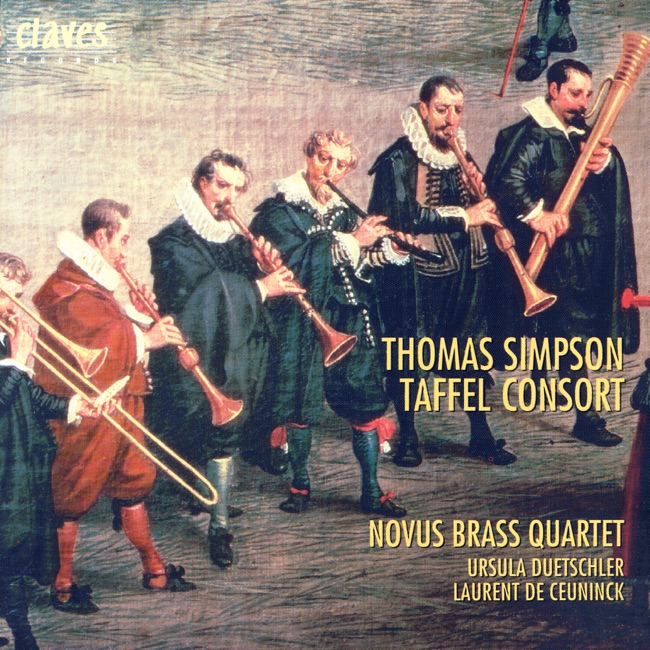 October 1, 1999
Artist Info
Role:ComposerGenre:ChamberNicolaus Bleyer was a German composer of the Baroque era, born on December 28, 1629, in the town of Nuremberg. He was the son of a musician and grew up in a musical family. His father, Johann Bleyer, was a respected organist and composer, and his mother, Maria, was a singer. Nicolaus showed an early interest in music and began his musical education at a young age. Bleyer's musical education began with his father, who taught him the basics of music theory and composition. He then studied with the renowned composer Johann Erasmus Kindermann, who was the organist at St. Sebaldus Church in Nuremberg. Kindermann was a significant influence on Bleyer's musical style, and he learned a great deal from him. In 1650, Bleyer was appointed as the organist at St. Lorenz Church in Nuremberg, a position he held for the rest of his life. He was also a member of the Nuremberg city council and served as the director of the city's music school. Bleyer was a respected musician in his time, and his compositions were highly regarded. Bleyer's music is characterized by its contrapuntal complexity and its use of chromaticism. He was influenced by the music of Heinrich Schütz and Johann Sebastian Bach, and his works reflect the Baroque style of the time. Bleyer's compositions include sacred music, such as cantatas, motets, and chorales, as well as instrumental music, such as sonatas and suites. One of Bleyer's most significant works is his collection of 12 cantatas, titled "Geistliche Harmonien" (Spiritual Harmonies), which he composed in 1660. The cantatas are based on texts from the Bible and are written for solo voices, choir, and instruments. The collection is notable for its use of chromaticism and its complex counterpoint. Another notable work by Bleyer is his "Sonata a 5," which he composed in 1670. The sonata is written for two violins, two violas, and basso continuo and is characterized by its lively rhythms and intricate counterpoint. The work is an excellent example of Bleyer's skill as a composer and his ability to write music that is both technically challenging and musically engaging. Bleyer's music was highly regarded in his time, and he was considered one of the leading composers of the Baroque era. His works were performed throughout Germany and were influential in the development of the Baroque style. Despite his success, Bleyer remained humble and dedicated to his work, and he continued to compose music until his death on December 28, 1683, in Nuremberg. In conclusion, Nicolaus Bleyer was a significant figure in the development of Baroque music. His compositions were highly regarded in his time, and his influence can be seen in the works of later composers. Bleyer's music is characterized by its contrapuntal complexity and its use of chromaticism, and his works are an excellent example of the Baroque style. Despite his success, Bleyer remained dedicated to his work and continued to compose music until his death. His legacy lives on through his music, which continues to be performed and enjoyed by audiences around the world.More....
Recent Artist Music


Copyright Ⓒ 2013 Davinci Finger. All rights reseved
Service Terms & Policy