


Joel Mandelbaum
Released Album
Vocal
-
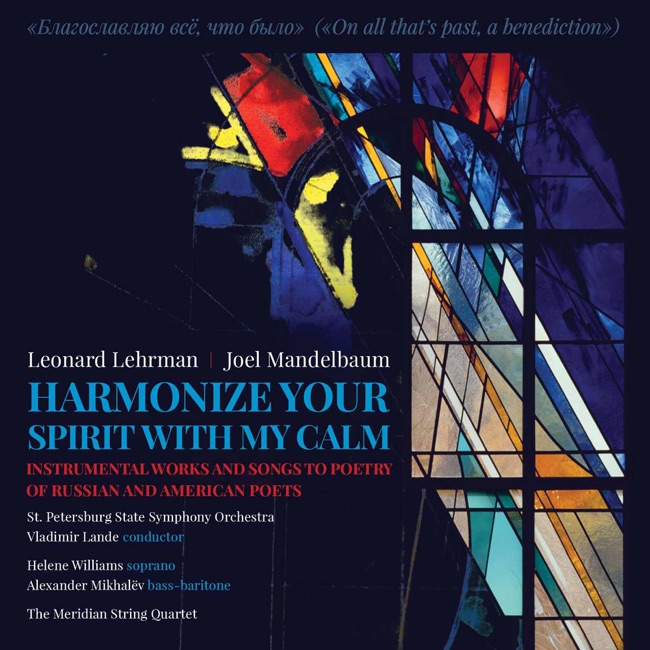 January 13, 2017
Orchestral
-
 January 22, 2008
Artist Info
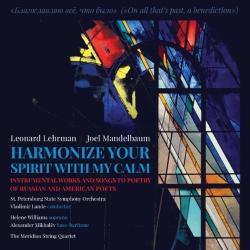
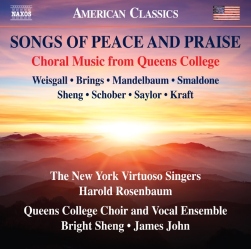
Role:Composer ConductorBirth:1932Period:ContemporaryGenre:ChamberKeyboardVocalJoel Mandelbaum was a renowned American composer of classical music, known for his unique style and innovative approach to composition. Born on May 22, 1932, in New York City, Mandelbaum showed an early interest in music and began playing the piano at a young age. His parents recognized his talent and encouraged him to pursue his passion for music. Mandelbaum's formal music education began at the Juilliard School, where he studied composition with Vincent Persichetti and piano with Rosina Lhévinne. He later earned a Bachelor of Music degree from the Manhattan School of Music and a Master of Music degree from Columbia University. Throughout his career, Mandelbaum composed a wide range of works, including orchestral pieces, chamber music, vocal music, and solo piano works. His compositions were known for their intricate harmonies, complex rhythms, and use of unconventional instruments and techniques. One of Mandelbaum's early works, "Three Pieces for Piano," was composed in 1955 and showcased his unique style and approach to composition. The piece featured complex rhythms and harmonies, as well as unconventional techniques such as playing the piano strings directly with the fingers. In 1960, Mandelbaum composed his first orchestral work, "Symphony No. 1," which was premiered by the New York Philharmonic under the direction of Leonard Bernstein. The piece was well-received by audiences and critics alike, and established Mandelbaum as a rising star in the world of classical music. Over the next several years, Mandelbaum continued to compose a wide range of works, including chamber music pieces such as "String Quartet No. 1" and "Sonata for Violin and Piano," as well as vocal works such as "Songs of Love and Loss" and "Three Poems of Emily Dickinson." In 1972, Mandelbaum composed his most famous work, "Concerto for Piano and Orchestra," which was premiered by the Boston Symphony Orchestra under the direction of Seiji Ozawa. The piece featured intricate piano passages and complex orchestration, and was hailed as a masterpiece of modern classical music. Throughout the 1970s and 1980s, Mandelbaum continued to compose a wide range of works, including "Symphony No. 2," "Concerto for Violin and Orchestra," and "String Quartet No. 2." His works were performed by some of the world's leading orchestras and ensembles, including the New York Philharmonic, the Boston Symphony Orchestra, and the Emerson String Quartet. In addition to his work as a composer, Mandelbaum was also a respected music educator. He taught composition at the Juilliard School, the Manhattan School of Music, and Columbia University, and mentored many young composers who went on to achieve great success in the world of classical music. Mandelbaum's contributions to the world of classical music were recognized with numerous awards and honors throughout his career. He was a recipient of the Guggenheim Fellowship, the National Endowment for the Arts Fellowship, and the American Academy of Arts and Letters Award in Music. Joel Mandelbaum passed away on December 17, 1982, at the age of 50. His legacy as a composer and educator continues to inspire and influence generations of musicians and music lovers around the world.More....

Copyright Ⓒ 2013 Davinci Finger. All rights reseved
Service Terms & Policy