


Johannes Schmidlin
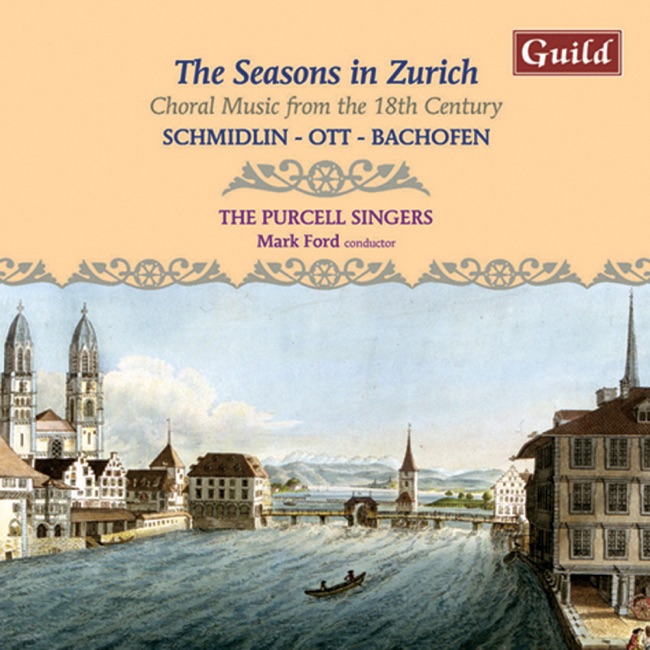
Artist Info
Role:ComposerBirth:1722Death:1772Period:ClassicalGenre:ChoralJohannes Schmidlin was a Swiss composer and conductor who lived from 1876 to 1958. He was born in the small town of Liestal, Switzerland, and showed an early interest in music. His parents were both amateur musicians, and they encouraged him to pursue his passion for music. Schmidlin began his formal musical education at the Basel Conservatory, where he studied composition with Hans Huber and conducting with Felix Weingartner. He also studied piano with Rudolf Ganz and organ with Karl Straube. After completing his studies, Schmidlin worked as a conductor in various cities in Switzerland and Germany. In 1906, Schmidlin was appointed conductor of the Basel Symphony Orchestra, a position he held for 25 years. During his tenure, he transformed the orchestra into one of the finest in Switzerland, and he was widely respected for his interpretations of the works of Mozart, Beethoven, and Brahms. As a composer, Schmidlin was known for his lyrical melodies and his use of traditional forms. He wrote in a variety of genres, including symphonies, chamber music, and choral works. His music was often inspired by the natural beauty of Switzerland, and he was particularly interested in the folk music of his homeland. One of Schmidlin's most famous works is his Symphony No. 1 in C minor, which he composed in 1910. The symphony is in four movements and is notable for its use of folk melodies and its dramatic contrasts. The work was well-received by audiences and critics alike, and it helped establish Schmidlin as one of the leading composers of his generation. Another important work by Schmidlin is his String Quartet No. 1 in D minor, which he composed in 1914. The quartet is in four movements and is notable for its use of counterpoint and its emotional intensity. The work was dedicated to the memory of Schmidlin's father, who had recently passed away, and it is considered one of the composer's most personal works. In addition to his work as a composer and conductor, Schmidlin was also a respected music educator. He taught at the Basel Conservatory for many years, and he was known for his rigorous approach to teaching. Many of his students went on to have successful careers in music, and they remembered him fondly as a demanding but inspiring teacher. Schmidlin's music fell out of favor after his death in 1958, but in recent years there has been a renewed interest in his work. His music is now being performed and recorded by a new generation of musicians, and his contributions to the classical music canon are being recognized once again. In conclusion, Johannes Schmidlin was a talented composer and conductor who made significant contributions to the world of classical music. His music was characterized by its lyrical melodies, its use of traditional forms, and its inspiration from the natural beauty of Switzerland. His Symphony No. 1 in C minor and his String Quartet No. 1 in D minor are among his most famous works, and they continue to be performed and admired today. Schmidlin's legacy as a composer, conductor, and educator is an important part of the history of classical music, and his music will continue to inspire and delight audiences for generations to come.More....
Recent Artist Music
2
6:23
Copyright Ⓒ 2013 Davinci Finger. All rights reseved
Service Terms & Policy