


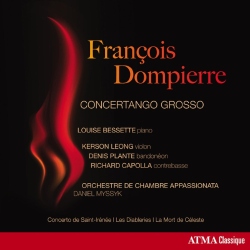
François Dompierre
Released Album
Concerto
-
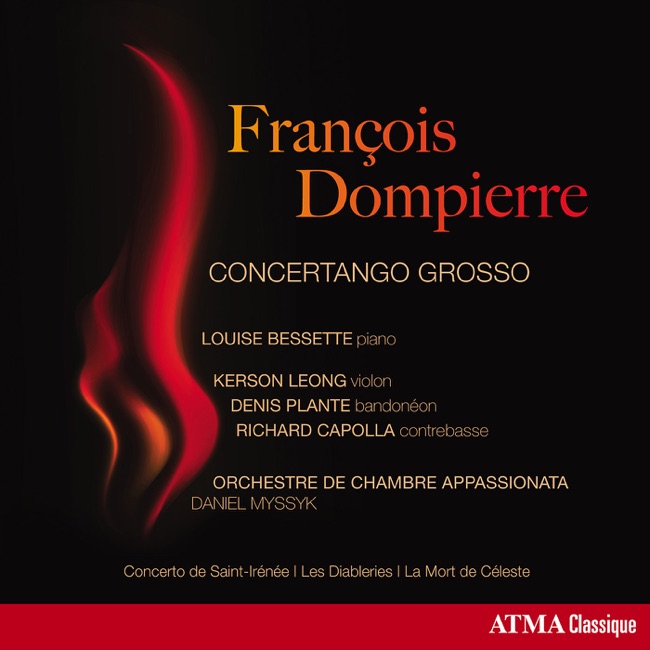 October 14, 2016
Chamber
-
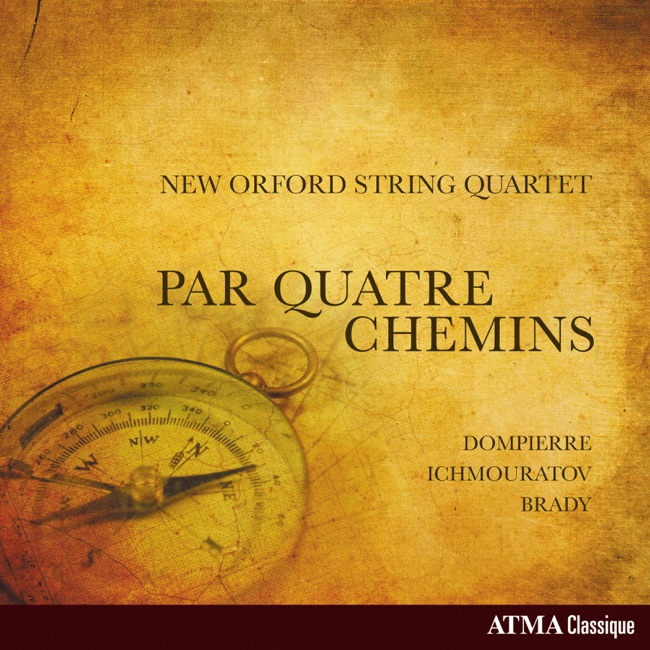 February 16, 2018
Orchestral
-
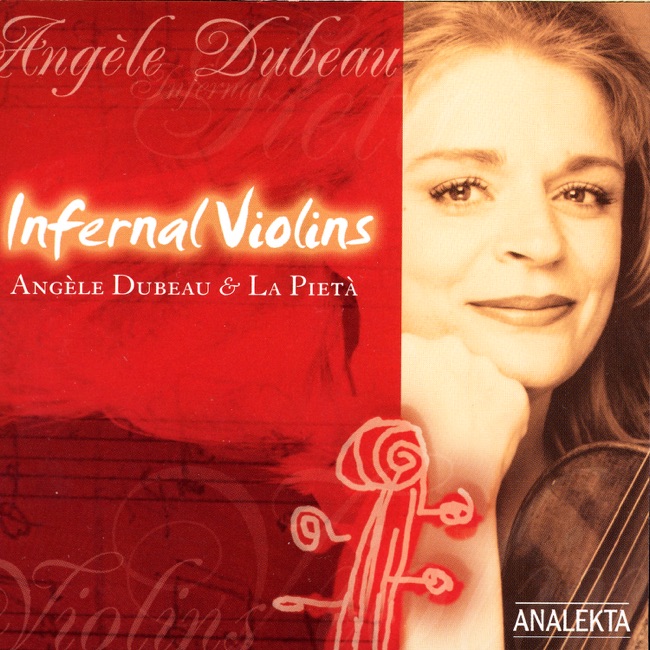 December 4, 2000
Film
-
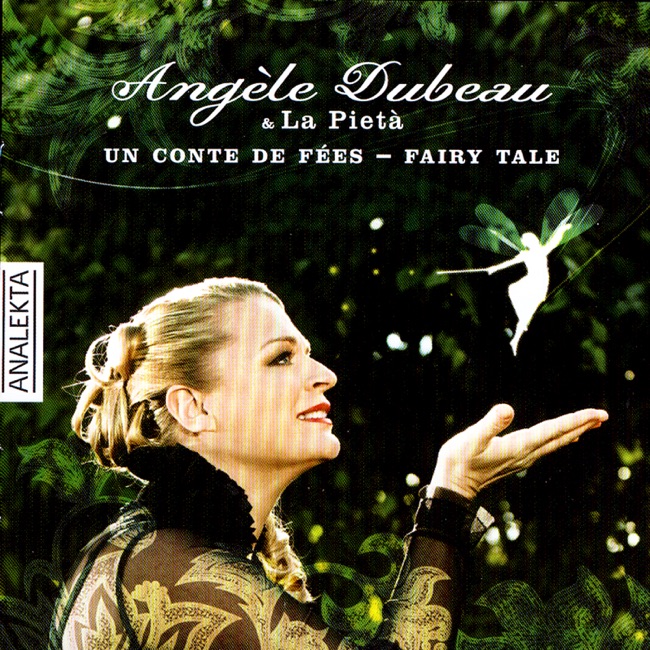 January 1, 2007
Artist Info
Role:Composer ConductorBirth:1943Genre:ChamberOrchestralFrançois Dompierre is a Canadian composer, pianist, and conductor who has made significant contributions to the world of classical music. Born on June 22, 1943, in Ottawa, Canada, Dompierre grew up in a family of musicians. His father, Jean Dompierre, was a composer and conductor, and his mother, Lucille Dumont, was a singer and actress. From a young age, Dompierre was exposed to music and began playing the piano at the age of five. Dompierre's musical education began at the Conservatoire de musique du Québec in Montreal, where he studied piano and composition. He later continued his studies at the Juilliard School in New York City, where he studied composition with Vincent Persichetti and conducting with Jean Morel. Dompierre's early compositions were influenced by the avant-garde movement, and he was particularly drawn to the works of Pierre Boulez and Karlheinz Stockhausen. In the 1970s, Dompierre began to shift his focus towards more accessible and tonal music. He became interested in jazz and popular music, and began incorporating elements of these genres into his compositions. This new direction in his music was well-received by audiences and critics alike, and Dompierre quickly gained a reputation as a composer who was able to bridge the gap between classical and popular music. One of Dompierre's most famous works is his Concerto de l'asile, which was commissioned by the Montreal Symphony Orchestra in 1978. The piece is a tribute to the composer's father, who spent much of his career working in mental hospitals. The concerto is divided into three movements, each of which represents a different aspect of life in a mental institution. The first movement, "Entrée," is a lively and energetic piece that represents the chaos and confusion of life in an asylum. The second movement, "Lamentations," is a slow and mournful piece that represents the sadness and despair of the patients. The final movement, "Sortie," is a triumphant and joyful piece that represents the hope and optimism of those who are able to leave the asylum and return to the outside world. Another notable work by Dompierre is his Suite en concert, which was commissioned by the Toronto Symphony Orchestra in 1981. The piece is a collection of five short movements, each of which is based on a different dance form. The first movement, "Ouverture," is a lively and energetic piece that sets the tone for the rest of the suite. The second movement, "Sarabande," is a slow and graceful piece that features a solo violin. The third movement, "Gavotte," is a playful and whimsical piece that features a solo flute. The fourth movement, "Menuet," is a stately and elegant piece that features a solo oboe. The final movement, "Gigue," is a fast and lively piece that brings the suite to a rousing conclusion. Dompierre has also composed music for film and television. He has worked on numerous projects, including the films The Apprenticeship of Duddy Kravitz and Les Plouffe, as well as the television series The Littlest Hobo and The Kids in the Hall. Dompierre's music for film and television is often characterized by its catchy melodies and playful rhythms. In addition to his work as a composer, Dompierre is also an accomplished pianist and conductor. He has performed with numerous orchestras around the world, including the Montreal Symphony Orchestra, the Toronto Symphony Orchestra, and the National Arts Centre Orchestra.More....
Recent Artist Music




Copyright Ⓒ 2013 Davinci Finger. All rights reseved
Service Terms & Policy