


Friedrich Hartmann Graf
Released Album
Concerto
-
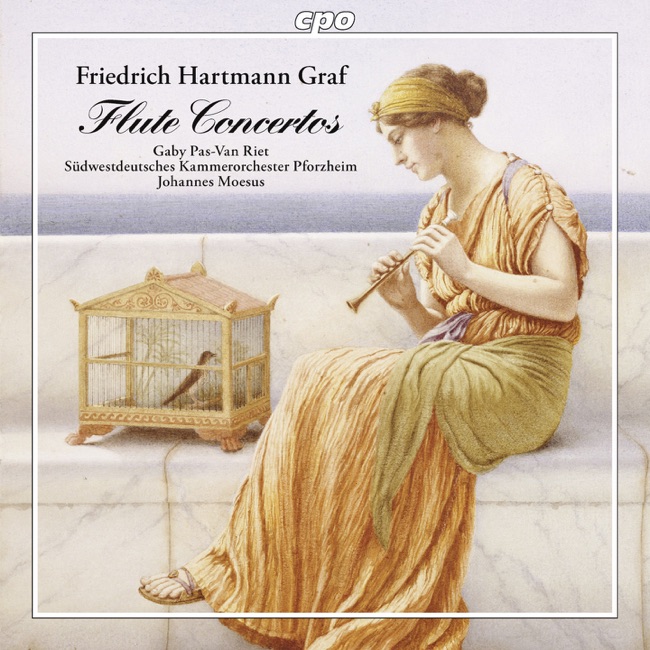 January 7, 2013
Chamber
Artist Info
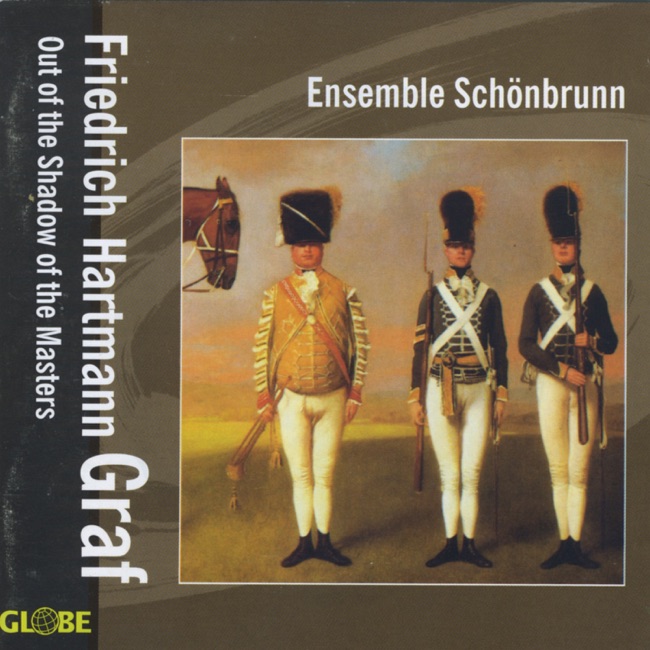
Role:ComposerBirth:August 23, 1727 in Rudolstadt, GermanyDeath:August 19, 1795 in Augsburg, GermanyGenre:ChamberFriedrich Hartmann Graf was a German composer and musician who lived during the 18th century. He was born on January 20, 1727, in Rudolstadt, Thuringia, Germany. His father, Johann Graf, was a court musician, and his mother, Johanna Dorothea, was a singer. Friedrich Hartmann Graf grew up in a musical family and received his early musical education from his father. At the age of 14, Friedrich Hartmann Graf was sent to study music in Leipzig, where he studied with Johann Sebastian Bach. Bach was impressed with Graf's talent and took him under his wing, teaching him composition, counterpoint, and keyboard playing. Graf's studies with Bach had a profound influence on his musical style, and he became known for his contrapuntal writing and his use of complex harmonies. After completing his studies with Bach, Friedrich Hartmann Graf returned to Rudolstadt, where he worked as a court musician. He composed music for the court and also taught music to the local children. In 1756, he was appointed Kapellmeister (music director) of the court orchestra, a position he held for the rest of his life. Friedrich Hartmann Graf was a prolific composer, and his works include symphonies, concertos, chamber music, and vocal music. His music is characterized by its elegance, clarity, and emotional depth. He was particularly skilled at writing for the keyboard, and his keyboard works are considered some of the finest of the 18th century. One of Friedrich Hartmann Graf's most famous works is his Symphony in D major, which was composed in 1774. The symphony is a four-movement work that showcases Graf's skill at orchestration and his ability to create memorable melodies. The first movement is a lively allegro, while the second movement is a beautiful andante. The third movement is a minuet and trio, and the final movement is a spirited allegro. Another notable work by Friedrich Hartmann Graf is his Concerto for Flute and Orchestra in G major, which was composed in 1777. The concerto is a three-movement work that features a virtuosic flute part and a lively orchestral accompaniment. The first movement is a fast and energetic allegro, while the second movement is a slow and lyrical adagio. The final movement is a lively and playful allegro. In addition to his instrumental works, Friedrich Hartmann Graf also composed vocal music, including cantatas, oratorios, and operas. One of his most famous vocal works is his oratorio "Die Auferstehung und Himmelfahrt Jesu" (The Resurrection and Ascension of Jesus), which was composed in 1774. The oratorio is a large-scale work that features soloists, choir, and orchestra. It tells the story of Jesus' resurrection and ascension and is notable for its dramatic and emotional music. Friedrich Hartmann Graf was highly respected during his lifetime and was considered one of the leading composers of his time. His music was widely performed throughout Germany and Austria, and he was admired for his skill as a composer and his contributions to the development of classical music. Friedrich Hartmann Graf died on October 19, 1795, in Rudolstadt, Germany. He left behind a legacy of beautiful and inspiring music that continues to be performed and enjoyed today. His works are a testament to his talent and his dedication to the art of music, and they serve as a reminder of the power of music to move and inspire us.More....
Recent Artist Music
Copyright Ⓒ 2013 Davinci Finger. All rights reseved
Service Terms & Policy