


Kurt Wiklander
Released Album
Keyboard
-
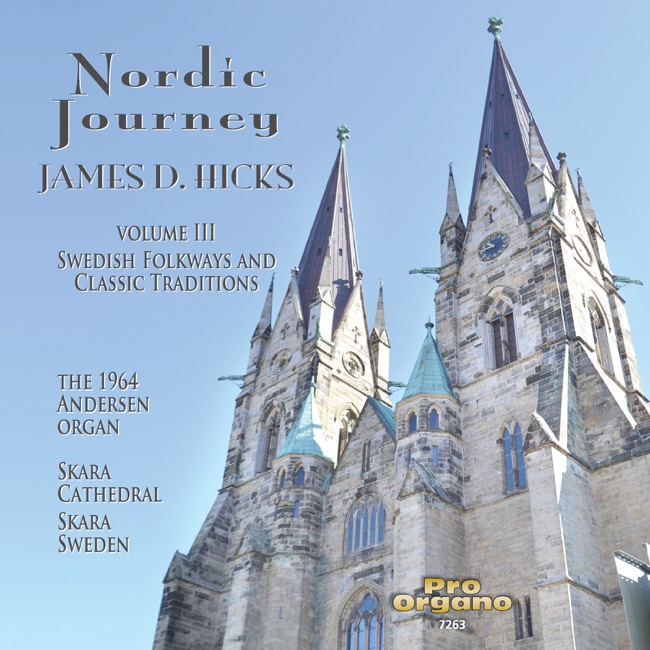 September 9, 2014
 -
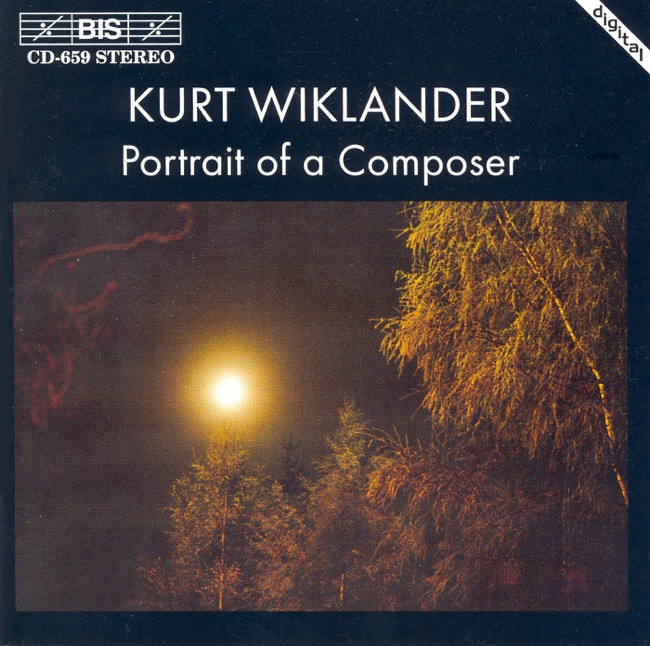 July 18, 1995
Artist Info
Role:ComposerCountry: SwedenBirth:1950Period:ModernGenre:ChamberKeyboardKurt Wiklander was a Swedish composer who was born on May 12, 1927, in Stockholm, Sweden. He was the son of a music teacher and grew up in a musical family. His father was a pianist and his mother was a singer, and they both encouraged him to pursue a career in music. Wiklander began his musical education at the age of six when he started taking piano lessons. He showed great talent and quickly progressed, and by the age of 12, he had already composed his first piece of music. He continued his studies at the Royal College of Music in Stockholm, where he studied composition with Lars-Erik Larsson and piano with Gunnar Hallhagen. After completing his studies, Wiklander began his career as a composer and pianist. He quickly gained recognition for his compositions, which were characterized by their lyrical melodies and harmonies. His music was often inspired by Swedish folk music and nature, and he was known for his ability to create vivid musical landscapes. One of Wiklander's early works was his Piano Concerto, which he composed in 1952. The concerto was well-received and helped establish Wiklander as a composer to watch. He continued to compose throughout the 1950s and 1960s, and his works were performed by some of the leading orchestras in Sweden and Europe. In 1967, Wiklander was appointed as a professor of composition at the Royal College of Music in Stockholm, where he taught until his retirement in 1992. During his time as a professor, he mentored many young composers and helped shape the future of Swedish classical music. Wiklander's compositions were often inspired by his travels and experiences. In 1970, he visited Japan and was deeply influenced by the country's culture and music. This led to the composition of his Japanese Suite, which was premiered in 1972. The suite was a departure from his earlier works and showcased his ability to incorporate non-Western musical elements into his compositions. Another notable work by Wiklander was his Symphony No. 3, which he composed in 1980. The symphony was inspired by the Swedish landscape and was characterized by its sweeping melodies and lush harmonies. The work was well-received and helped cement Wiklander's reputation as one of Sweden's leading composers. Wiklander continued to compose throughout the 1980s and 1990s, and his works were performed by orchestras around the world. He was awarded numerous honors and awards for his contributions to Swedish music, including the Litteris et Artibus medal in 1992. Kurt Wiklander passed away on December 22, 2000, at the age of 73. He left behind a legacy of beautiful and evocative music that continues to be performed and enjoyed by audiences around the world. His contributions to Swedish classical music will always be remembered, and his influence can be heard in the works of many contemporary composers.More....
Recent Artist Music
Copyright Ⓒ 2013 Davinci Finger. All rights reseved
Service Terms & Policy