


Sigismund Toduta
Released Album
Chamber
-
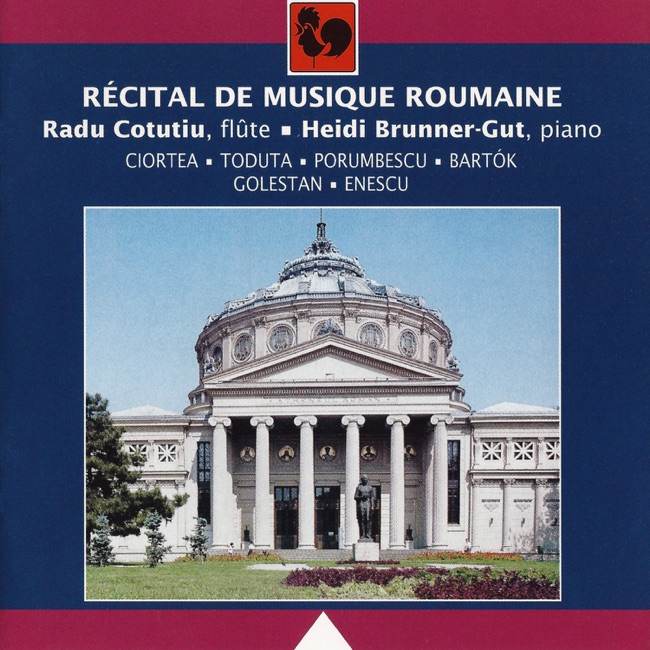 April 27, 2004
Keyboard
-
 January 5, 2018
Artist Info
Role:ComposerBirth:May 17, 1908Death:July 3, 1991Period:ModernGenre:ChamberConcertoSigismund Toduta was a Romanian composer who was born on the 25th of October, 1908, in the city of Cluj-Napoca. He was the son of a music teacher, and his father played a significant role in his early musical education. Toduta began his musical studies at the age of six, and by the time he was ten, he was already composing his own music. Toduta's early musical education was primarily focused on the piano, and he quickly became a skilled pianist. He also studied composition with some of the most prominent Romanian composers of the time, including Mihail Jora and George Enescu. Toduta's early compositions were heavily influenced by the music of his teachers, and he quickly developed a reputation as a talented young composer. In 1928, Toduta moved to Paris to continue his musical studies. While in Paris, he studied with the renowned composer Nadia Boulanger, who had a significant impact on his musical style. Boulanger encouraged Toduta to explore new musical techniques and to experiment with different forms of composition. Toduta's early compositions were primarily focused on traditional forms of classical music, such as sonatas and symphonies. However, as he continued to study and experiment with new techniques, his music began to take on a more avant-garde style. He became interested in the use of atonality and serialism, and his compositions began to incorporate these techniques. One of Toduta's most significant works is his Piano Sonata No. 1, which he composed in 1933. The sonata is a prime example of Toduta's early style, which was heavily influenced by the music of his teachers. The piece is written in a traditional sonata form, but it also incorporates elements of Romanian folk music. In the 1940s, Toduta's music began to take on a more experimental style. He became interested in the use of electronic music and began to incorporate electronic sounds into his compositions. One of his most significant works from this period is his Electronic Symphony, which he composed in 1957. The piece is a groundbreaking work that incorporates electronic sounds with traditional orchestral instruments. Toduta's later works continued to explore new musical techniques and forms. He became interested in the use of aleatoric music, which is music that is partially or wholly left to chance. One of his most significant works from this period is his Aleatoric Symphony, which he composed in 1968. The piece is a prime example of Toduta's experimental style and incorporates elements of chance into the composition. Throughout his career, Toduta was a prolific composer, and he wrote over 200 works in a variety of genres. His music was performed throughout Europe and the United States, and he received numerous awards and honors for his contributions to classical music. Toduta died on the 12th of August, 1991, in Cluj-Napoca, Romania. His legacy as a composer continues to live on, and his music remains an important part of the classical music canon.More....
Recent Artist Music
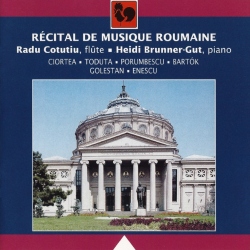
Copyright Ⓒ 2013 Davinci Finger. All rights reseved
Service Terms & Policy