


Bülent Arel

Artist Info
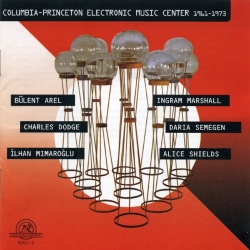
Role:ComposerCountry: United States of AmericaBirth:May 23, 1919 in Istanbul, TurkeyDeath:November 24, 1990 in East Setauket, NYPeriod:ContemporaryGenre:Avant-GardeBülent Arel was a Turkish-American composer who was born on April 23, 1919, in Istanbul, Turkey. He was the son of a prominent Turkish journalist and grew up in a family that valued education and culture. Arel showed an early interest in music and began studying piano and composition at a young age. In 1940, Arel moved to Paris to study music at the École Normale de Musique de Paris. He studied with renowned composers such as Nadia Boulanger and Olivier Messiaen, and was exposed to a wide range of musical styles and techniques. During his time in Paris, Arel also became interested in electronic music and began experimenting with tape recorders and other electronic equipment. After completing his studies in Paris, Arel returned to Turkey and began working as a composer and music educator. He taught at the Ankara State Conservatory and the Istanbul Municipal Conservatory, and also worked as a music critic for various publications. During this time, Arel continued to experiment with electronic music and became one of the pioneers of the genre in Turkey. In 1959, Arel was awarded a Fulbright scholarship to study electronic music at the Columbia-Princeton Electronic Music Center in New York City. He moved to the United States and began working with some of the leading figures in electronic music, including Vladimir Ussachevsky and Otto Luening. Arel also began teaching at the State University of New York at Stony Brook, where he helped establish the university's electronic music program. Arel's compositions from this period are characterized by their innovative use of electronic sounds and techniques. His most famous work from this period is "Stereo Electronic Music No. 1," which was composed in 1960 and is considered one of the earliest examples of stereo electronic music. The piece features a wide range of electronic sounds, including sine waves, white noise, and tape loops, and was created using a variety of electronic equipment. In addition to his work in electronic music, Arel also composed a number of works for traditional instruments. His compositions from this period are characterized by their use of Turkish folk music and traditional Turkish instruments, such as the ney and the saz. Arel's most famous work from this period is "Music for a Sacred Service," which was composed in 1963 and is a setting of the Jewish liturgy for choir and orchestra. In the late 1960s, Arel began to move away from electronic music and began exploring other genres and styles. He composed a number of works for traditional instruments, including a series of pieces for solo piano and a concerto for violin and orchestra. Arel's later works are characterized by their use of complex rhythms and harmonies, as well as their incorporation of Turkish folk music and other non-Western musical traditions. Arel continued to compose and teach until his death in 1990. His contributions to the field of electronic music and his innovative use of electronic sounds and techniques have had a lasting impact on the genre. Arel's work also helped to bridge the gap between Western and non-Western musical traditions, and his use of Turkish folk music and traditional instruments has inspired a new generation of composers and musicians.More....




Copyright Ⓒ 2013 Davinci Finger. All rights reseved
Service Terms & Policy